Edgeworthia
Edgeworthia chrysantha (Paper Bush)
“A winter marvel for a sheltered wall. Silky flower clusters on bare branches, an extraordinary scent, and the knowledge that Japanese banknotes are made from its bark. What more could you want?”
— ROSIE
Rosie's Take
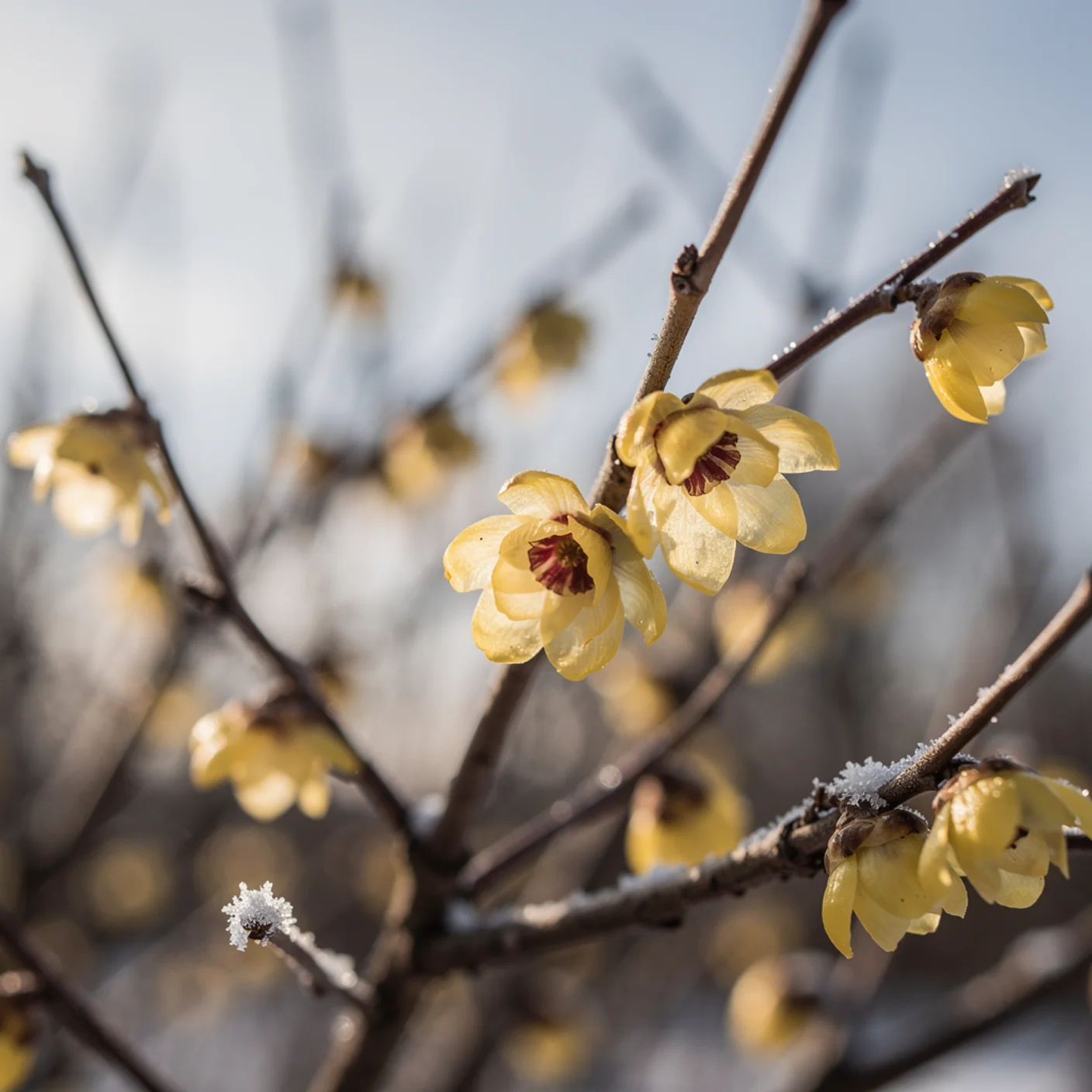
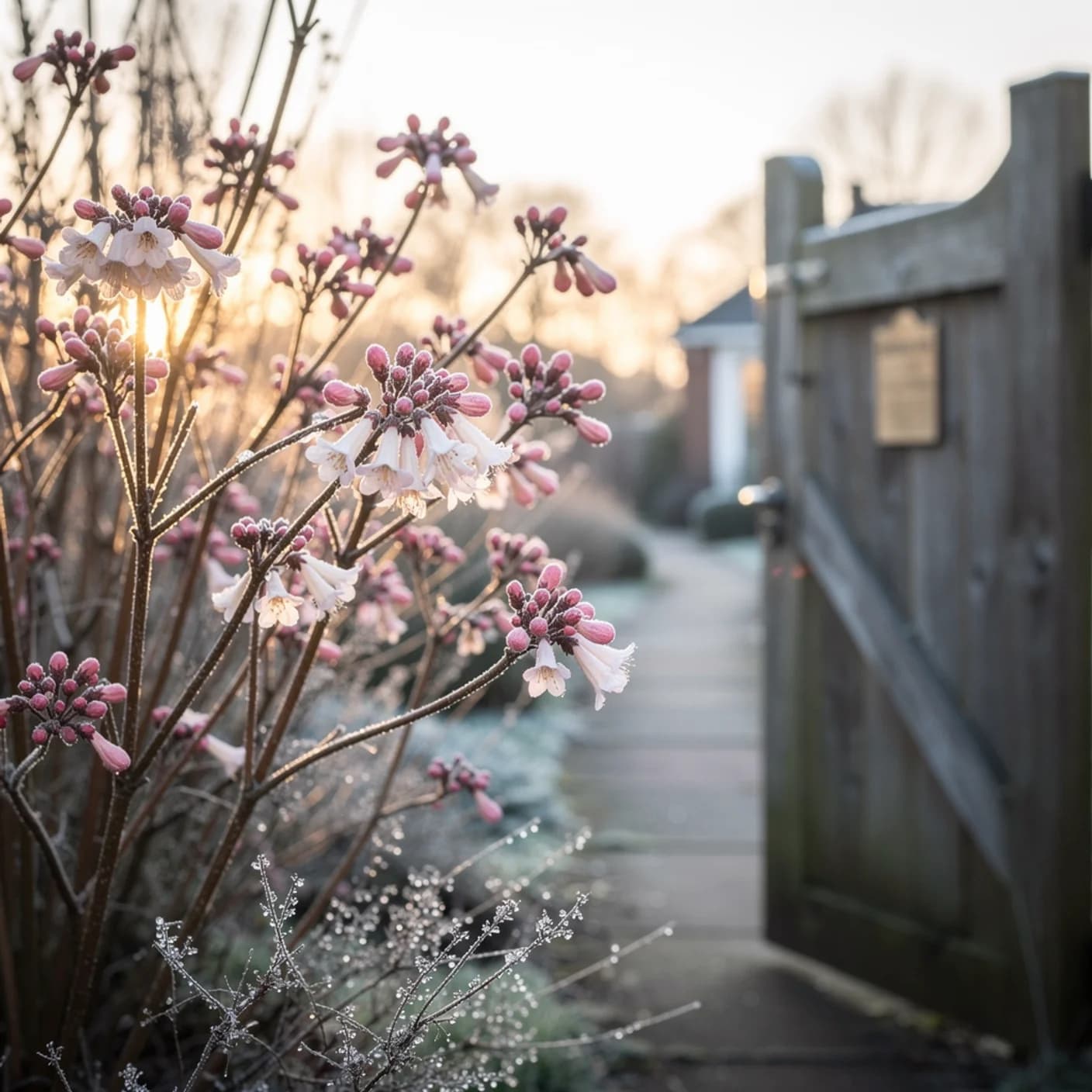
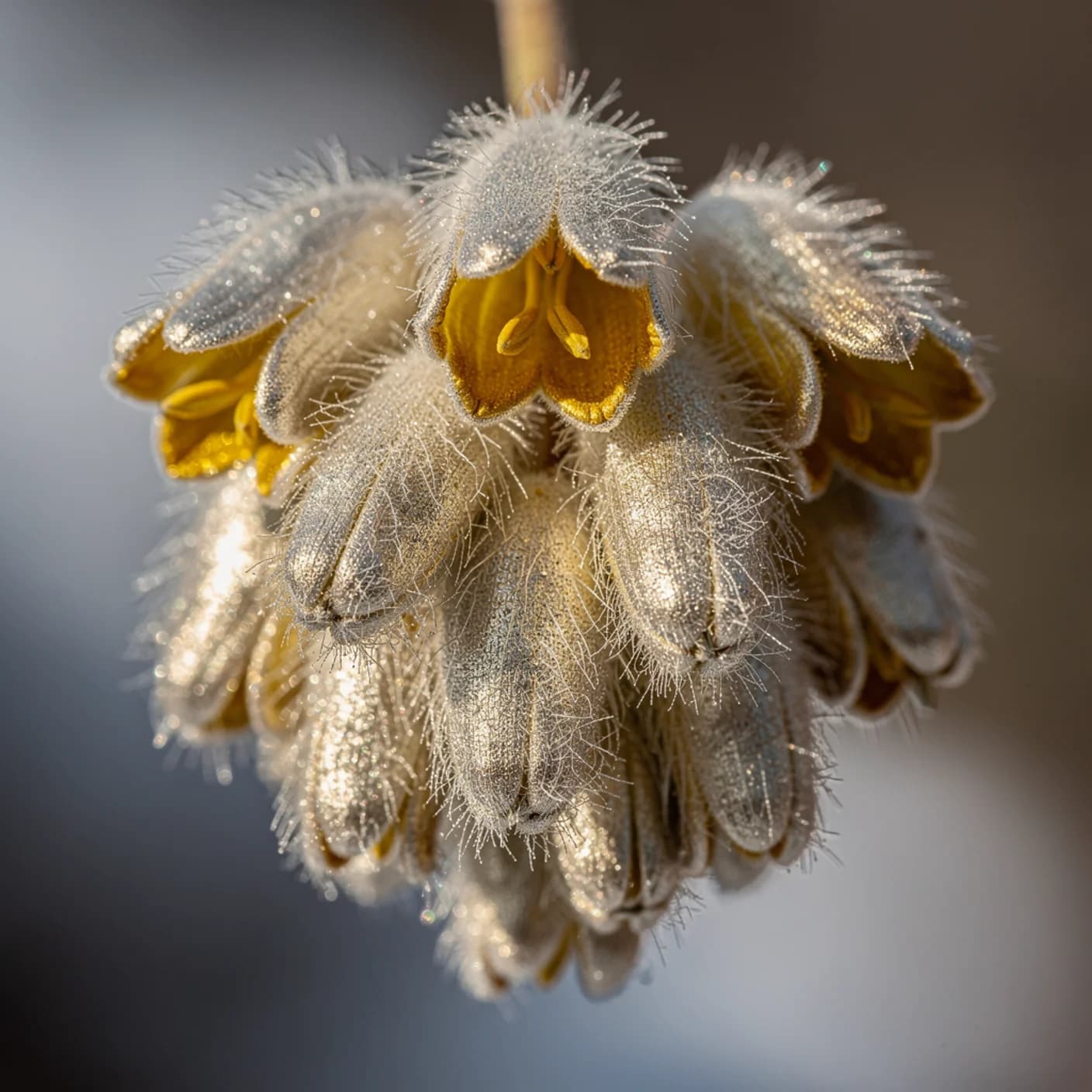
Edgeworthia chrysantha is the kind of plant that makes you stop and say 'what on earth is that?' — which, as far as I'm concerned, is the highest compliment a plant can earn. It flowers in February and March, when the shrub is completely leafless, producing clusters of small, tubular flowers that hang in rounded, drooping heads from the bare branch tips. The flowers are covered in fine, silvery-white silk on the outside, and when they open they reveal golden-yellow interiors. The effect is of small, luminous, silken lanterns dangling from bare wood.
The scent is the real revelation. Sweet, warm, honeyed, with something almost tropical underneath — gardenia-like, some people say, and they're not far wrong. It carries on the cold winter air the way only winter scents seem to, drifting across the garden with an intensity that seems wildly disproportionate to those modest little flower clusters. On a mild February afternoon, standing near a flowering edgeworthia is one of the great sensory experiences of the winter garden.
The bark is extraordinary too — the stems are covered in a tough, papery bark that was traditionally used in Japan to make high-quality paper, hence the common name 'paper bush.' Mitsumata paper, made from edgeworthia bark, is still used for Japanese banknotes. The whole plant has an architectural quality — the bare winter framework of branches, each tipped with a silk-covered flower cluster, is sculptural and strange and wonderful.
It needs a sheltered spot — a south or west-facing wall is ideal — and it's not reliably hardy everywhere in Britain. But in a warm corner, protected from cold winds, it's one of the most remarkable things you can grow. I'd call it a collector's plant, except that implies exclusivity, and I think everyone who has a sheltered wall deserves to know about it.
Where to Buy
If you want to try edgeworthia for yourself, here's where I'd point you:
We may earn a small commission from purchases made through our links, at no extra cost to you.
✿ From the folklore cabinet
Edgeworthia is named after Michael Pakenham Edgeworth, an Irish-born botanist who collected plants in India in the 1840s. In Japan, the plant is called 'mitsumata' — meaning 'three forks' — because each branch divides into three at every node, creating a distinctive, symmetrical framework. It has been cultivated in Japan since at least the seventeenth century for paper-making, and mitsumata paper is prized for its strength, smoothness, and resistance to insects. The Bank of Japan still uses it. I love the idea that a plant this beautiful also has a working life — ornamental and useful, which is a combination the Japanese understand better than most.