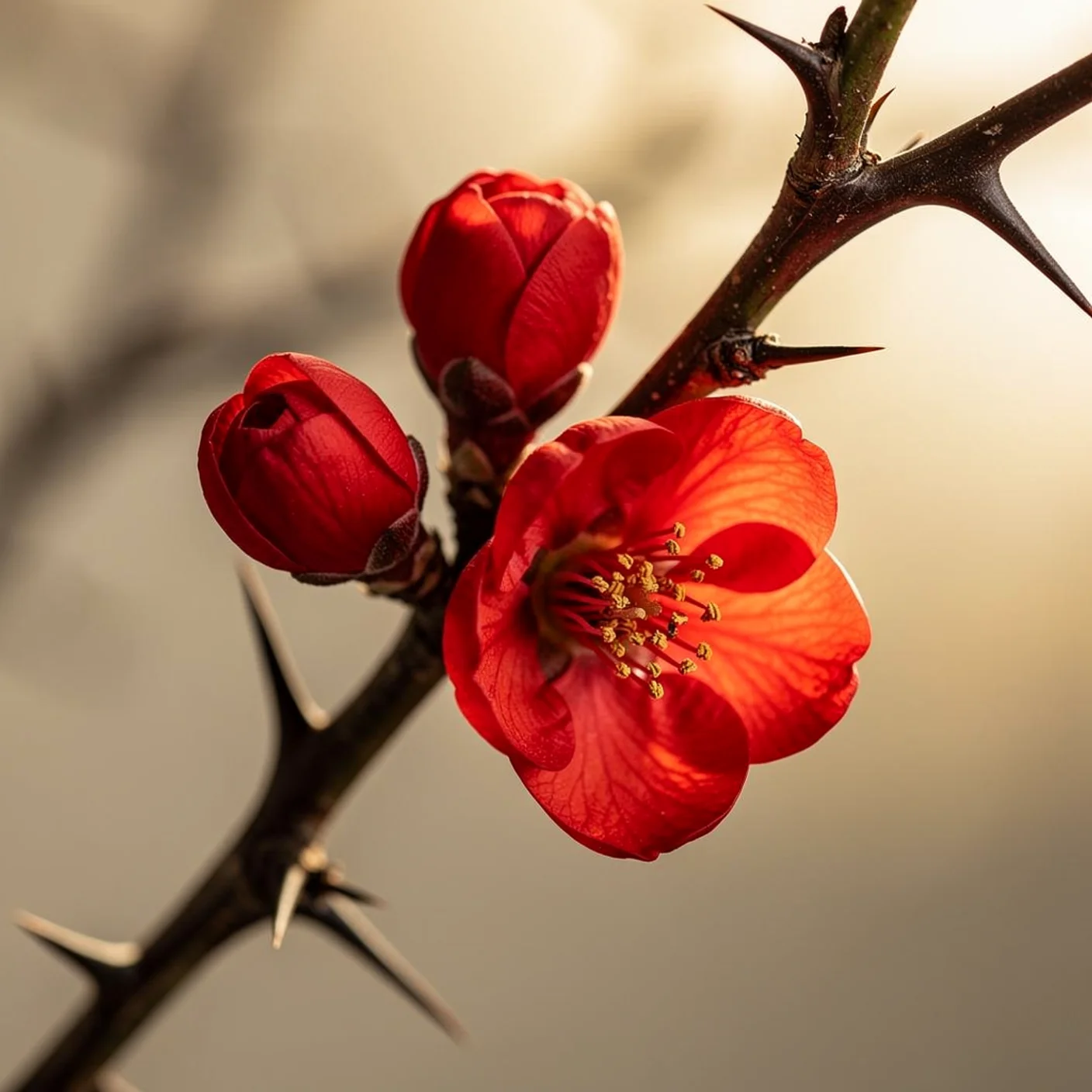
Flowering Quince
Chaenomeles Crimson and Gold
“Cut branches for the house in February, make jelly from the fruit in October. She earns her spot twice a year and asks for almost nothing.”
— ROSIE
Rosie's Take
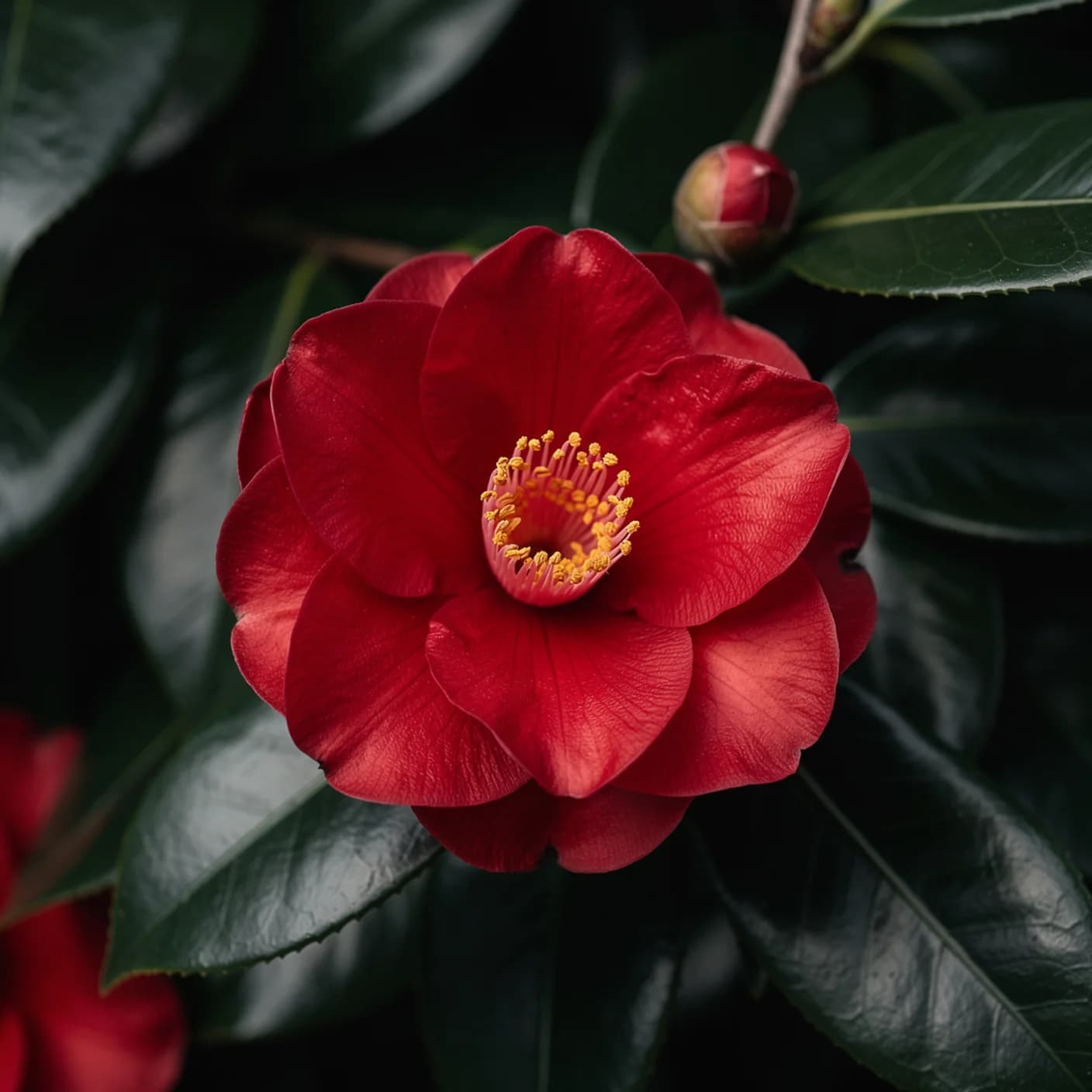
Flowering quince is the shrub I'd plant if I could only plant one thing against a wall. That's a bold claim, but hear me out. In the dead of winter — late January, early February, when you've almost forgotten what colour looks like — Crimson and Gold opens clusters of the most vivid, saturated scarlet flowers with prominent golden stamens, directly on the bare, thorny branches. No leaves. No warning. Just colour, fierce and sudden, like someone turned a light on.
The effect against a bare brick wall or a whitewashed fence is extraordinary. Each flower is about an inch across — small, but when the whole shrub is in bloom, the sheer quantity of them turns the bare branches into something theatrical. They're tough, too. Frost barely bothers them. They'll flower through snow, which is a quality I value enormously in a February plant.
She's followed by small, hard, aromatic fruits in autumn — proper quinces that you can cook into the most beautiful amber jelly. So she earns her spot twice: flowers in winter, fruit in autumn. I've made quince jelly from mine and given jars away with sprigs of rosemary tied to the lid. If that's not peak cottage, I don't know what is.
You can cut a few flowering branches and bring them inside — they force beautifully in the warmth and the flowers open further, lasting a week or more in a vase. A few bare branches studded with scarlet flowers in a tall glass jar is my go-to February arrangement. Simple, architectural, and absolutely electrifying.
She asks for almost nothing. A wall. Occasional pruning. A bit of patience in the first year. After that, she's yours forever.
Where to Buy
If you want to try flowering quince for yourself, here's where I'd point you:
We may earn a small commission from purchases made through our links, at no extra cost to you.
✿ From the folklore cabinet
Quince has been a symbol of love and fertility since ancient Greece — Aphrodite is often depicted holding one. It was traditional to give a quince as a wedding gift. The golden apple that Paris gave to Aphrodite, sparking the Trojan War, is sometimes said to have been a quince rather than an apple. Not bad for a fruit sitting on my kitchen windowsill.