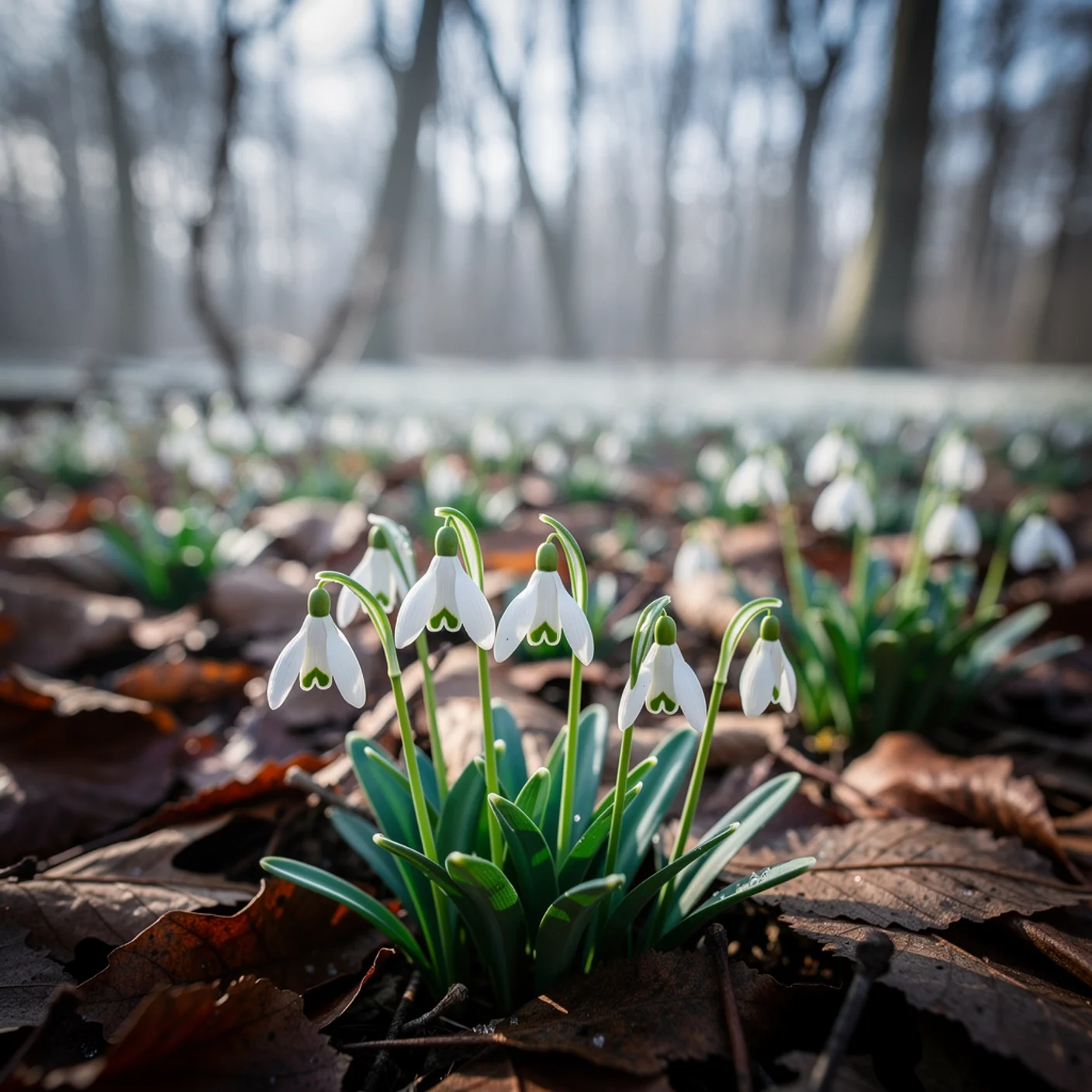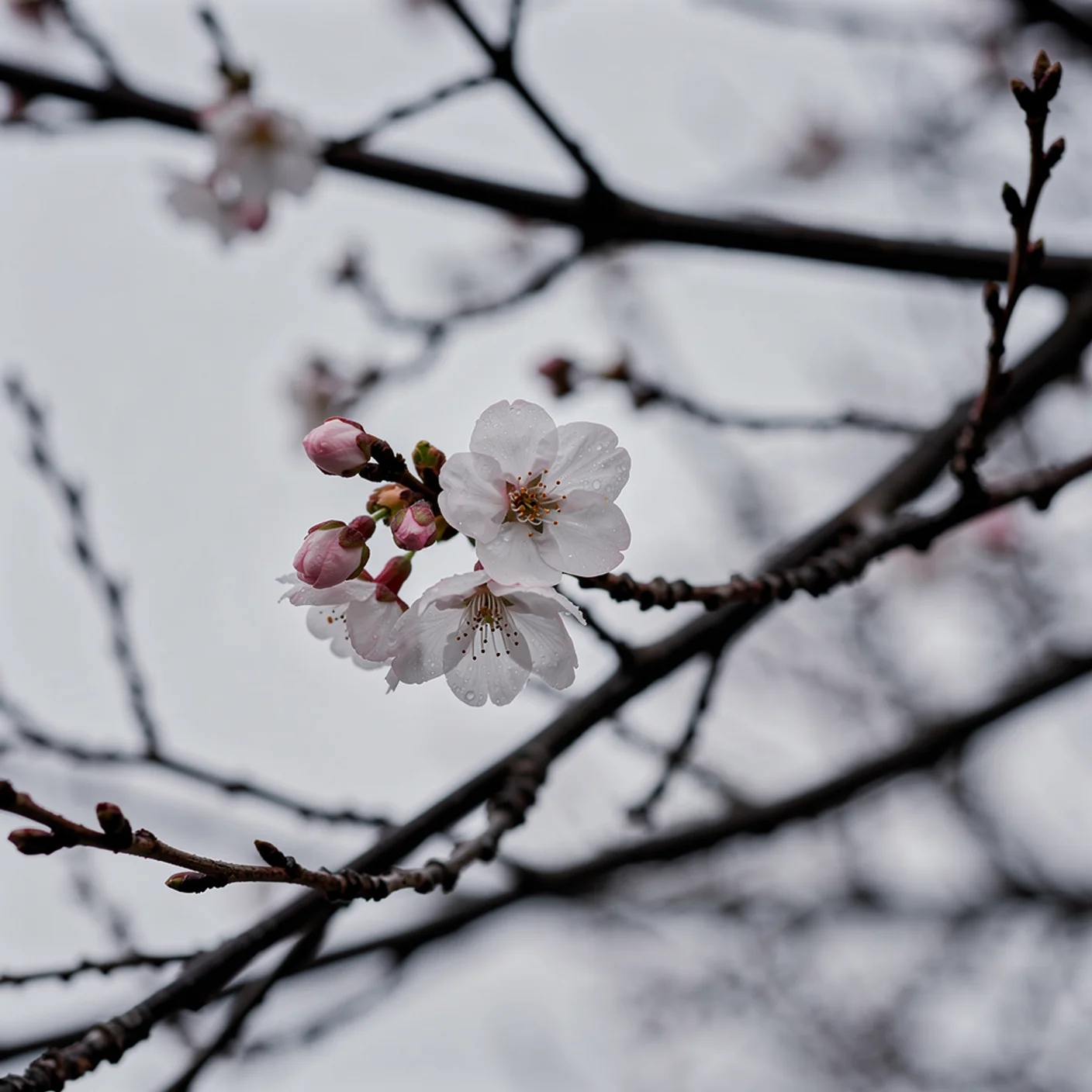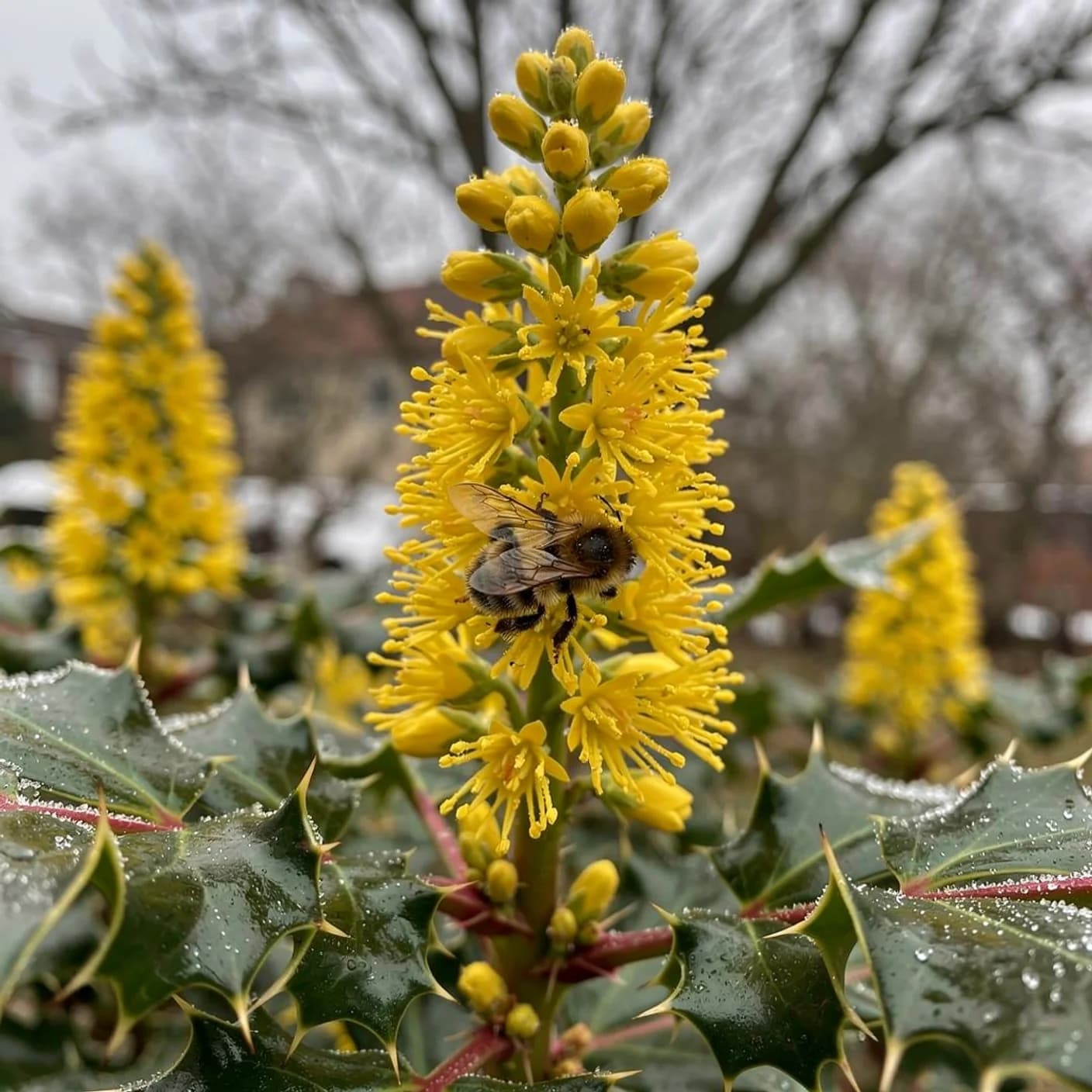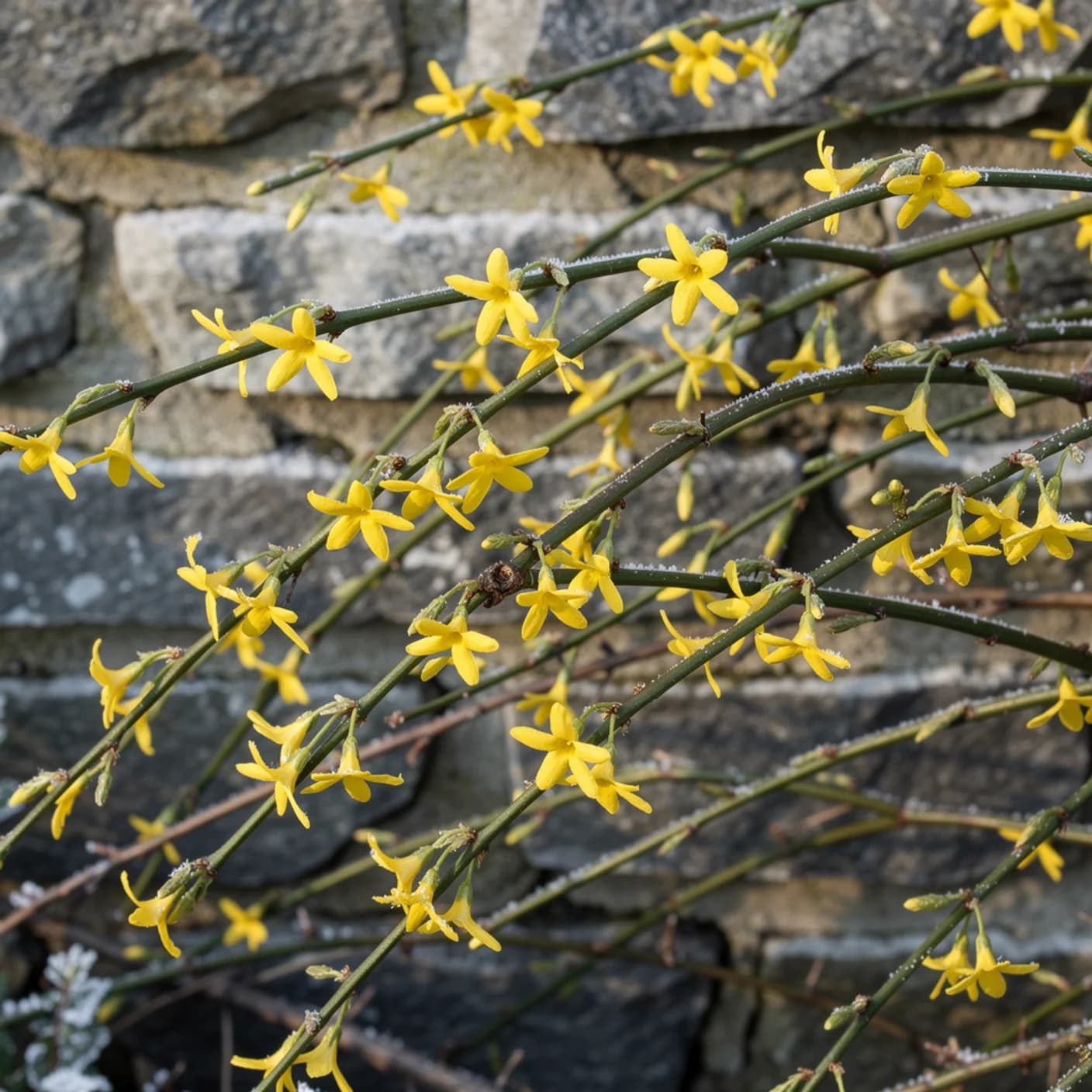
Corylopsis
Pauciflora (Winter Hazel)
“Late winter's sweetest secret. Tiny pale yellow bells with a cowslip scent that carries across the February garden when you need it most.”
— ROSIE
Rosie's Take
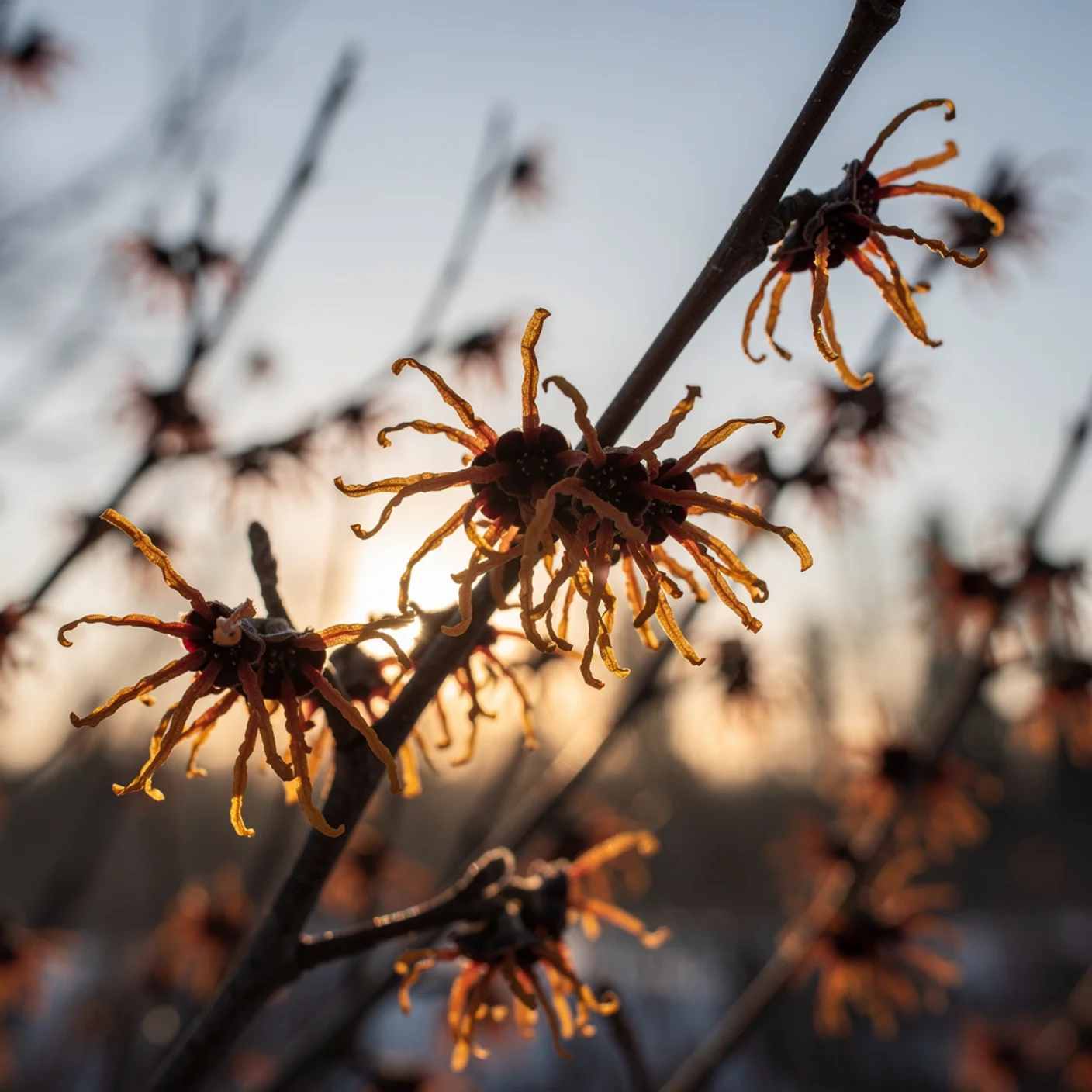
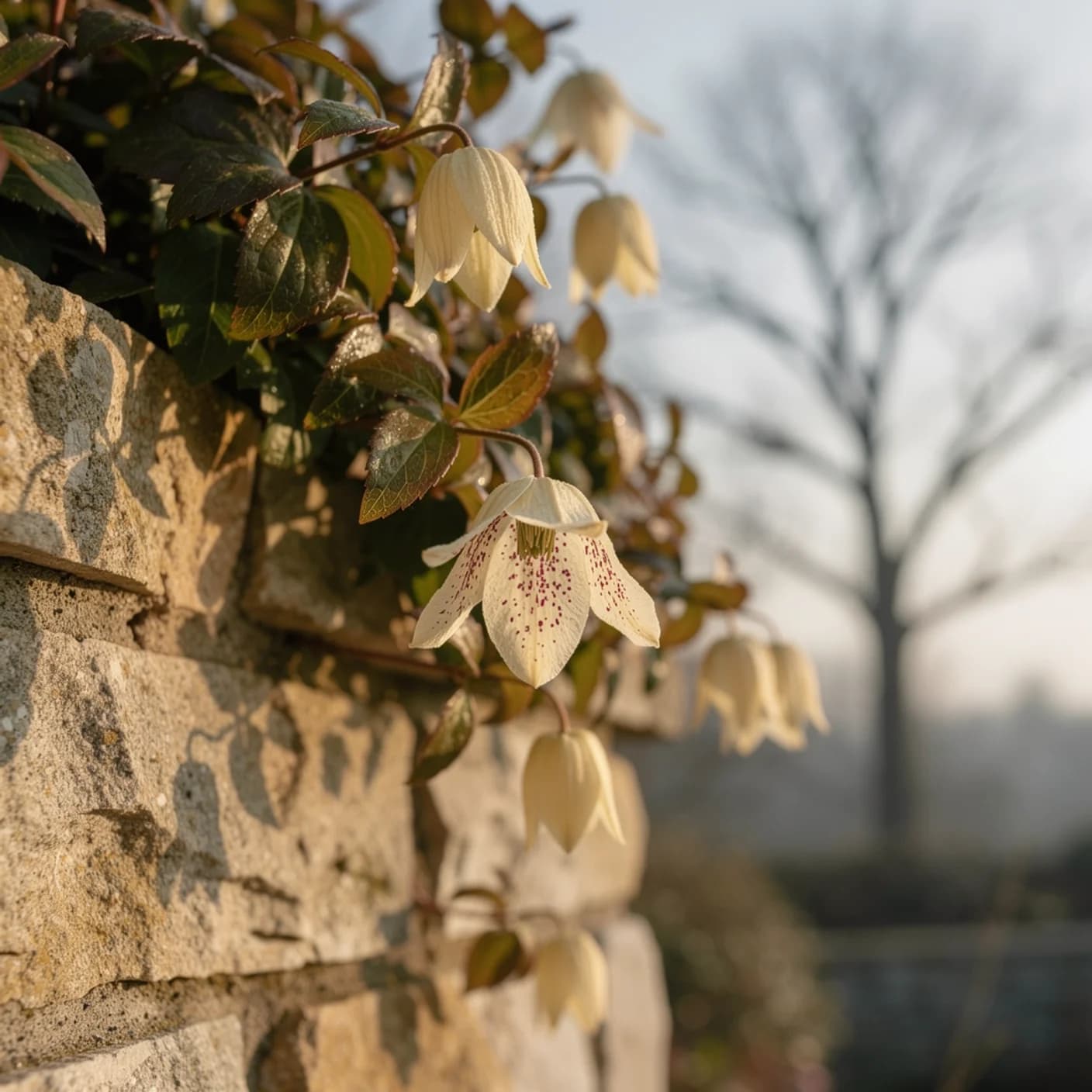
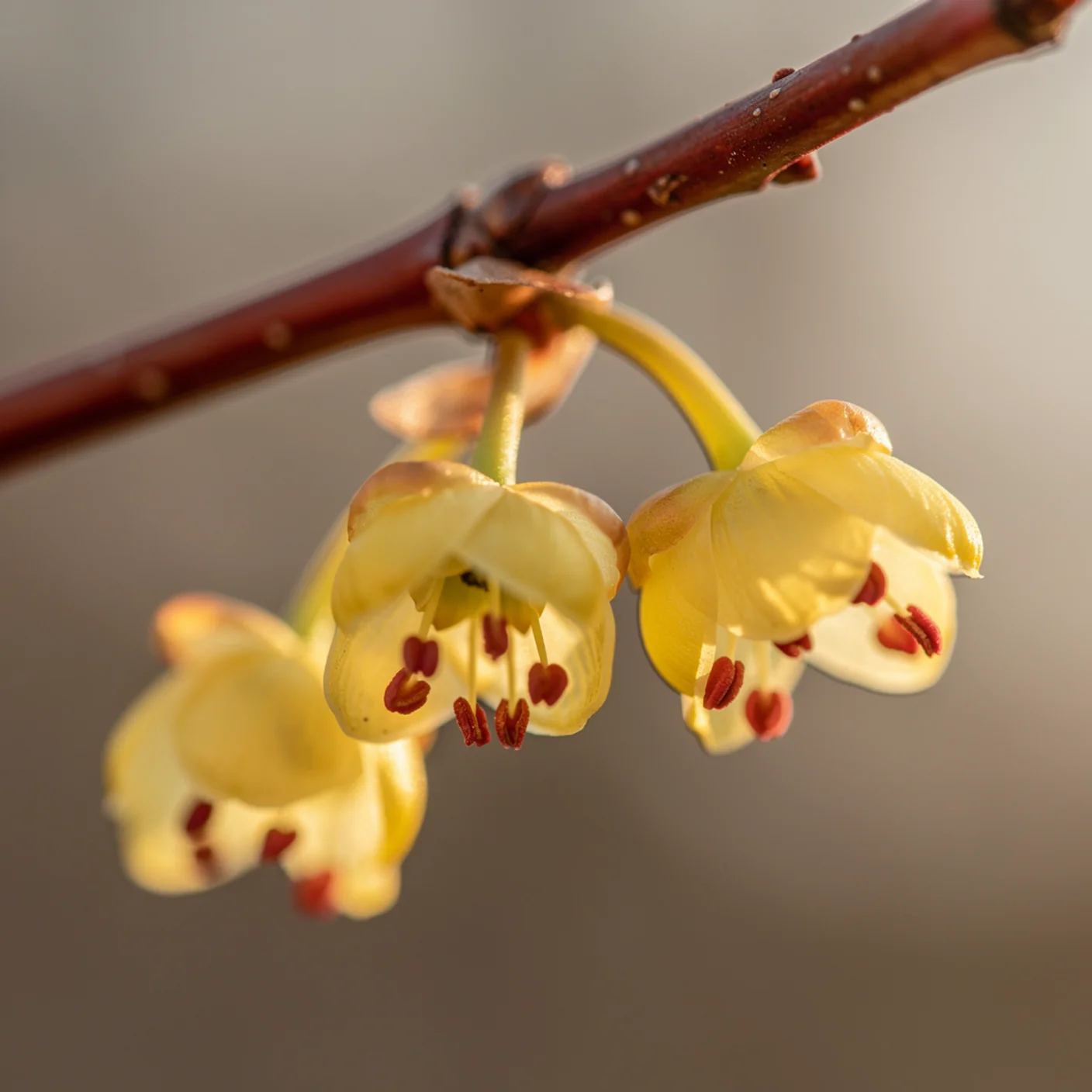
Corylopsis pauciflora is one of the garden's best-kept secrets. In late winter — February, sometimes March — this small, elegant shrub produces short, drooping clusters of pale primrose-yellow flowers on bare branches. Each cluster is delicate, barely an inch long, holding just two or three tiny, bell-shaped flowers. Individually they're almost nothing. But the cumulative effect, when the whole bush is covered in these tiny, trembling clusters, is enchanting — like a pointillist painting of early spring.
The scent is the thing that elevates it from pretty to essential. A sweet, cowslip-like fragrance that carries on cold winter air with surprising reach. I've caught it from ten feet away on a still February afternoon, that unexpected sweetness stopping me mid-step. In a season when most scents require you to press your nose against the flower, corylopsis broadcasts. It wants to be noticed.
The plant itself is compact and well-mannered — perhaps four or five feet at maturity, with a graceful, spreading habit and neat, heart-shaped leaves in summer. It needs acid or neutral soil and a sheltered spot out of cold winds, which means it won't work everywhere. But where it does work, it rewards you with one of the most charming early-spring performances in the shrub world.
I planted mine where I pass it every morning on the way to the shed, so I get that burst of fragrance on the coldest, greyest mornings of the year. Some plants you position for visitors. This one I positioned for myself. The most generous thing a gardener can do is plant something that makes the worst months better.
Where to Buy
If you want to try corylopsis for yourself, here's where I'd point you:
We may earn a small commission from purchases made through our links, at no extra cost to you.
✿ From the folklore cabinet
Corylopsis means 'looking like Corylus' — hazel — because the leaves bear a resemblance to hazel leaves. The common name 'winter hazel' reinforces the connection, though the plants are unrelated. It's native to Japan, where it grows in mountain woodlands and is appreciated as one of the earliest harbingers of spring. 'Pauciflora' means 'few-flowered,' referring to the small number of flowers per cluster. It was introduced to Western gardens in the late nineteenth century by the great plant collector Charles Maries, who sent specimens from Japan to the Veitch nursery in Devon. It's been quietly delighting a small circle of devoted admirers ever since.