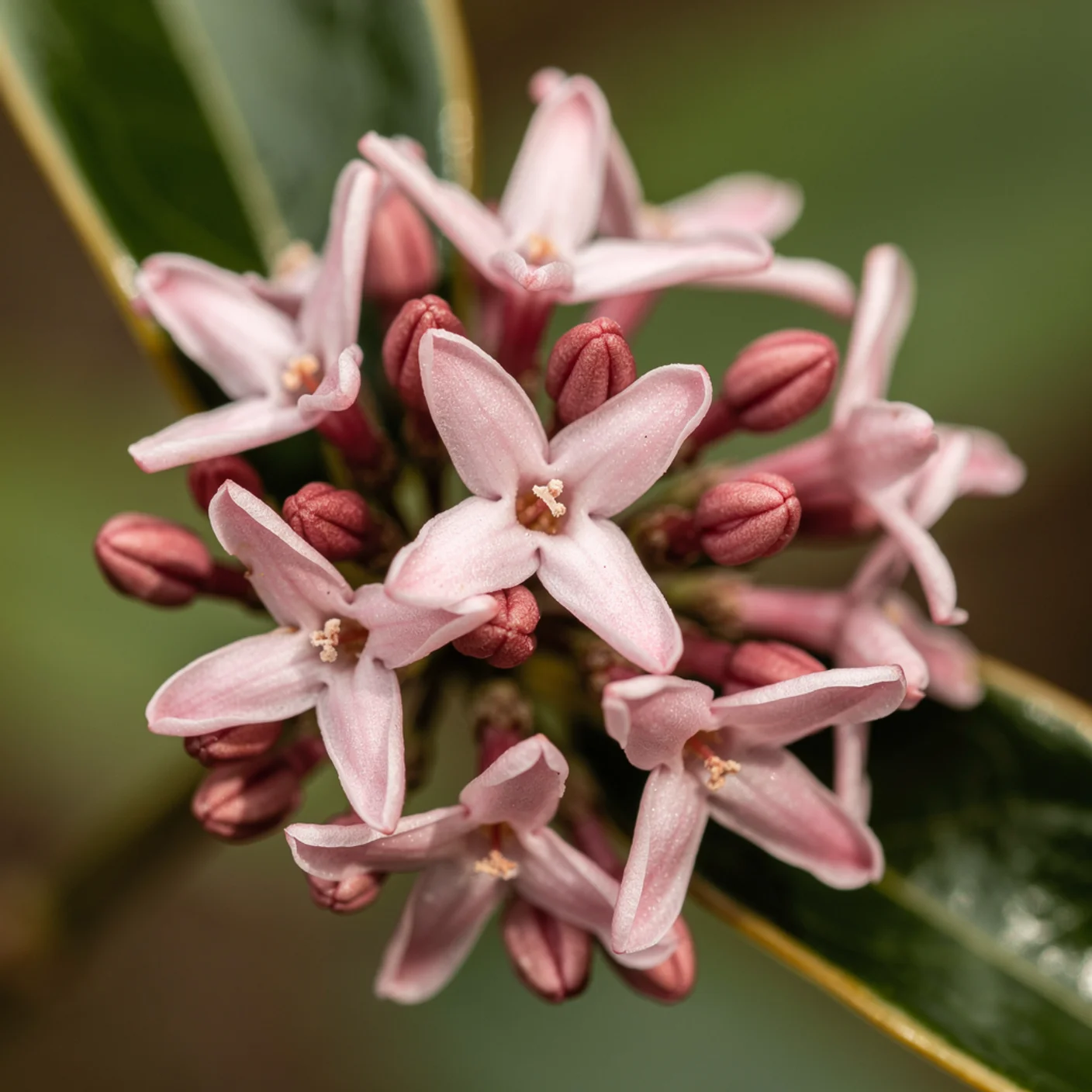
Daphne
Odora
“Winter's most extravagant secret. One small shrub will fill your February with a perfume that rivals anything summer can offer.”
— ROSIE
Rosie's Take
If I could bottle one scent from my garden, it would be Daphne odora on a still February afternoon. It's the kind of fragrance that stops you mid-stride — rich, sweet, with a citrus sharpness underneath and something almost tropical that has no business being present in an English garden in the middle of winter.
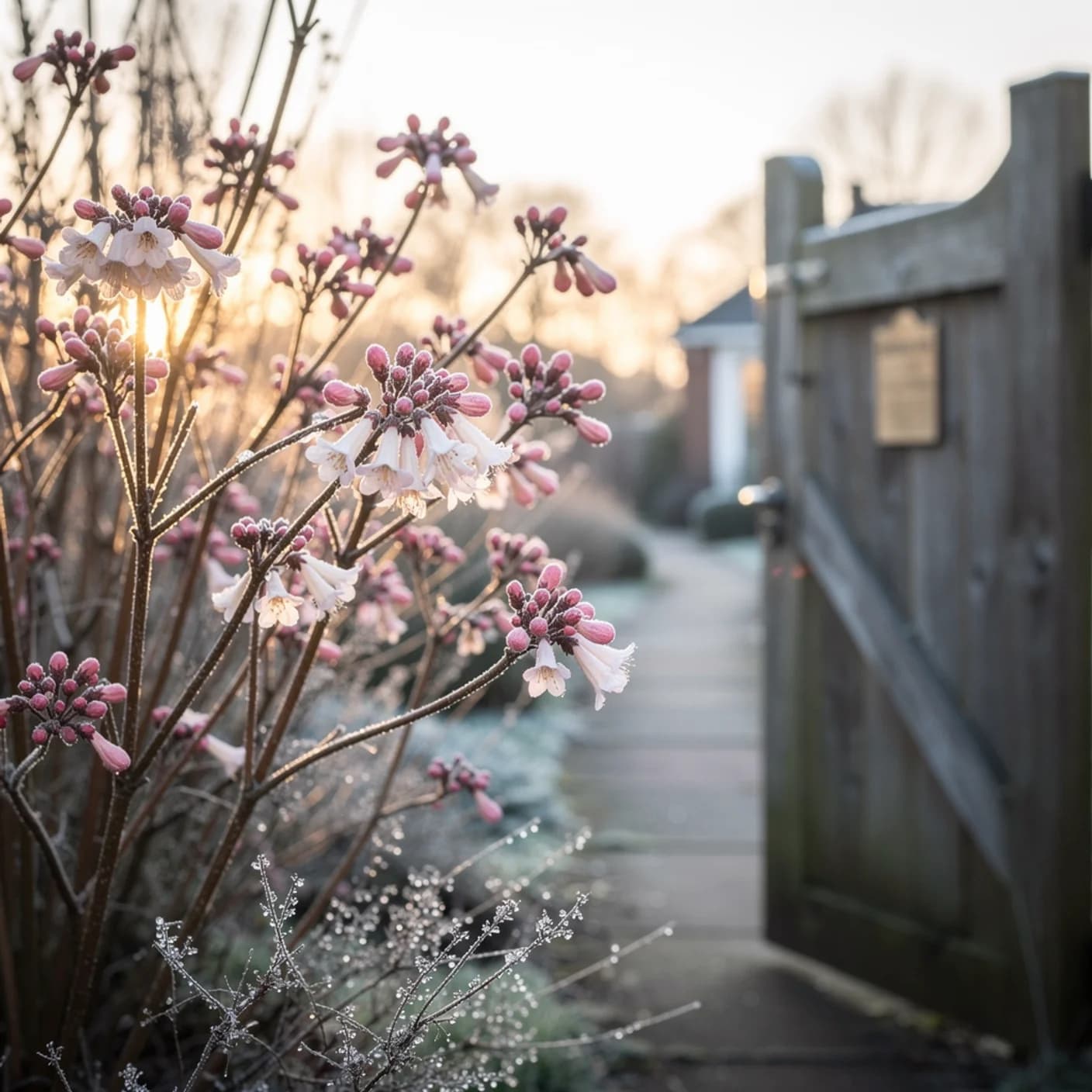
The variegated form, 'Aureomarginata,' is the one I grow, with glossy dark leaves edged in pale gold, which means it looks good even when it's not in flower. But when those clusters of deep pink buds open to reveal pale pink, waxy, star-shaped flowers in late January or February, the combination of that improbable scent and those jewel-like blooms is genuinely one of the highlights of the whole gardening year.
It's an evergreen shrub, about a metre tall at most, and it wants a sheltered spot out of cold winds. Against a south-facing wall is ideal — somewhere you walk past often, because you want to catch that scent as many times as possible during the few weeks it flowers.
I cut a tiny sprig for the kitchen windowsill and it perfumes the whole room. Just one small stem. The scent-to-size ratio is absurd. Daphnes have a reputation for being temperamental — they can drop dead for no apparent reason after years of contentment — but I've had mine for six years now and we seem to have an understanding. I try not to disturb it, and it fills my February with the most extraordinary perfume.
Where to Buy
If you want to try daphne for yourself, here's where I'd point you:
We may earn a small commission from purchases made through our links, at no extra cost to you.
✿ From the folklore cabinet
Daphne is named after the nymph from Greek mythology who was turned into a laurel tree to escape Apollo's pursuit — though confusingly, this plant isn't a laurel. The name stuck anyway. In Chinese and Japanese gardens, Daphne odora has been treasured for centuries for its winter fragrance. It's sometimes called 'winter daphne,' which is accurate but doesn't begin to capture what that scent does to you on a cold afternoon.