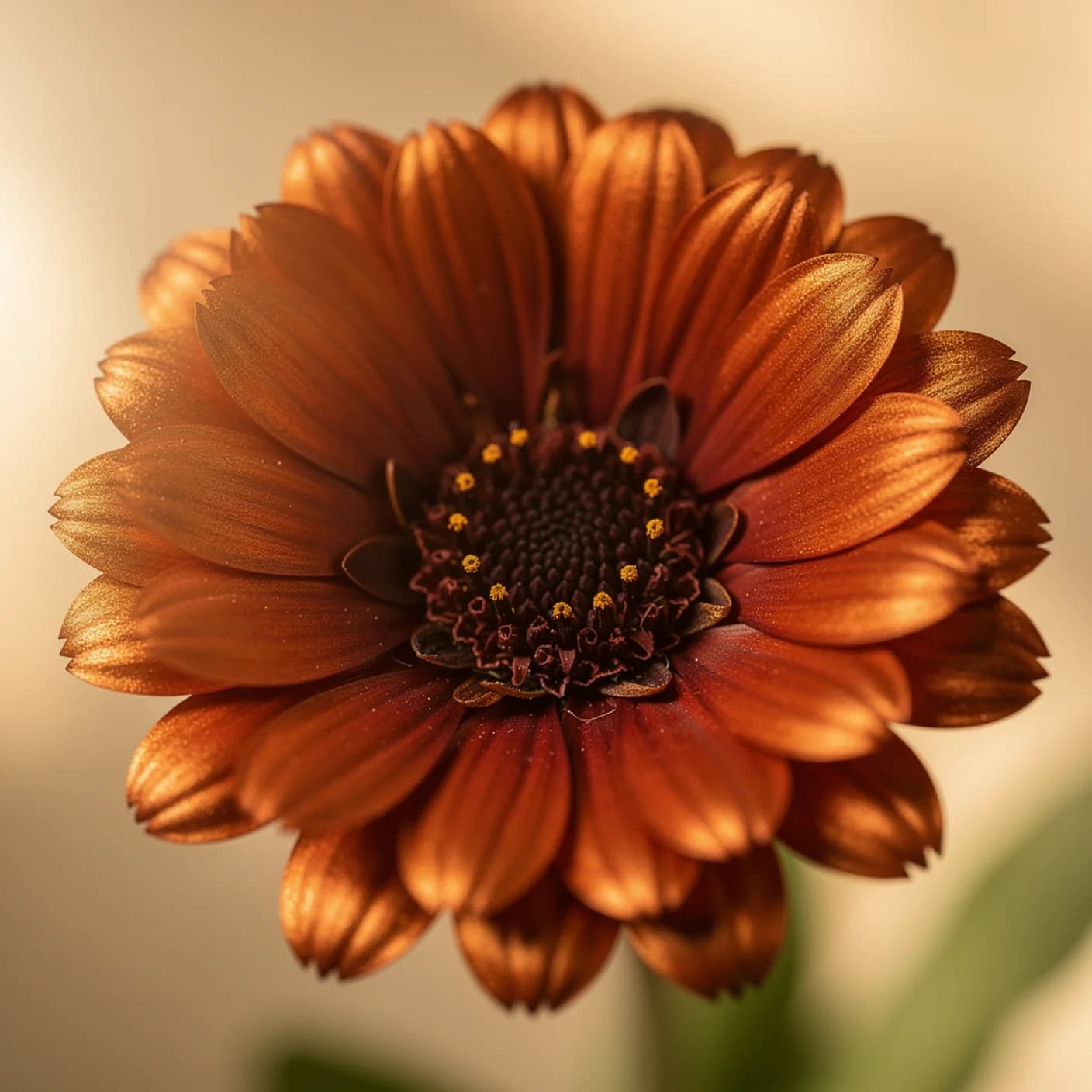
Calendula
Indian Prince
“The beginner's flower that never stops giving. 'Indian Prince' costs pennies to grow and fills your summer with warm, edible, endlessly cheerful colour.”
— ROSIE
Rosie's Take
Calendula is the flower I'd recommend to anyone who's never grown anything before and thinks they can't. Sow the seeds, stand back, and within weeks you'll have these cheerful, open-faced flowers in shades of orange, gold, and warm amber that keep coming and coming and coming until the first frosts.
'Indian Prince' is the variety I grow — darker and more interesting than the typical marigold orange, with petals that are a deep, burnished copper-orange on top and a smoky, almost mahogany reverse. When they catch the light, they have this gorgeous two-tone effect that's far more sophisticated than calendula has any right to be.
The petals are edible, which I love. Scatter them over a salad or float them in a soup and you've got this instant hit of colour that makes a Tuesday evening dinner feel slightly ceremonial. They taste mildly peppery — nothing dramatic, but the visual is everything.
As a cut flower, they're wonderfully cheerful. They don't last as long as some — five or six days — but they're free, they're abundant, and they have that slightly sticky, resinous quality to the stems that makes the whole bunch smell like warm greenhouses and summer. I cut armfuls of them from June onwards and put them in jars on every surface. They cost nothing and they give everything.
Where to Buy
If you want to try calendula for yourself, here's where I'd point you:
Also available as seeds — Calendula officinalis 'Fiesta Gitana Mixed' - Seeds →
We may earn a small commission from purchases made through our links, at no extra cost to you.
✿ From the folklore cabinet
Calendula takes its name from the Latin 'calendae,' meaning the first day of the month — because in Mediterranean climates it flowers almost continuously. Medieval monks grew it in monastery gardens as 'Mary's gold,' and it's been used as a healing herb for centuries. The petals were used to colour cheese and butter, which explains why they were sometimes called 'poor man's saffron.'