Sweet William
Dianthus barbatus
“Sow seed in July, pick armfuls the following June. The clove scent and vintage charm will make your kitchen feel like someone else's lovely memory.”
— ROSIE
Rosie's Take
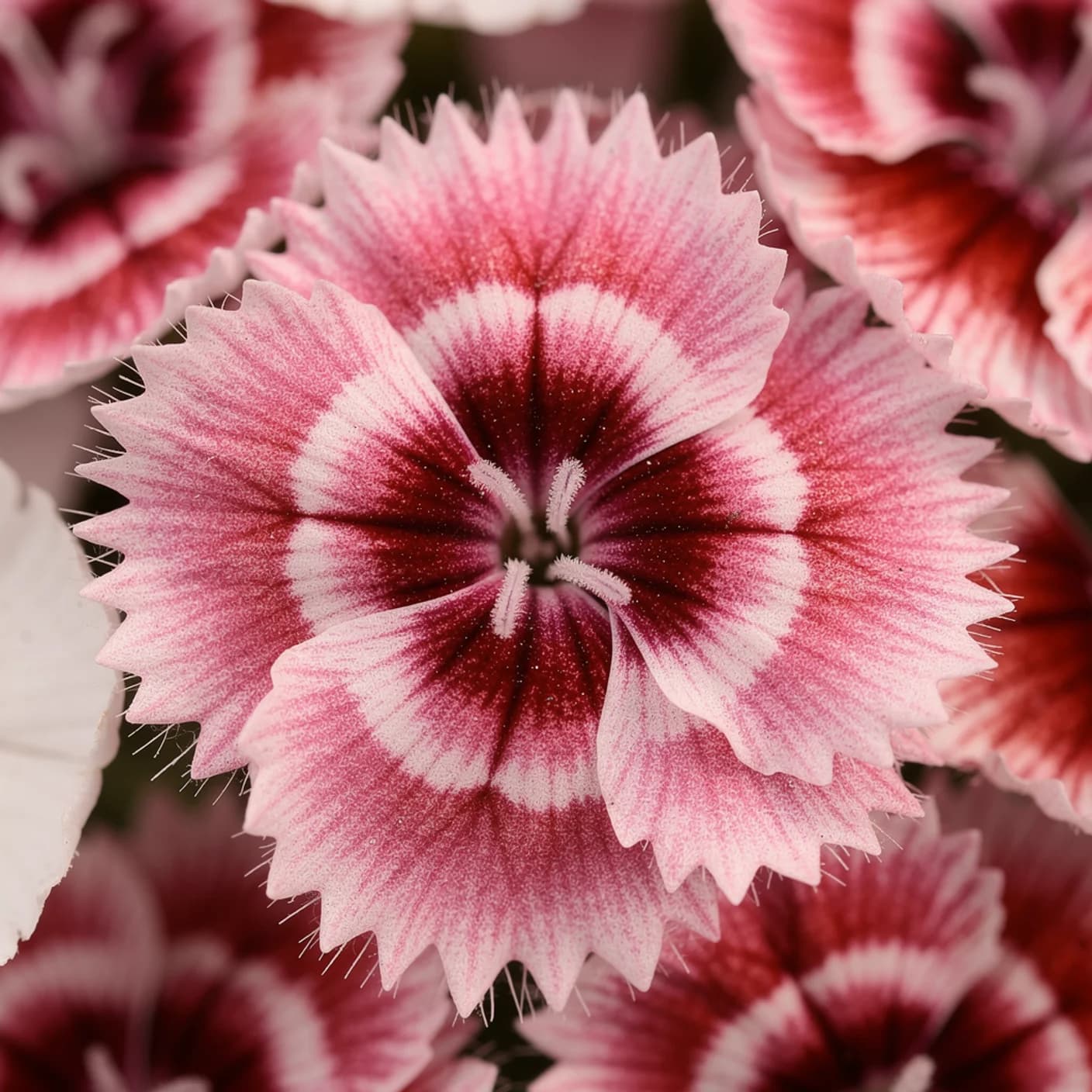
Sweet William is the flower that makes me nostalgic for a childhood I didn't actually have — one with a proper cottage garden, a rickety gate, and a grandmother who knew the names of everything. There's something about those flat-topped clusters of densely packed, fringed flowers in patterned reds, pinks, and whites that feels like a direct line to a more innocent age of gardening.
The patterns are what I love most. Each tiny flower in the cluster has its own markings — concentric rings, a dark eye, a pale edge, or a contrasting picotee border. The effect when you look at a whole head close up is almost kaleidoscopic. And the colour range is extraordinary — from the deepest, richest crimson through salmon pink to pure white, often with several colours in a single head.
They're clove-scented, which puts them in the dianthus family alongside carnations and pinks. The scent is warm, spicy, and surprisingly strong from something so unassuming. I pick them for the kitchen all through June and July and the house smells faintly of cloves and summer.
They're biennials or short-lived perennials, which means they flower in their second year from seed. I sow a pinch every July and by the following summer I've got these robust, generous plants covered in flowers. They self-seed too, popping up in gravel and pavement cracks with the casual confidence of a flower that knows it belongs.
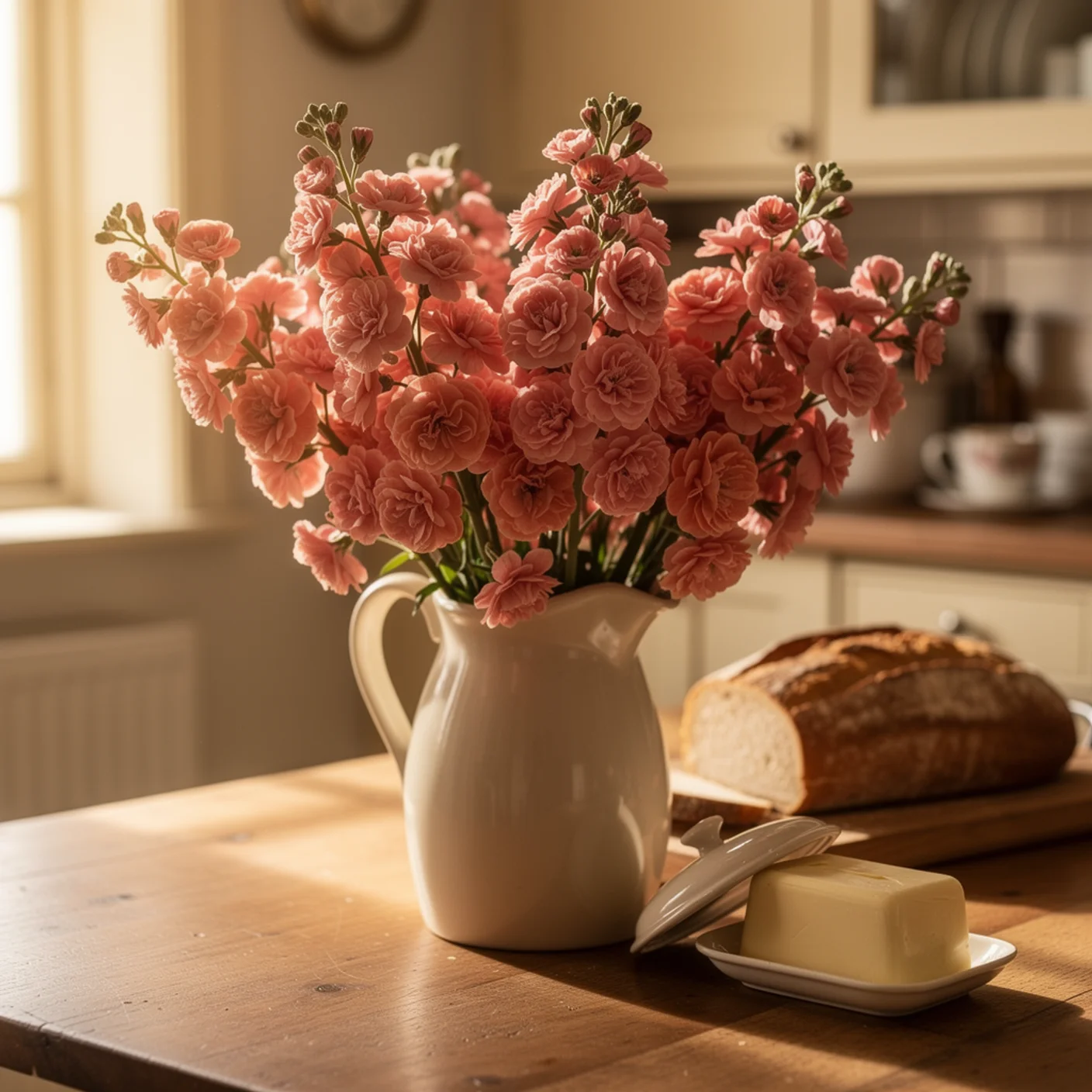
As a cut flower, they're underrated. Those flat-topped heads last a good week in water, they fill space without looking stiff, and they bring a vintage, cottage-garden quality to any arrangement. A jam jar of Sweet William on a windowsill is about as English as it gets.
Where to Buy
If you want to try sweet william for yourself, here's where I'd point you:
Also available as seeds — Dianthus barbatus nigrescens 'Sooty' - Seeds →
We may earn a small commission from purchases made through our links, at no extra cost to you.
✿ From the folklore cabinet
Nobody's entirely sure which William the flower is named after — candidates include Shakespeare, William the Conqueror, and St William of York. My favourite theory is that it's a corruption of the French 'oeillet' meaning little eye, referring to the eye-like patterns on each tiny flower. But I prefer to think there was a real William somewhere, and that he was sweet.