Gaura
Whirling Butterflies
“Pure movement and grace. Gaura softens everything it grows near, flowers for five months, and asks for nothing but sun and good drainage.”
— ROSIE
Rosie's Take
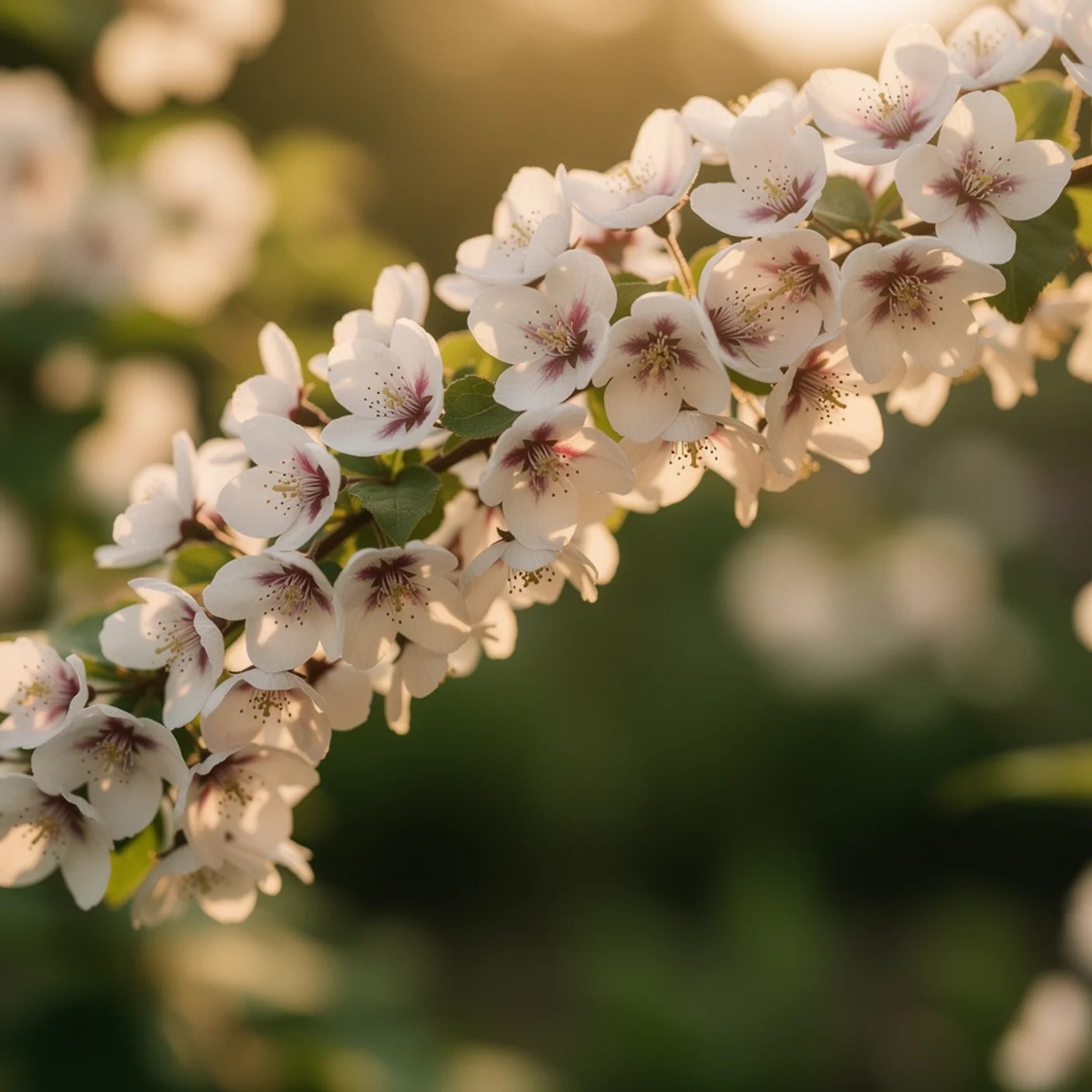
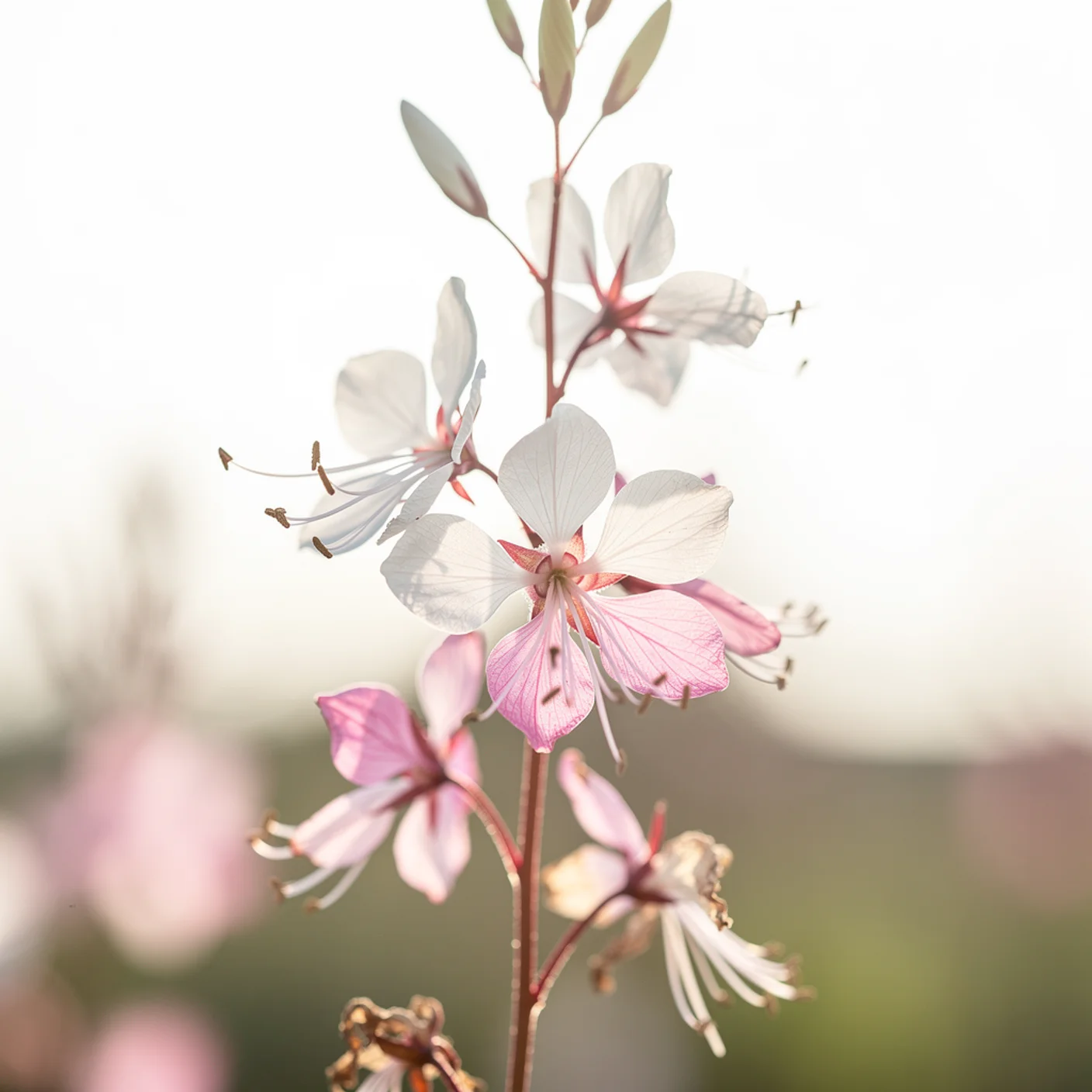
Gaura is the plant I recommend to anyone who says their garden feels heavy or static. It is movement made physical — long, slender, wiry stems that sway in the slightest breeze, carrying tiny white flowers that genuinely look like small butterflies caught mid-flight. On a warm evening with a gentle wind, a clump of gaura doesn't just move, it dances. It's the most graceful thing in the border.
'Whirling Butterflies' is the classic white form, and in my garden it does something nothing else manages: it softens everything around it. Plant it between roses and they look less stiff. Thread it through dahlias and they look less solid. It's the plant equivalent of candlelight — it doesn't change what's there, it just makes everything look better.
The flowers open white with a blush of pink that deepens as they age, so each stem carries a gradient — fresh white at the top, soft rose-pink below, and faded blooms dropping off naturally. No deadheading needed. It flowers from June right through to the first frosts, which is a remarkable run. In October, when most perennials have called it a day, gaura is still going, still swaying, still producing those little butterfly flowers.
It comes from the prairies of Texas and Louisiana, which tells you what it wants — sun and sharp drainage. In a damp, heavy clay it'll rot over winter. In a warm, gravelly spot it's a perennial that comes back year after year, self-seeding gently into any gap it can find. I let the seedlings stay. They always seem to choose the right place, as if they know where the border needs softening.
Where to Buy
If you want to try gaura for yourself, here's where I'd point you:
We may earn a small commission from purchases made through our links, at no extra cost to you.
✿ From the folklore cabinet
Gaura is now officially reclassified as Oenothera lindheimeri — making it an evening primrose relative, which you'd never guess by looking at it. The original name gaura comes from the Greek 'gauros' meaning superb or proud, though I'd have chosen something meaning 'graceful' instead. It's native to the southern United States and was introduced to European gardens in the mid-nineteenth century. Ferdinand Lindheimer, the German-born botanist it's named for, was known as the 'father of Texas botany.' He'd have liked knowing his namesake flower became a favourite in English cottage gardens.