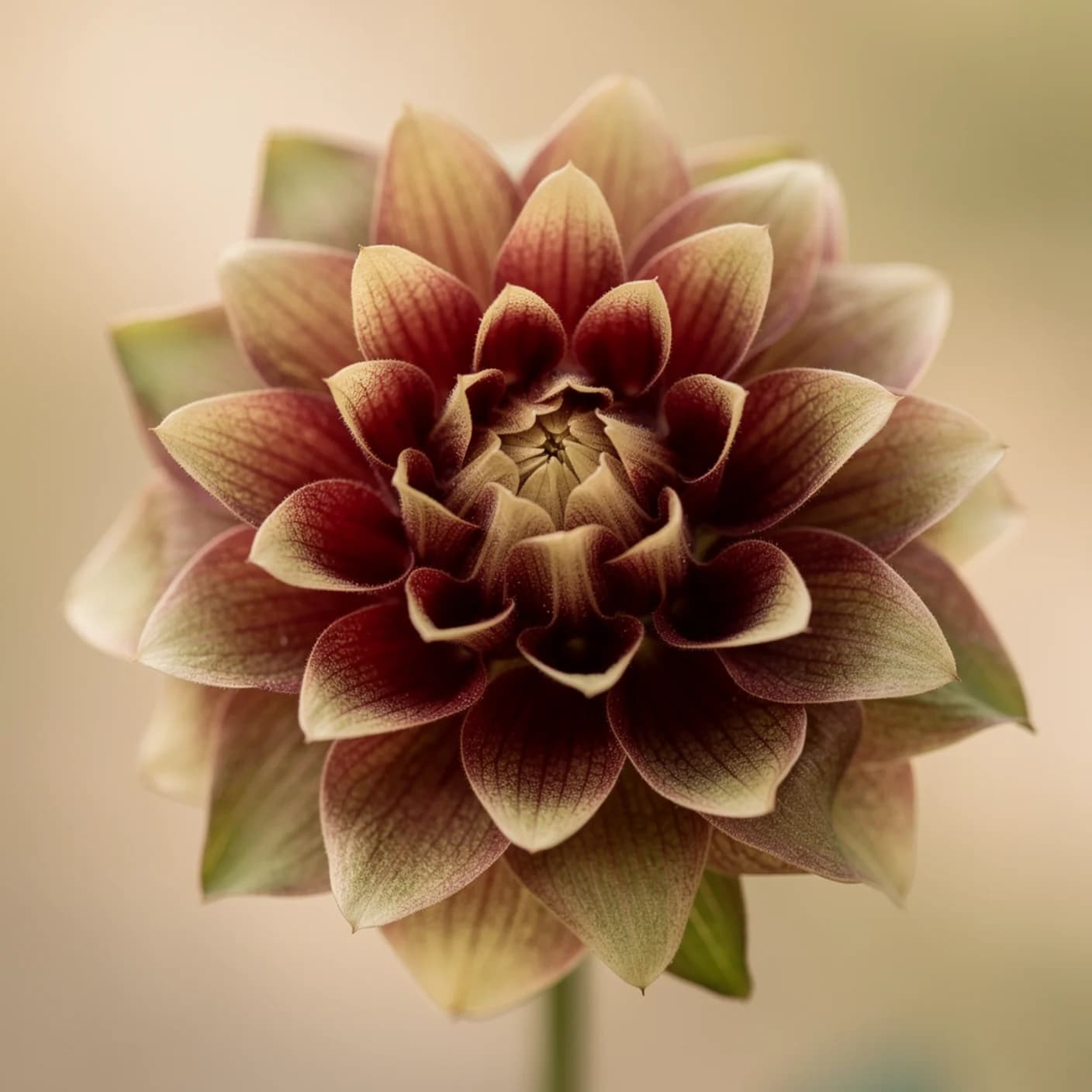
Aquilegia
Nora Barlow
“The cottage garden eccentric. 'Nora Barlow' self-seeds, cross-breeds, and produces flowers that look like they belong in a curiosity cabinet.”
— ROSIE
Rosie's Take
Aquilegias are among the most obliging plants in any garden. They seed themselves about, they tolerate shade, they ask for nothing, and in late spring they produce these impossibly intricate flowers that look like they were designed by someone who couldn't decide between a star and a bell and ended up making both.
'Nora Barlow' is the double variety, and it's genuinely eccentric. Each flower is a dense pompom of narrow, spurred petals in red and green, with creamy-white tips — like a tiny, elaborate firework frozen mid-burst. It shouldn't work. The colour combination sounds like Christmas. But in the garden, surrounded by ferny foliage and the general lushness of late May, it's captivating.
I let mine self-seed, which means they cross with my other aquilegias and produce all sorts of unexpected offspring. Sometimes the seedlings are exactly like the parent. Sometimes they're something entirely new — a pale lavender thing with long spurs, or a near-black single that appeared from nowhere. It's like a very slow, very pretty lottery.
They're lovely cut, though not long-lived in the vase — four or five days at best. But those spidery, nodding flowers bring a texture to a mixed bunch that nothing else replicates. I pair them with grasses, cow parsley, and whatever else the garden is offering that week. They're the kind of flower that makes a casual, gathered-from-the-garden arrangement look effortless.
Where to Buy
If you want to try aquilegia for yourself, here's where I'd point you:
Also available as seeds — Aquilegia 'Nora Barlow' - Seeds →
We may earn a small commission from purchases made through our links, at no extra cost to you.
✿ From the folklore cabinet
Aquilegia means 'eagle' in Latin — the spurred petals were said to resemble eagle talons. In Elizabethan England, it was associated with foolishness, perhaps because of the jester's-cap shape of the flowers, and Shakespeare gave columbines to Ophelia in Hamlet. Nora Barlow herself was Charles Darwin's granddaughter, which gives this particular variety a rather distinguished pedigree.