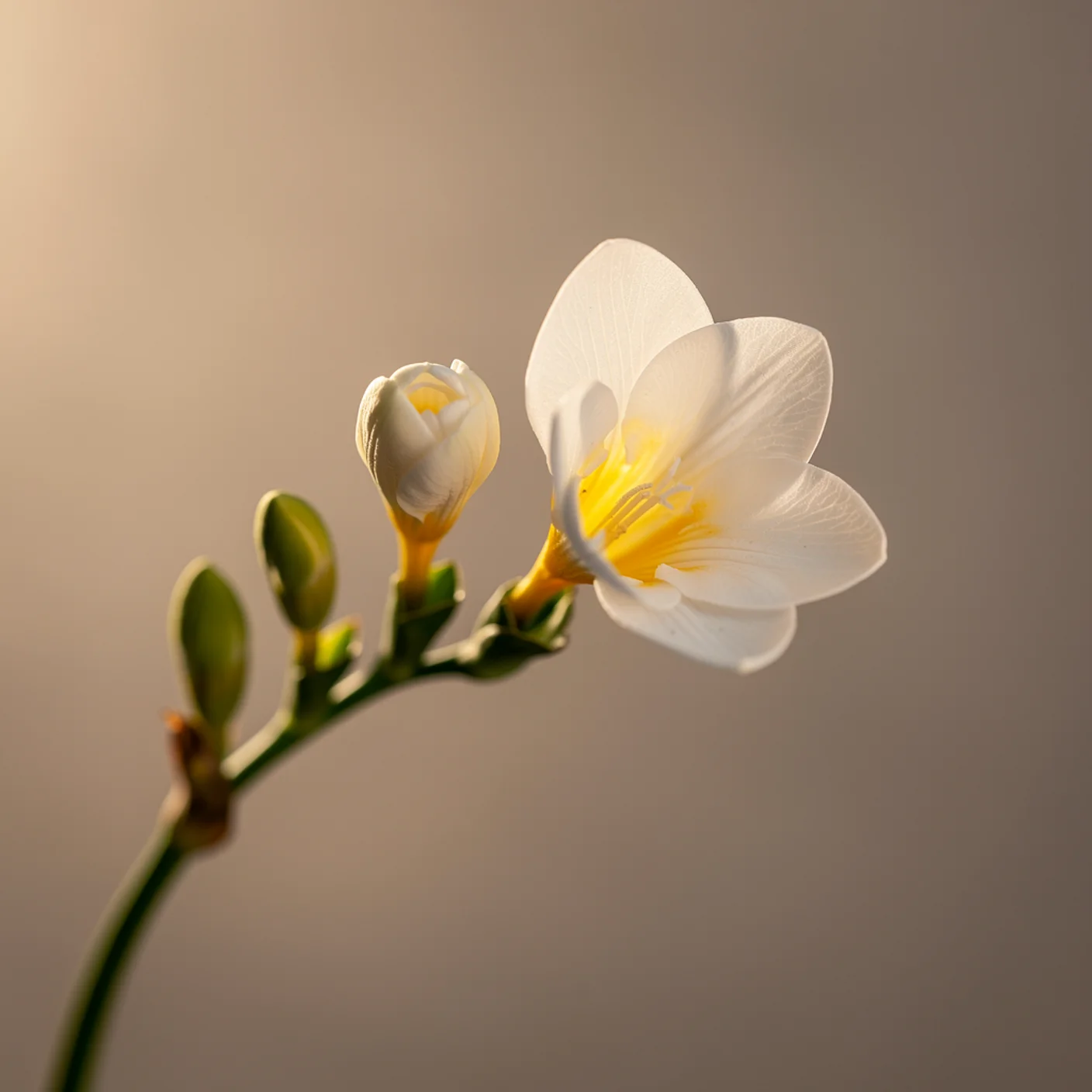
Freesia
Mixed
“The best value scented flower you can buy. White or yellow for maximum fragrance. Put them where you'll be pleasantly ambushed by the scent.”
— ROSIE
Rosie's Take
Freesia is the flower I associate most powerfully with my mother's kitchen. She always had a bunch on the windowsill in spring — those elegant, one-sided sprays of trumpet-shaped flowers in yellow or white — and the scent would meet you at the door. Sweet, clean, citrusy, with a freshness that smelled like spring itself had found a way indoors.
They're one of the most popular cut flowers in Britain and I understand why. The scent-to-size ratio is extraordinary — a handful of slender stems can perfume a whole room. And they last well, easily a week, with new buds continuing to open along each stem long after the first flowers have faded.
The colour range goes far beyond the classic yellow and white — you can find them in soft pink, deep purple, orange, red, and a creamy apricot that I'm particularly fond of. But for sheer scent power, the whites and yellows are unbeatable. The more intensely coloured varieties often sacrifice fragrance for pigment, which feels like a poor trade.
I buy them from the supermarket without shame. A two-quid bunch of white freesias on a Monday morning is the most cost-effective mood improver I know. Pop them in a small jar on your desk, on the bathroom shelf, on the bedside table — anywhere you'll catch the scent unexpectedly. That's how freesias work best. Not as a display, but as a pleasant ambush.
They originate from South Africa, but they've become so thoroughly adopted by British flower buyers that they feel like ours now. Some flowers travel well. Freesia found a second home and stayed.
Where to Buy
If you want to try freesia for yourself, here's where I'd point you:
We may earn a small commission from purchases made through our links, at no extra cost to you.
✿ From the folklore cabinet
Freesias were named after Friedrich Freese, a German physician and friend of the botanist who discovered them in South Africa. In the Victorian language of flowers, freesias symbolise trust and innocence — which feels right for a flower this clean and straightforward. No tricks, no drama. Just scent and grace.