Rosemary
Miss Jessopp's Upright
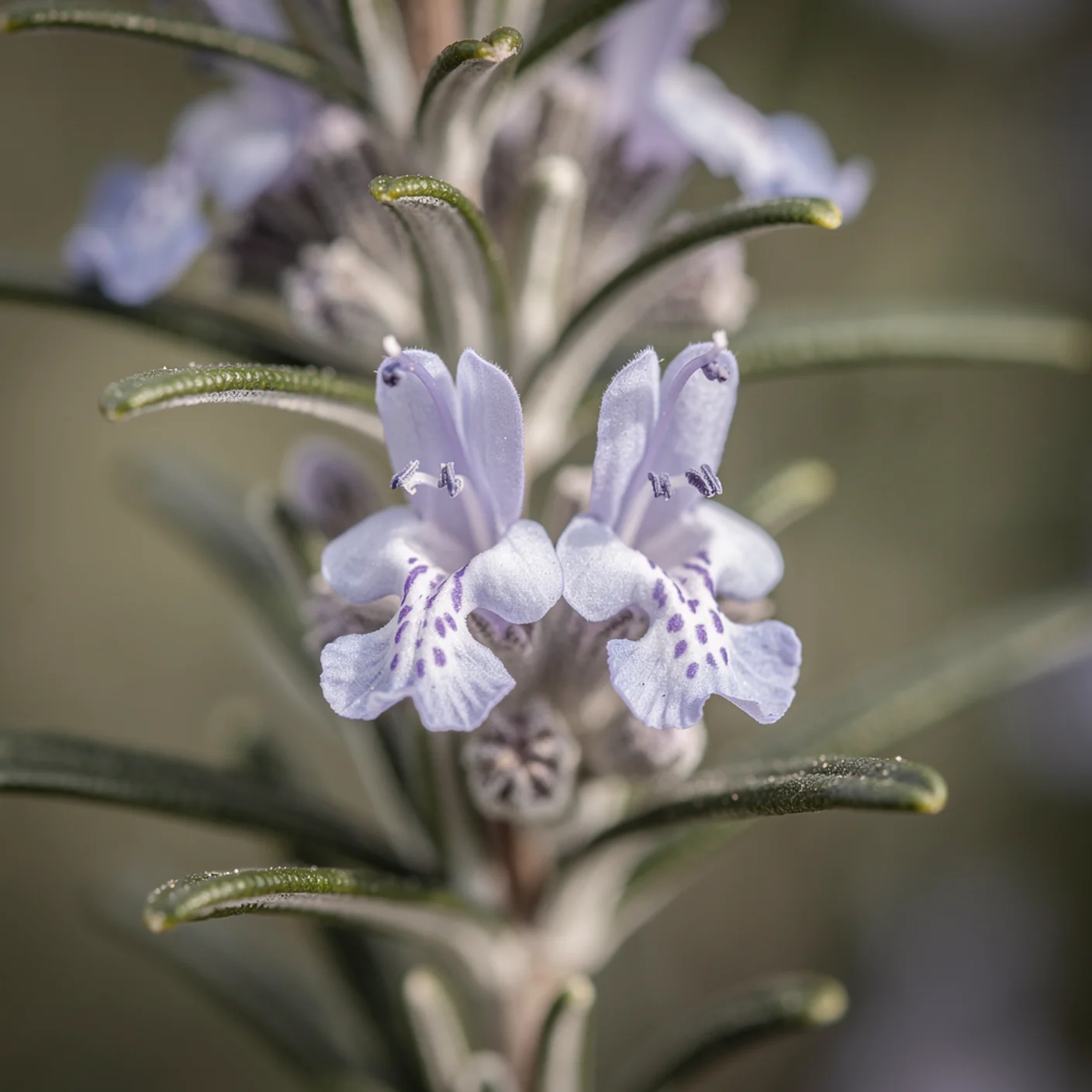
“More than a herb. 'Miss Jessopp's Upright' flowers pale blue in March, scents your coat when you brush past, and feeds the first bees of spring.”
— ROSIE
Rosie's Take
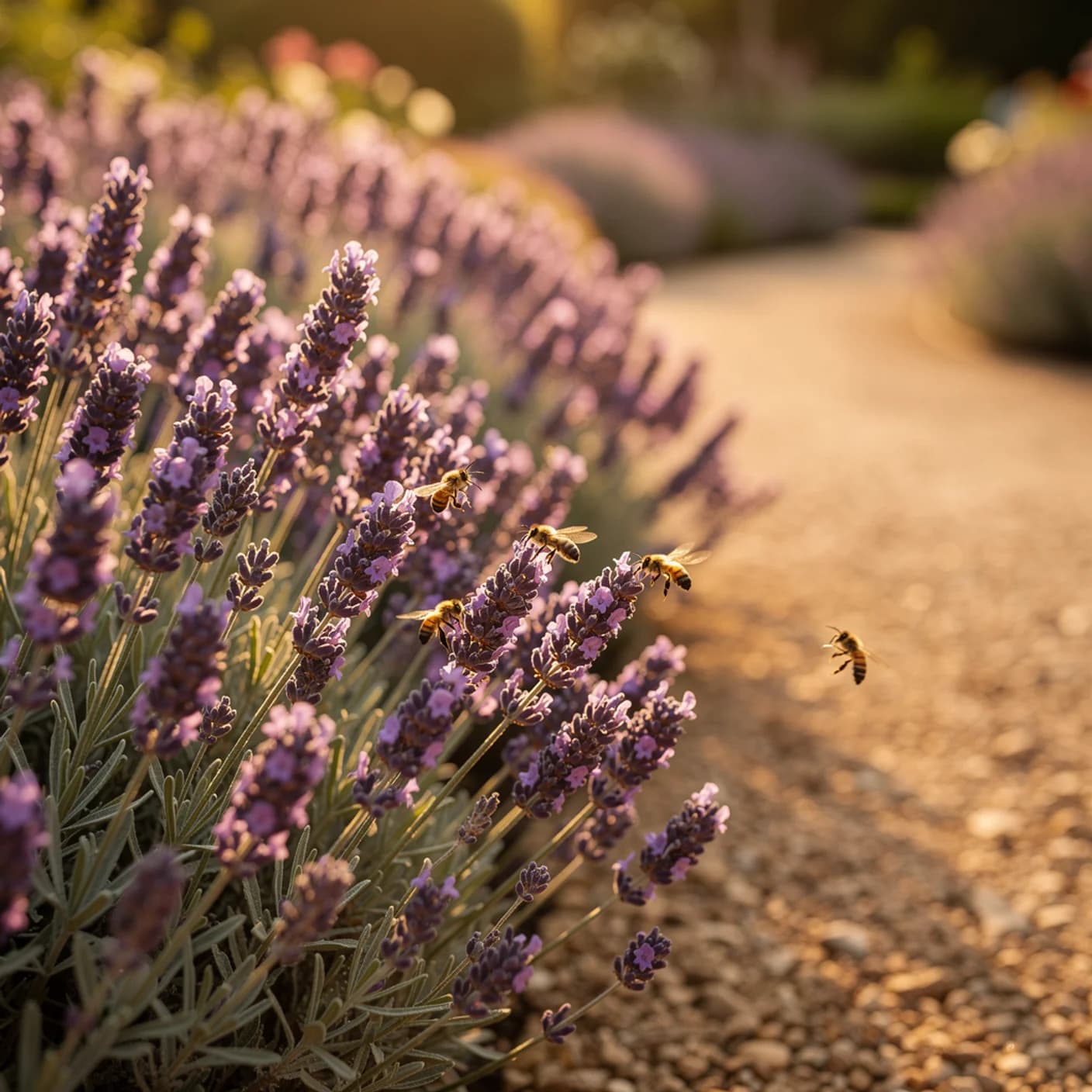
I sometimes forget rosemary flowers, and then every March they appear and I wonder how I could have forgotten. Those tiny, pale blue flowers scattered along the grey-green aromatic stems — they're not showy, not dramatic, not competing for attention. But they're there, reliably, in early spring when the garden is still mostly brown and grey, and the bees are desperately grateful.
'Miss Jessopp's Upright' is my preferred variety because it behaves itself. Where other rosemaries sprawl and flop, this one grows as a neat, columnar evergreen that you can use as a structural element in a border or beside a path. Brush past it on the way to the car and your coat smells of rosemary for the rest of the morning. That, to me, is what a garden plant should do.
The scent of rosemary is one of those universal comforts. Warm, resinous, camphor-sharp, and immediately evocative of kitchens and roasting and Mediterranean warmth. The flowers add a lighter, sweeter note — almost honey-like — that you miss if you only ever think of rosemary as a herb for lamb.
I tuck sprigs of flowering rosemary into small spring posies, and they add a herbal, aromatic note that lifts everything else. Mixed with a few narcissi and some primroses, it's a spring posy that smells as good as it looks. There's something about including a herb in a flower arrangement that makes the whole thing feel more honest — less decoration, more life.
Where to Buy
If you want to try rosemary for yourself, here's where I'd point you:
We may earn a small commission from purchases made through our links, at no extra cost to you.
✿ From the folklore cabinet
Rosemary's Latin name, Rosmarinus, means 'dew of the sea' — it grows wild on Mediterranean sea cliffs where the salt spray and mist settle on its leaves. In folklore, rosemary is for remembrance — Shakespeare's Ophelia says it — and it was traditionally carried at both weddings and funerals. Sprigs were thrown into graves. Brides carried it in their posies. Students in ancient Greece wore rosemary garlands while studying, believing it strengthened memory. There's now reasonable scientific evidence that they were right, which pleases me enormously.