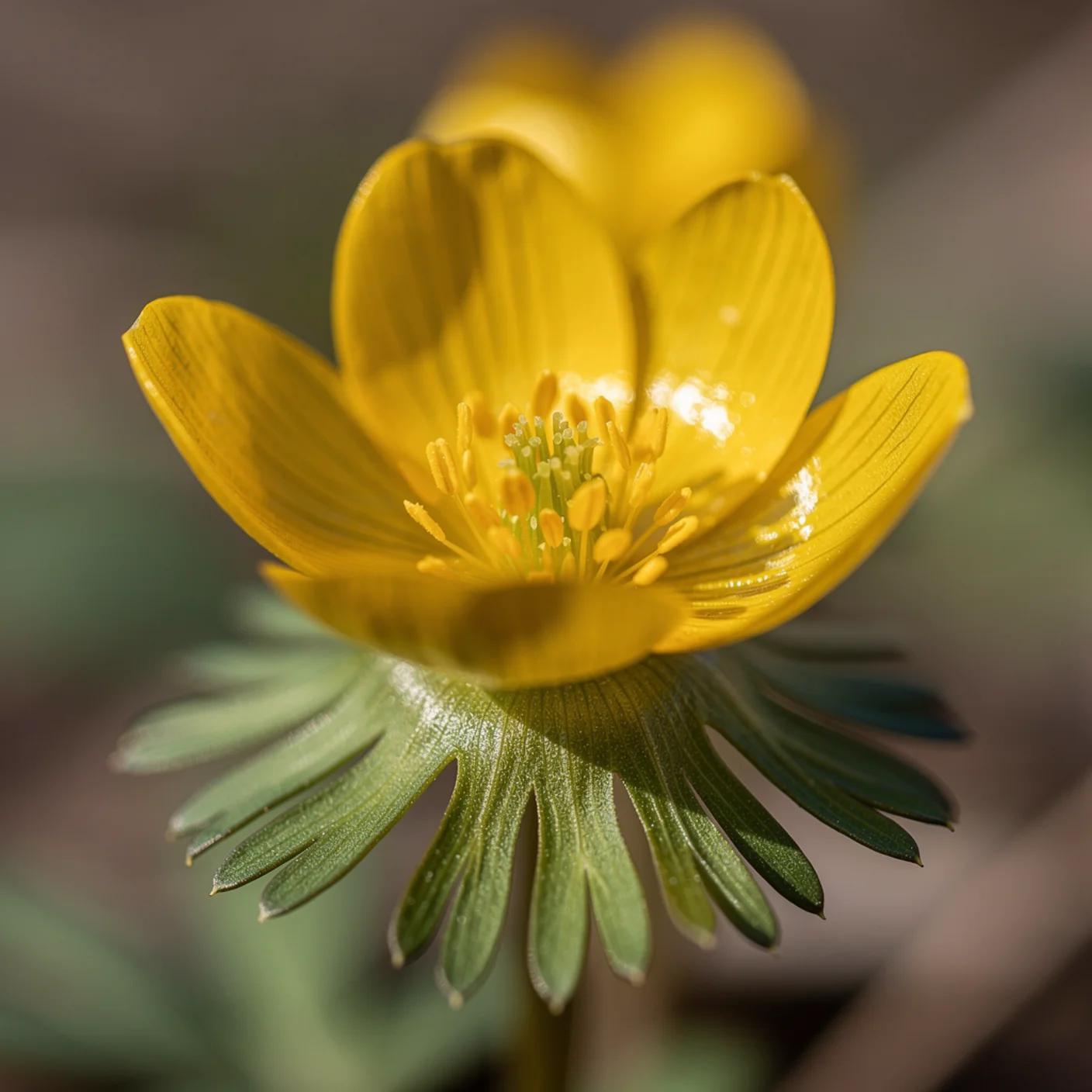
Winter Aconite
Eranthis Hyemalis
“Winter's most defiant flower. Plant a hundred under a tree and watch the coldest month turn briefly, impossibly golden.”
— ROSIE
Rosie's Take
If snowdrops are the first whisper of spring, winter aconites are the first shout. They appear even earlier — sometimes in January, pushing through frozen ground or even snow — and those bright, buttercup-yellow flowers surrounded by a ruff of green leaves are the most cheerful thing the winter garden produces.
I grow them under a deciduous tree where they get winter sun before the canopy fills in. They've slowly spread over the years into a carpet of gold that appears for about three weeks every February, and for those three weeks that patch of ground is the happiest place in the garden.
They're tiny — barely ten centimetres tall — which means you need to plant them in drifts to make an impact. A single aconite is easy to miss. A hundred of them, spread beneath a tree or along a path edge, is impossible to ignore. The trick is to buy them 'in the green' — as growing plants rather than dried tubers — because the tubers are notoriously difficult to establish.
What I love most is the timing. When everything else is still sleeping and the garden feels like it's been grey for months, here comes this burst of clean, vivid yellow that absolutely refuses to wait for proper spring. There's something defiant about it — blooming in the coldest part of the year, cheerful and unbothered, like someone whistling in a blizzard.
Where to Buy
If you want to try winter aconite for yourself, here's where I'd point you:
We may earn a small commission from purchases made through our links, at no extra cost to you.
✿ From the folklore cabinet
Winter aconites are native to southern Europe and were introduced to Britain in the sixteenth century. The name 'Eranthis' comes from the Greek for 'spring flower,' which is slightly premature — they're really a winter flower trying very hard. In the Victorian language of flowers, they represented patience in adversity. I think they represent something closer to stubbornness, which I admire.