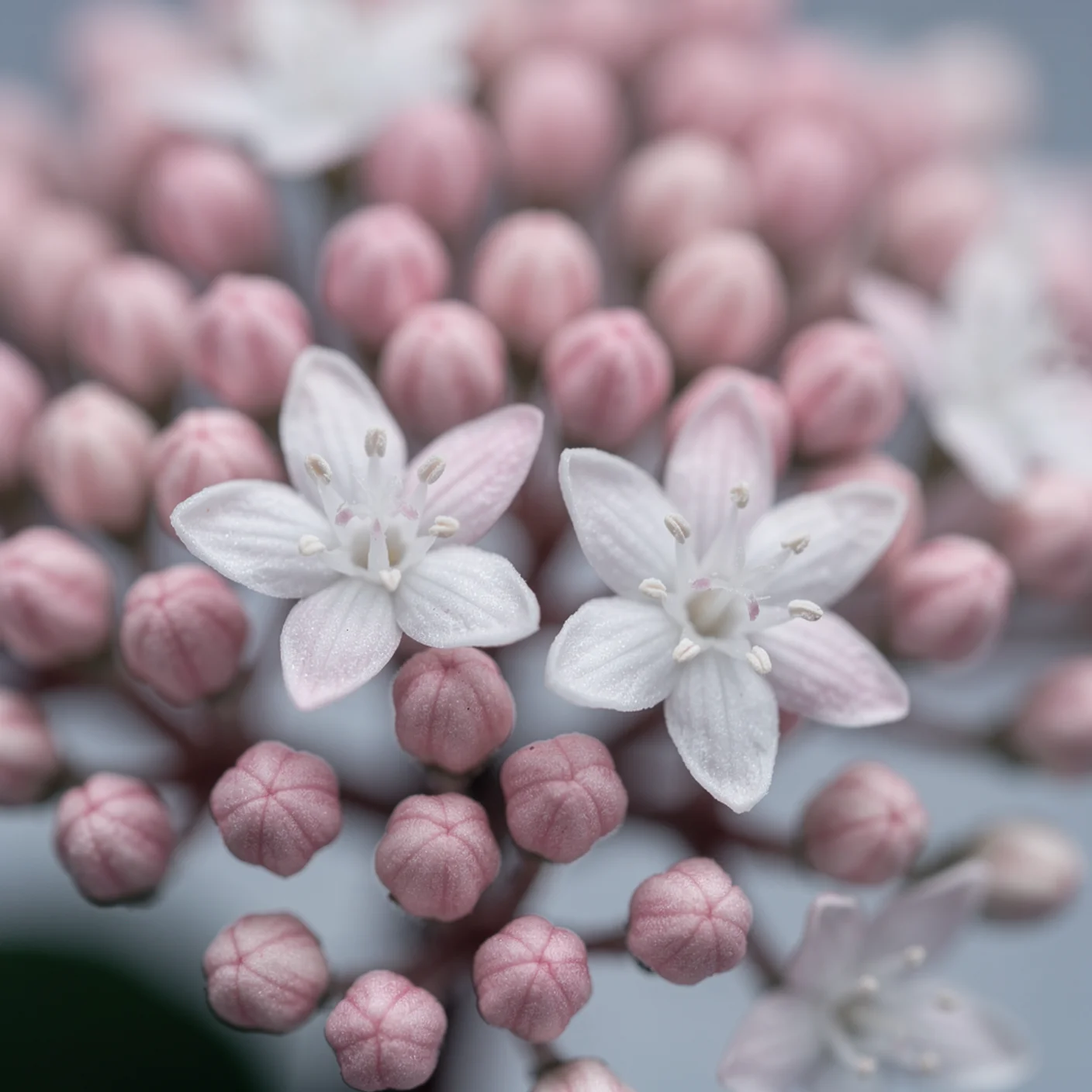
Viburnum
Dawn
“Plant her near your front gate. Every winter morning and evening, that hit of honeyed sweetness on cold air will remind you why the garden never really sleeps.”
— ROSIE
Rosie's Take
Dawn is the shrub that makes me grateful for winter. I know that's a strong statement from someone who spends most of January complaining about the cold, but when this extraordinary plant starts flowering in November and doesn't stop until March, the argument for winter having its own beauty becomes very hard to resist.
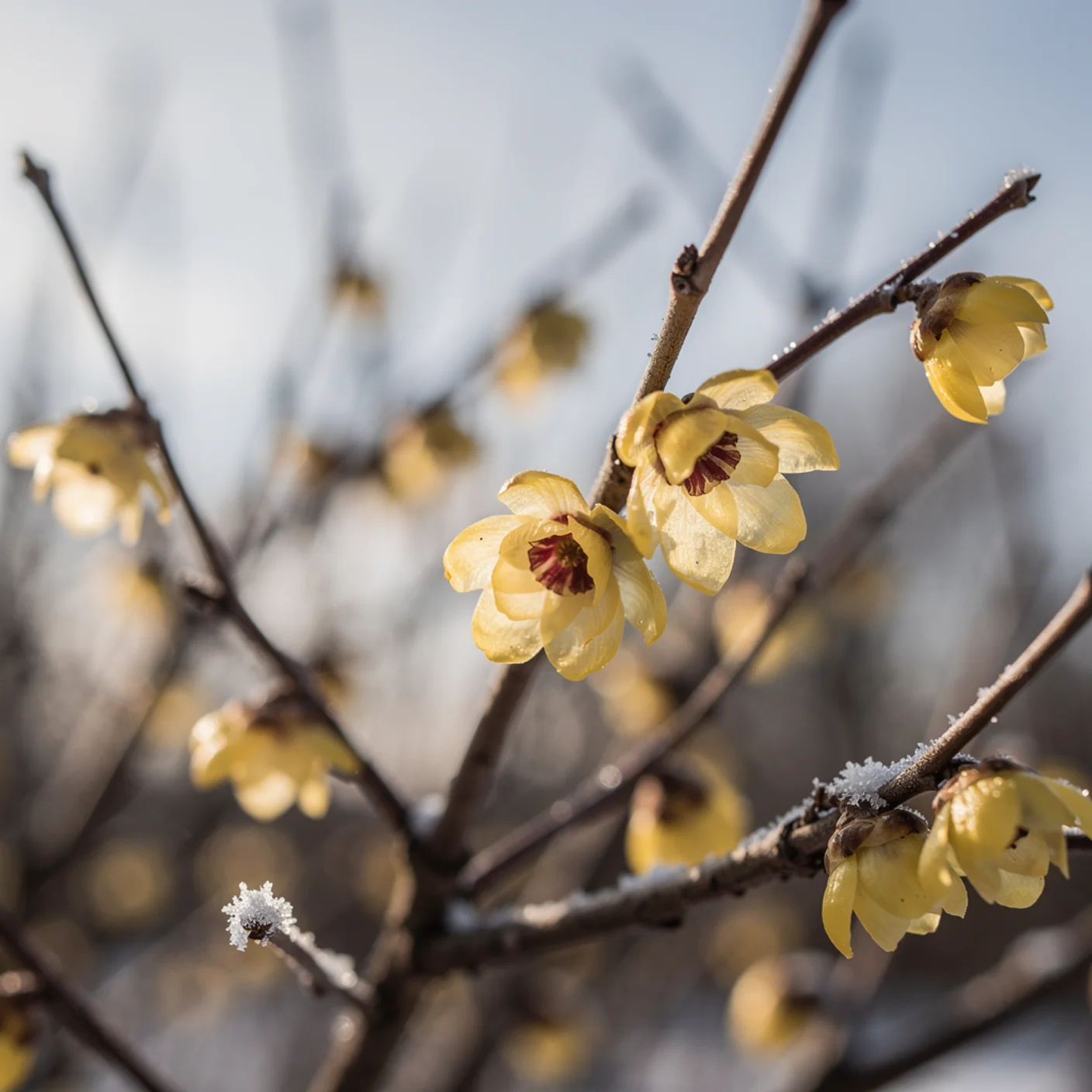
The flowers are small clusters of tubular, rose-pink buds that open to blush-white, studded along the bare, upright branches. They look delicate. They're not. They'll flower through frost, through sleet, through the kind of January weather that makes you question your life choices. And the scent — sweet, warm, honeyed, with a vanilla note — carries on still, cold air with a clarity that summer scents can't match.
I planted mine near the front gate specifically so I'd catch the scent every time I left the house or came home. On a cold December evening, walking up the path with the shopping, that hit of sweetness is absurdly cheering. It's the olfactory equivalent of someone having left the lights on for you.
The bare branch architecture is handsome in its own right — upright, vase-shaped, with a slight wild quality that looks good against a wall or fence. I prune mine lightly after flowering to keep it shapely, but it doesn't need much. She knows what she's doing.
She doesn't get the attention that winter jasmine or witch hazel get, and I think that's a shame. Dawn is arguably the most fragrant winter-flowering shrub in British gardens, and she's been quietly perfuming front gardens and churchyards since the 1930s. Some flowers don't need hype. They just need a spot near the path where you'll walk past them every day.
Where to Buy
If you want to try viburnum for yourself, here's where I'd point you:
We may earn a small commission from purchases made through our links, at no extra cost to you.
✿ From the folklore cabinet
Dawn was bred at Bodnant Garden in North Wales in the 1930s — a cross between two Asian viburnums. The garden still exists, run by the National Trust, and the original plant may still be there. I like visiting a garden and knowing that the plant I'm smelling has been scenting that exact spot for nearly a hundred years.