Stipa gigantea
Golden Oats
“The most dramatic ornamental grass in cultivation. Transparent golden flower heads that glow in evening light, on a plant tough enough for any sunny border. Use it at the front. Trust me.”
— ROSIE
Rosie's Take
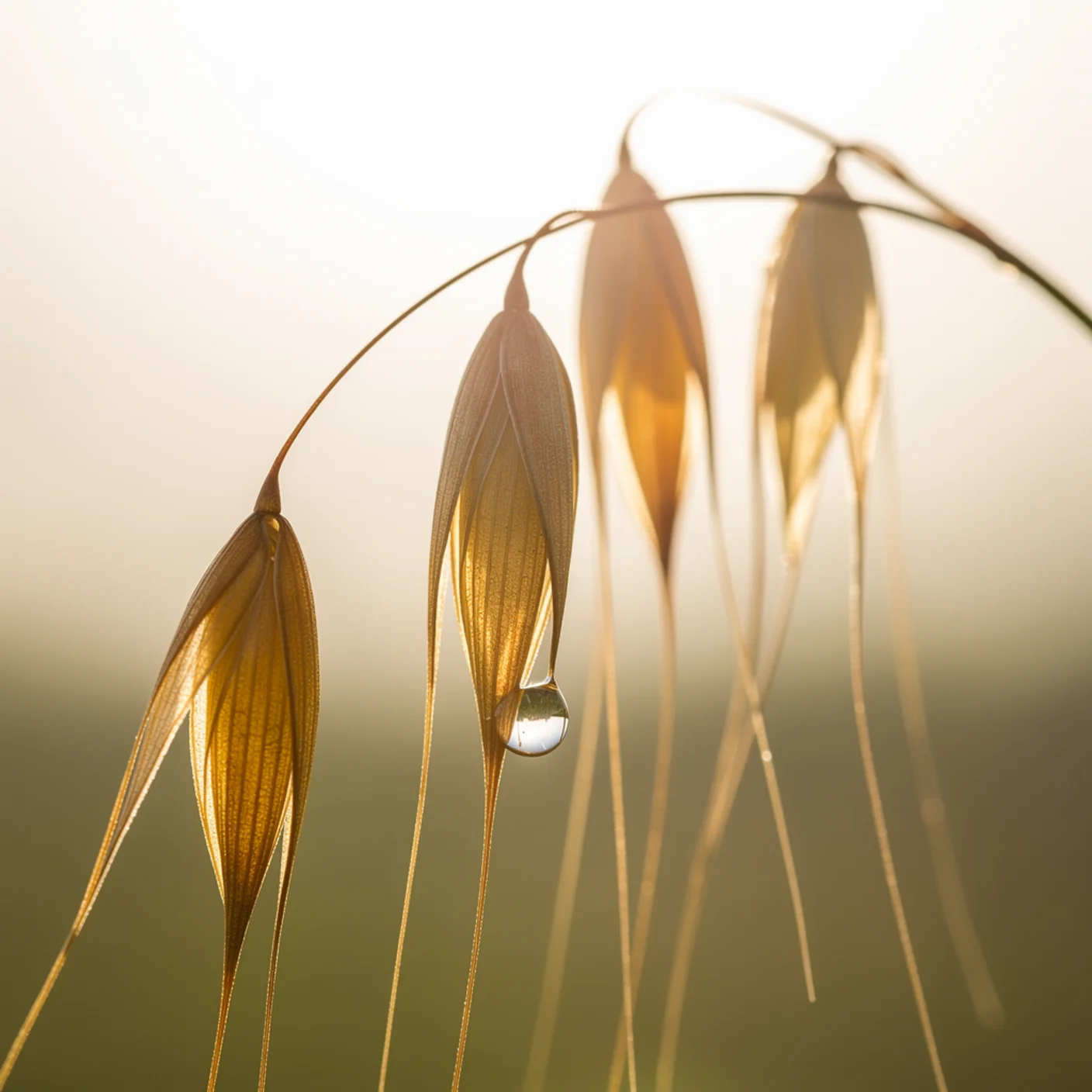
Stipa gigantea is what happens when a grass decides to be dramatic. From a modest, evergreen tussock of narrow leaves — maybe knee-high, well-behaved, perfectly ordinary — it sends up flowering stems in June that reach six feet or more, exploding at the top into huge, open panicles of golden oat-like spikelets. The effect is of a firework frozen at the moment of detonation. Or a fountain of gold coins suspended in mid-air.
The genius of it is the transparency. Those tall flowering stems are slender enough to see through, so you can plant stipa gigantea at the front of a border — not the back, as you'd assume for something this tall — and it creates a golden, shimmering screen through which you view the rest of the garden. Everything behind it is filtered through gold. Beth Chatto understood this. Piet Oudolf understood this. Once you see it used this way, you can't unsee it.
The spikelets catch every breath of wind, and in late afternoon light they're luminous — backlit, they glow as if each one is individually wired. On a July evening with the sun low behind a clump of stipa, the garden looks like it's been gilded. I've tried to photograph this many times and never quite captured what the eye sees. Some things resist the lens.
It's practically indestructible. Full sun, reasonable drainage, and it'll perform for years. The flower stems persist through autumn and into winter, the gold fading to pale straw but the architecture remaining. I leave them standing until February, because on a frosty morning a stipa stem encased in ice is a thing of considerable beauty. Only when the new growth stirs do I cut the old stems away, and within weeks the whole performance begins again.
✿ From the folklore cabinet
Stipa gigantea is native to the dry, rocky hillsides of Spain and Portugal, which explains its love of sun and drainage. The common name 'golden oats' reflects the resemblance of the spikelets to cultivated oats — though this grass has never been a food crop. It was popularised in British gardens by the great plantswoman Beth Chatto, who demonstrated its power as a see-through plant at the front of her famous gravel garden in Essex. 'Gigantea' simply means 'giant,' which is honest — from a sitting-height tussock, those flowering stems reach well above head height. It's the tallest plant in my garden that I don't need a ladder to appreciate.