Acanthus
Mollis (Bear's Breeches)
“Architecture in plant form. Magnificent glossy leaves, dramatic hooded flower spikes, and the knowledge that ancient Greeks carved your border plant into marble. Just don't try to move it.”
— ROSIE
Rosie's Take
Acanthus mollis has been impressing people for over two thousand years, and it's still going strong. Those magnificent, deeply lobed, glossy leaves — a foot and a half long, dark green and dramatically architectural — inspired the carved decoration on Corinthian columns in ancient Greece. Every grand building in Europe carries an echo of this plant. And here it is, perfectly happy in a border in suburban Britain, asking for absolutely nothing.
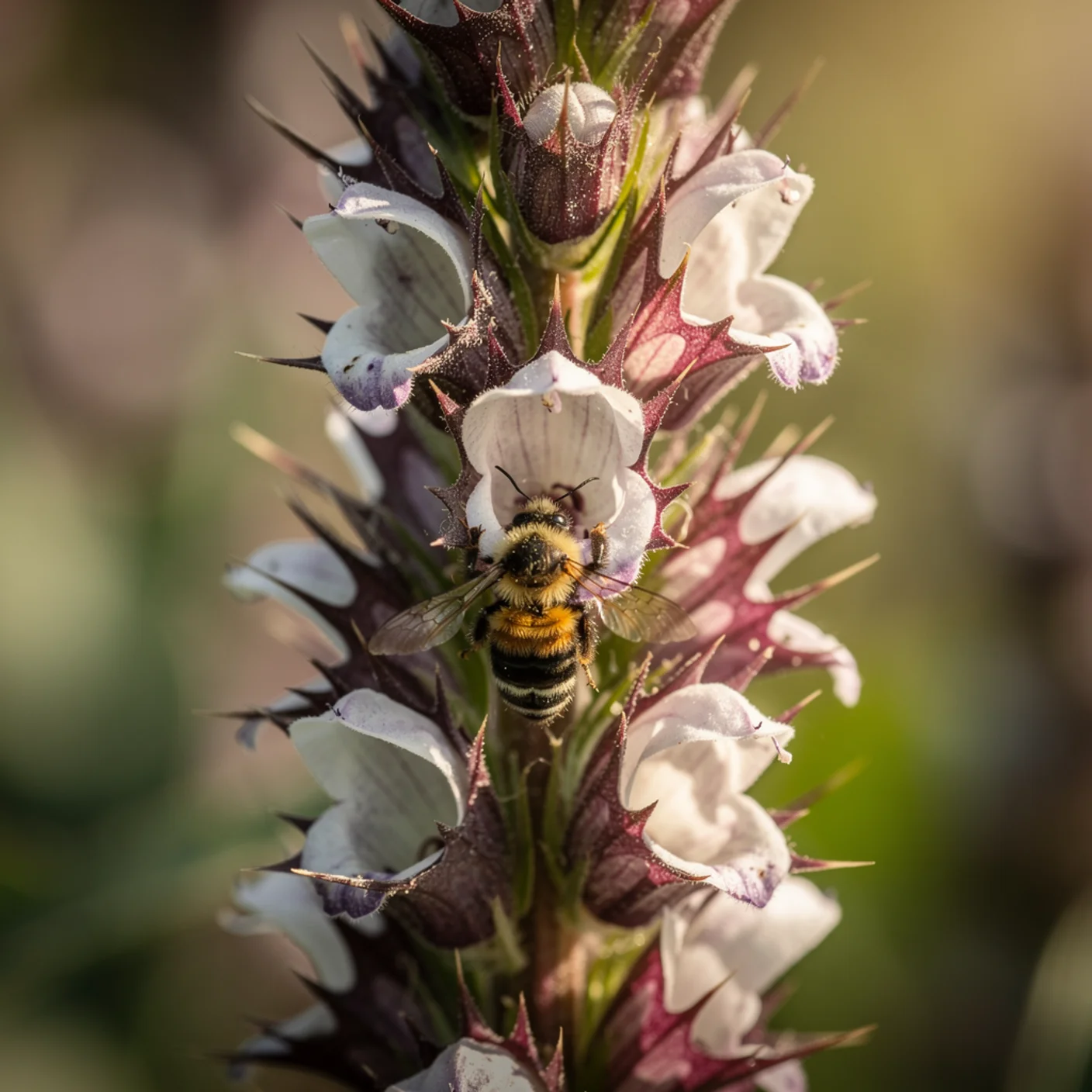
The flower spikes are almost as dramatic as the foliage. In July, stout stems rise three to four feet, carrying tall racemes of hooded flowers — white petals emerging from purple-flushed bracts, the whole spike looking like something between a foxglove and a medieval weapon. They're bold, structural, and slightly menacing. If the leaves are classical, the flower spikes are gothic.
I grow mine at the base of a south-facing wall where the soil is poor and dry, because acanthus is one of those rare plants that actually performs better with neglect. Rich soil and regular watering produce masses of leaf and hardly any flower. Starve it slightly, and it channels its energy into those extraordinary spikes. There's a lesson there somewhere.
A warning, though — once established, it's almost impossible to remove. The roots are thick, fleshy, and deep, and every broken fragment will regenerate. I once tried to move a clump and spent the following three years pulling up regrowth from the old site. Plant it where you want it to stay, and accept that you're entering a long-term relationship. On the other hand, a plant that's been growing in the same spot since the ancient Greeks used it as architectural inspiration has earned the right to put down roots.
Where to Buy
If you want to try acanthus for yourself, here's where I'd point you:
We may earn a small commission from purchases made through our links, at no extra cost to you.
✿ From the folklore cabinet
The legend goes that the fifth-century BC architect Callimachus saw an acanthus plant growing through a basket placed on a young girl's grave, and was inspired to create the Corinthian capital — the most ornate of the three Greek column styles. Whether the story is true or not, acanthus leaves have decorated Western architecture for twenty-five centuries. The Romans loved the plant and carried it across their empire. In medieval herbal medicine, acanthus was used to treat burns and dislocated joints. The common name 'bear's breeches' is wonderfully unexplained — nobody is entirely sure where it came from, though one theory suggests the large, furry-looking leaves reminded someone of a bear's haunches. I prefer not knowing.