Ox-eye Daisy
Leucanthemum vulgare
“Perfection in its simplest form. Pick a handful from a hedgerow, put them in a jug, and you've got the best arrangement of early summer.”
— ROSIE
Rosie's Take
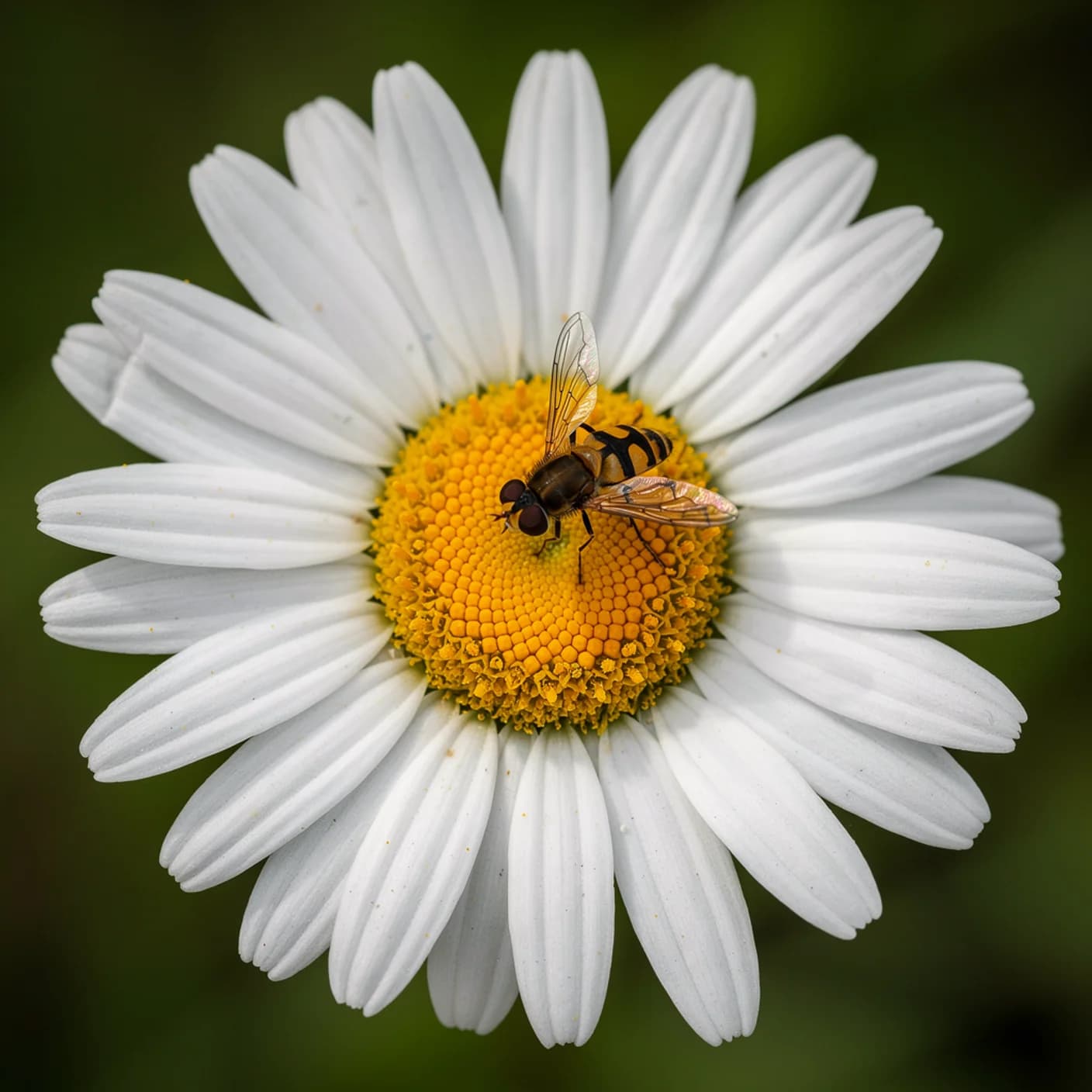
The ox-eye daisy is the flower a child draws when you ask them to draw a flower. White petals around a yellow centre, on a long green stem. That's it. And yet in a June meadow, thousands of them nodding in the breeze with buttercups and grasses, it becomes one of the most beautiful things the British countryside produces.
Leucanthemum vulgare is a wildflower, a roadside weed, a thing that grows in verges and field margins and railway cuttings without anyone's permission. I love it precisely because it hasn't been improved. No one has bred a double version or a pink one or tried to make it bigger. It's just itself — clean, honest, open-faced, and utterly content to be an ordinary daisy.
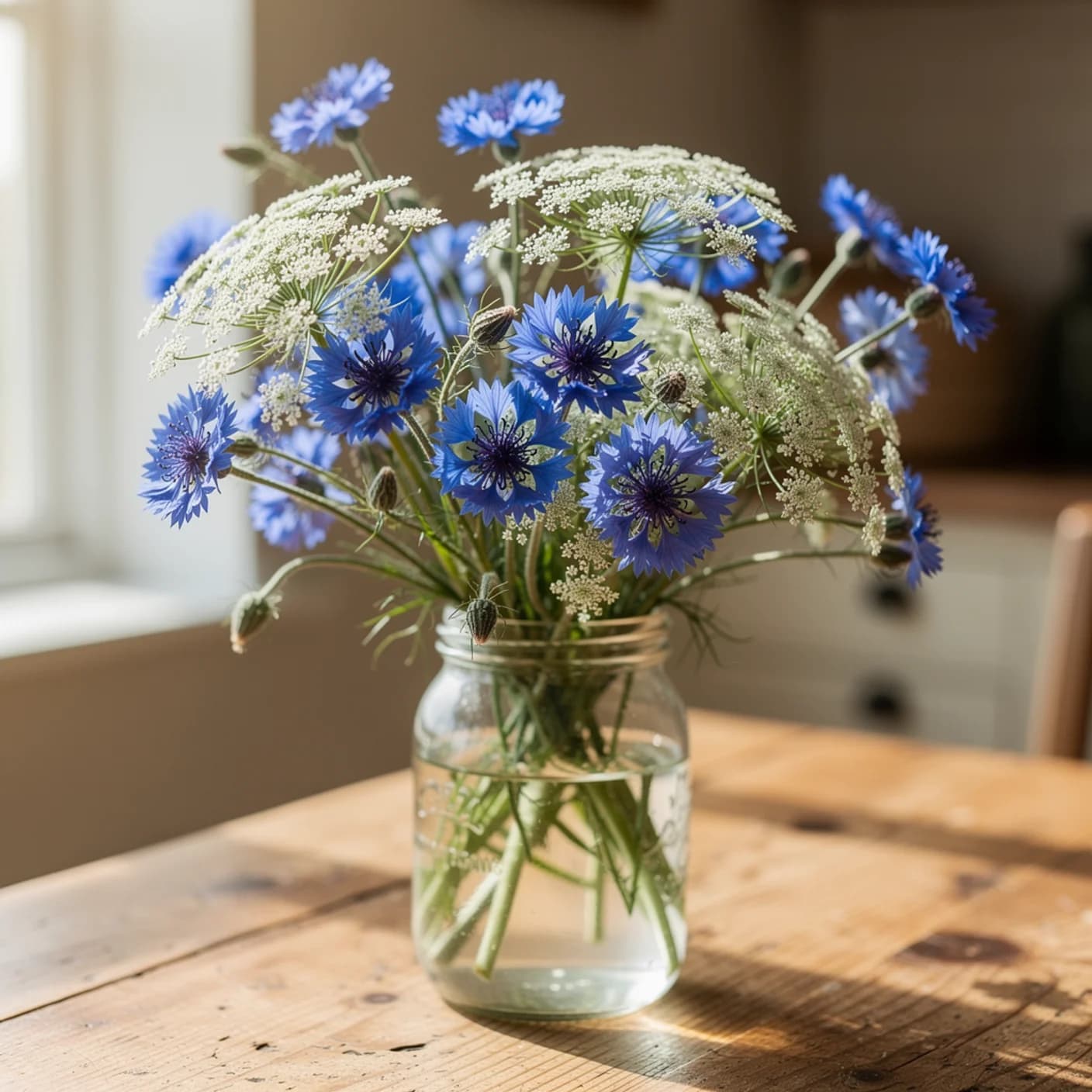
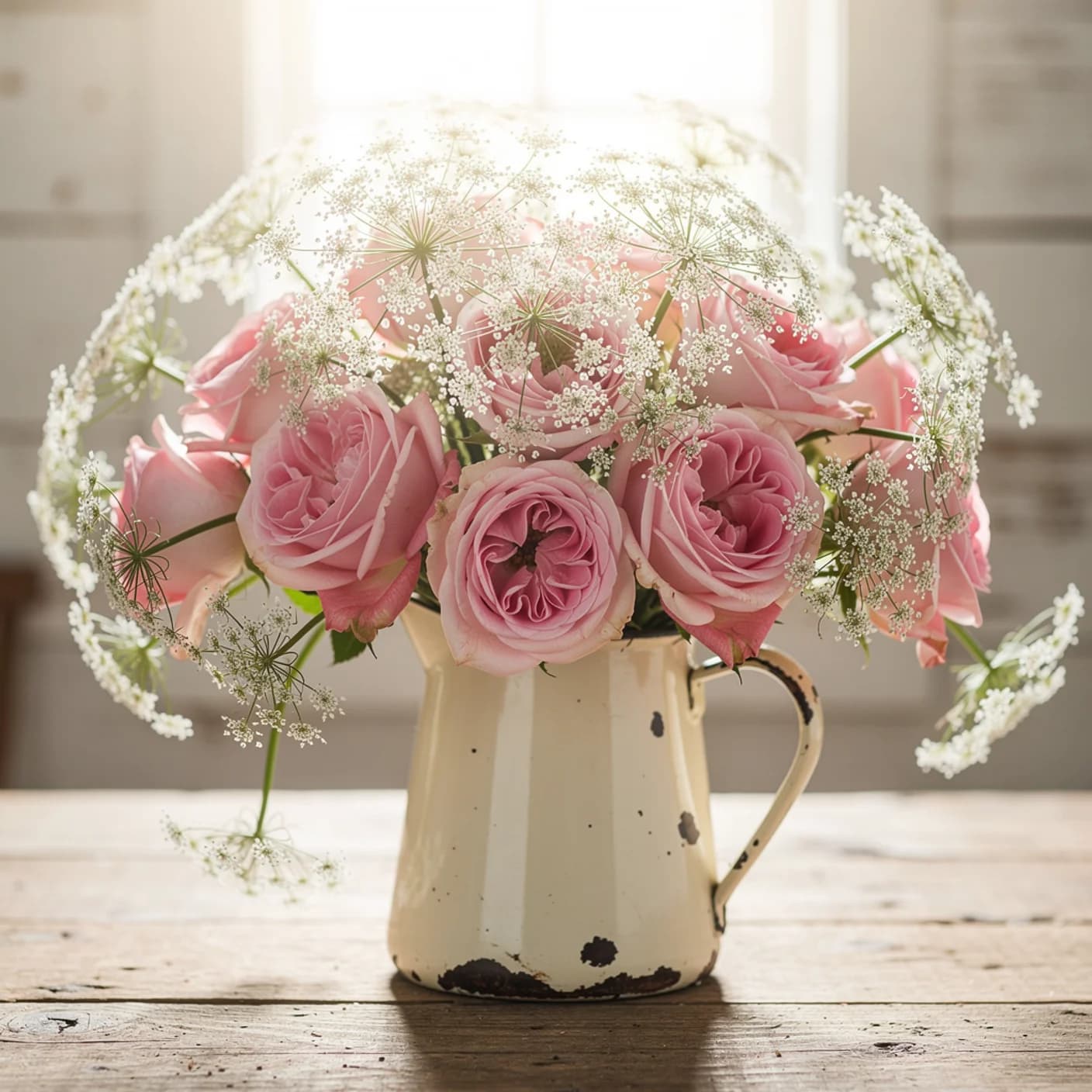
Pick a big handful and put them in a jug with some grasses and a few stems of whatever else is growing in the hedgerow — campion, cow parsley, a bit of clover — and you've got the best arrangement of early summer. It looks artless, which is the hardest thing to achieve. The white-and-yellow simplicity anchors everything around it.
The petals close slightly at night and in rain, and reopen when the sun comes back, which I find endlessly endearing. They last reasonably well in water — five or six days — especially if you cut them early in the morning when the stems are fully turgid. The scent is faint and green, more grass than flower. That's fine. Not everything needs to announce itself. Sometimes the quietest things in the room are the ones you'd miss the most.
Where to Buy
If you want to try ox-eye daisy for yourself, here's where I'd point you:
We may earn a small commission from purchases made through our links, at no extra cost to you.
✿ From the folklore cabinet
The ox-eye daisy's old English name is 'moon daisy' — the flowers were said to glow in the moonlight, and picking them by moonlight was considered unlucky. In medieval herbalism, the plant was used to treat chest complaints and as an eye wash. The name 'daisy' itself comes from 'day's eye,' because the flower opens with the sun, though that technically refers to Bellis perennis, the lawn daisy. Country children have been making daisy chains from ox-eyes for centuries, and I hope they never stop.