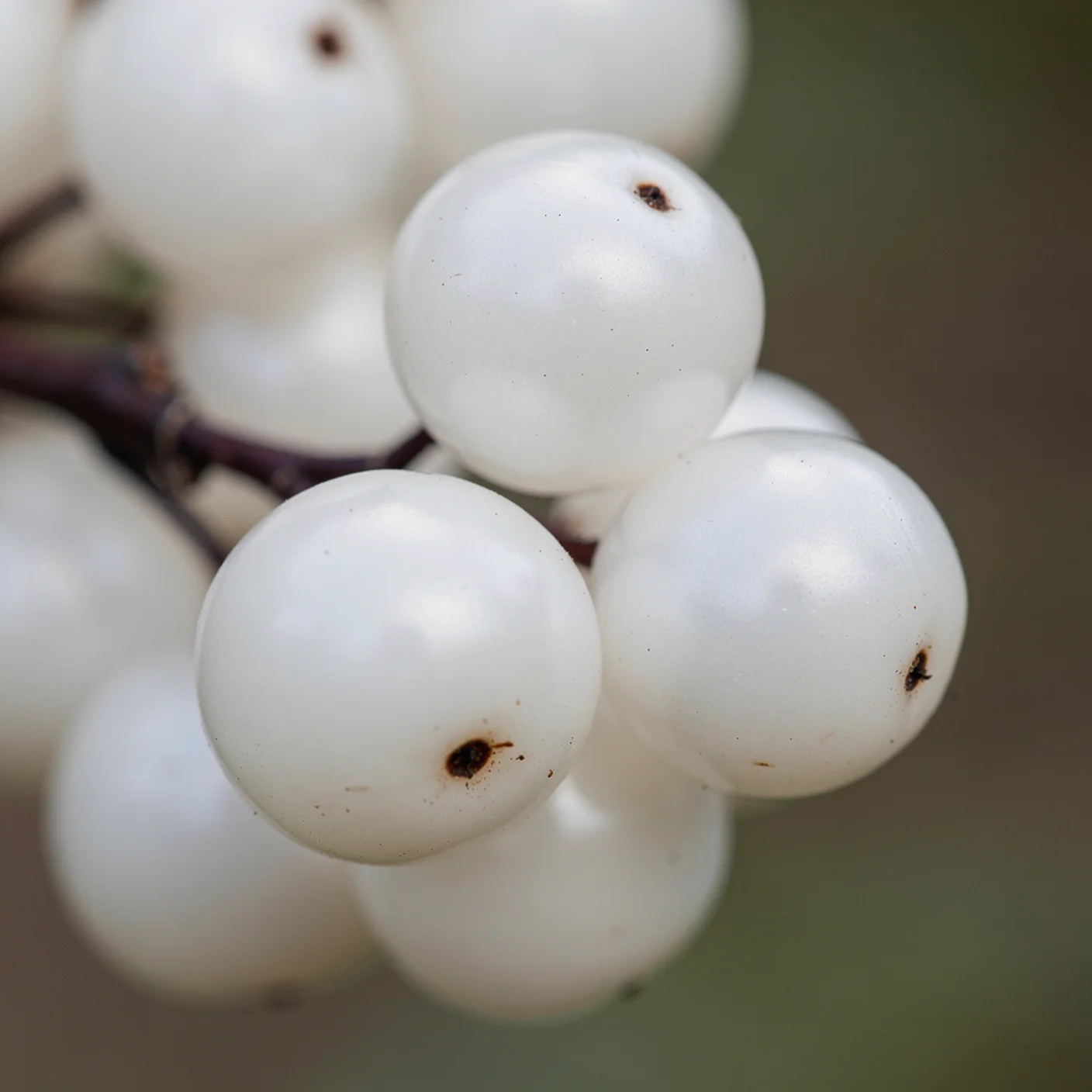
Snowberry
Symphoricarpos
“The overlooked hedgerow treasure. Snowberry's white-beaded branches turn autumn and winter arrangements into something quietly extraordinary.”
— ROSIE
Rosie's Take
I first noticed snowberry in a hedgerow in November — these clusters of fat, white, perfectly round berries along bare stems, like someone had threaded pearls through the undergrowth. I'd walked past that hedge a hundred times without seeing them, and then suddenly there they were, quiet and remarkable.
Symphoricarpos is technically a shrub, and not one that wins any prizes in summer — the flowers are tiny and unremarkable, the foliage is ordinary. But come autumn, when the leaves drop and those white berries appear, it becomes something genuinely magical. They persist for weeks, sometimes months, hanging on the bare branches through the worst of the weather.
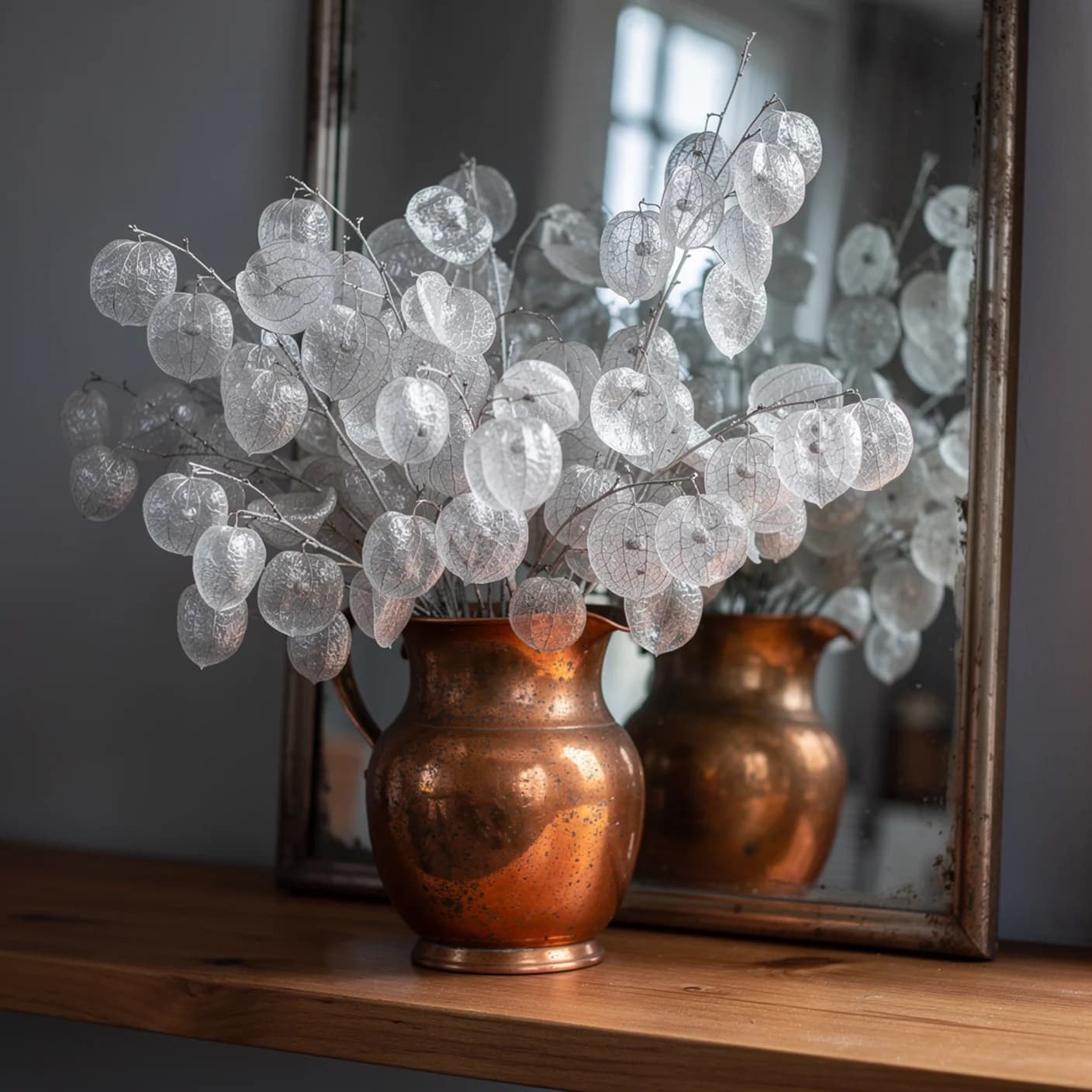
What I love is using the berried stems in arrangements. Cut a few branches and they add this unexpected texture to an autumn or winter vase — all those round white globes against the dark, angular stems. They pair brilliantly with dried honesty, rosehips, and seed heads for something that feels like a walk in the countryside distilled into a jug.
There's a pink-berried variety too, which is rather lovely, but I keep coming back to the white. There's something about those perfectly spherical, bright white berries in the grey of November that feels like nature making its own jewellery. They pop when you squeeze them, which is extremely satisfying and slightly childish, and I refuse to apologise for it.
Where to Buy
If you want to try snowberry for yourself, here's where I'd point you:
We may earn a small commission from purchases made through our links, at no extra cost to you.
✿ From the folklore cabinet
Snowberry is native to North America, where various indigenous peoples used the berries medicinally — though they're mildly toxic to humans, so this isn't a foraging recommendation. In folklore, the white berries were said to be the frozen tears of a maiden separated from her lover. I think they're just berries that happen to look like tiny moons, which is quite enough.