Sea Holly
Eryngium Big Blue
“Thrives on neglect, lasts for weeks cut, dries perfectly, and adds the element of surprise to every bunch. The most sculptural thing in the garden.”
— ROSIE
Rosie's Take
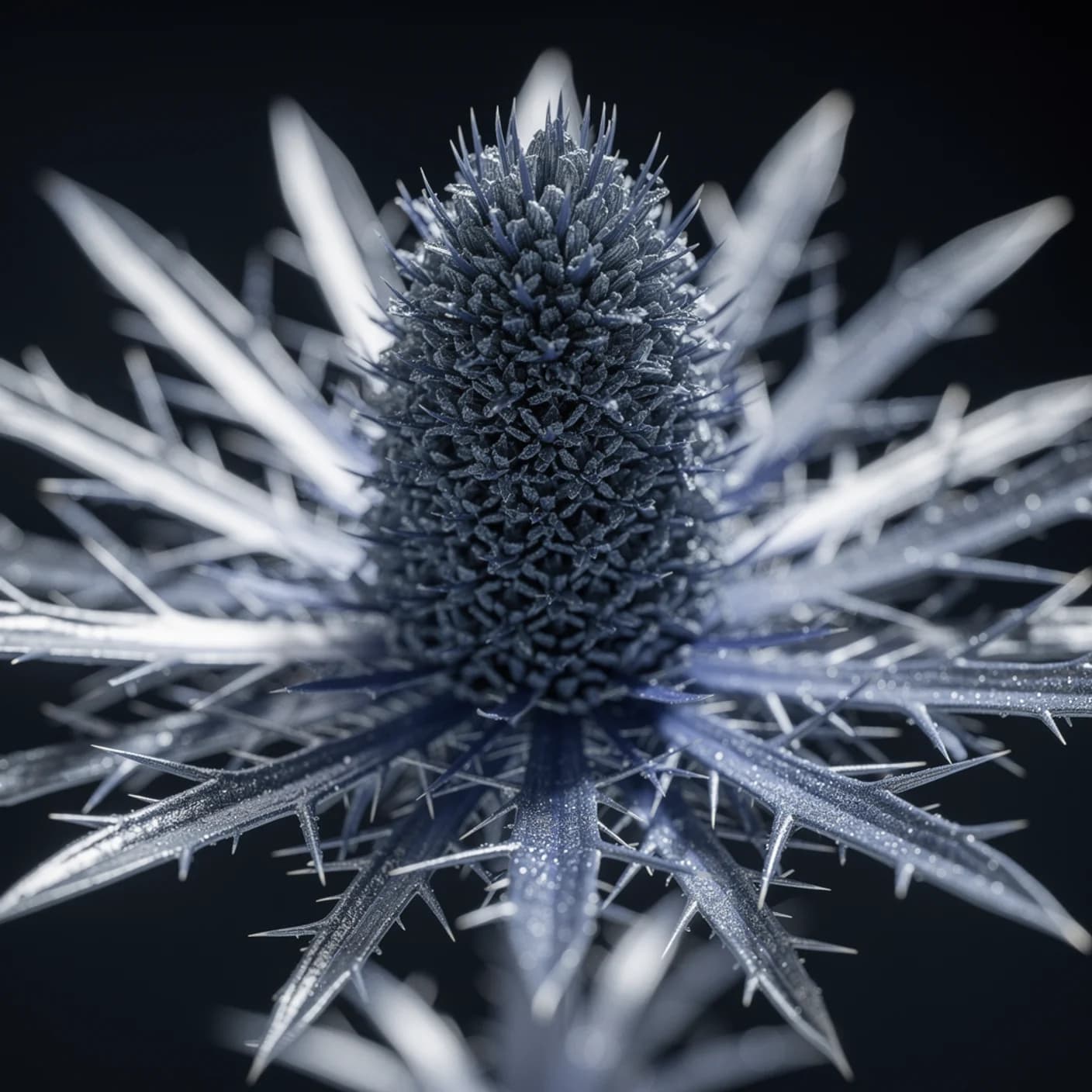
Sea holly is the flower that made a sculptor friend of mine say 'that can't be real.' I understood. The colour — a metallic, almost electric steel-blue that looks like someone dipped it in ink and then dusted it with frost — is unlike anything else growing in a British garden. It doesn't look organic. It looks forged.
Big Blue is one of the best cultivated varieties, with strong stems, large flower heads, and that extraordinary blue colouring that intensifies as the flowers mature. Each head is a thimble-shaped cone surrounded by a spiky collar of bracts, like a tiny thistle wearing a crown. The stems, the bracts, even the upper leaves all take on that same metallic blue. The whole plant becomes a sculpture.
They love sun and poor, well-drained soil — seaside gardens are ideal, which is fitting given the name. I grow mine at the front of a gravel bed where they bake all summer, and the hotter and drier the conditions, the bluer they get. Another plant that thrives on neglect. My favourite kind.
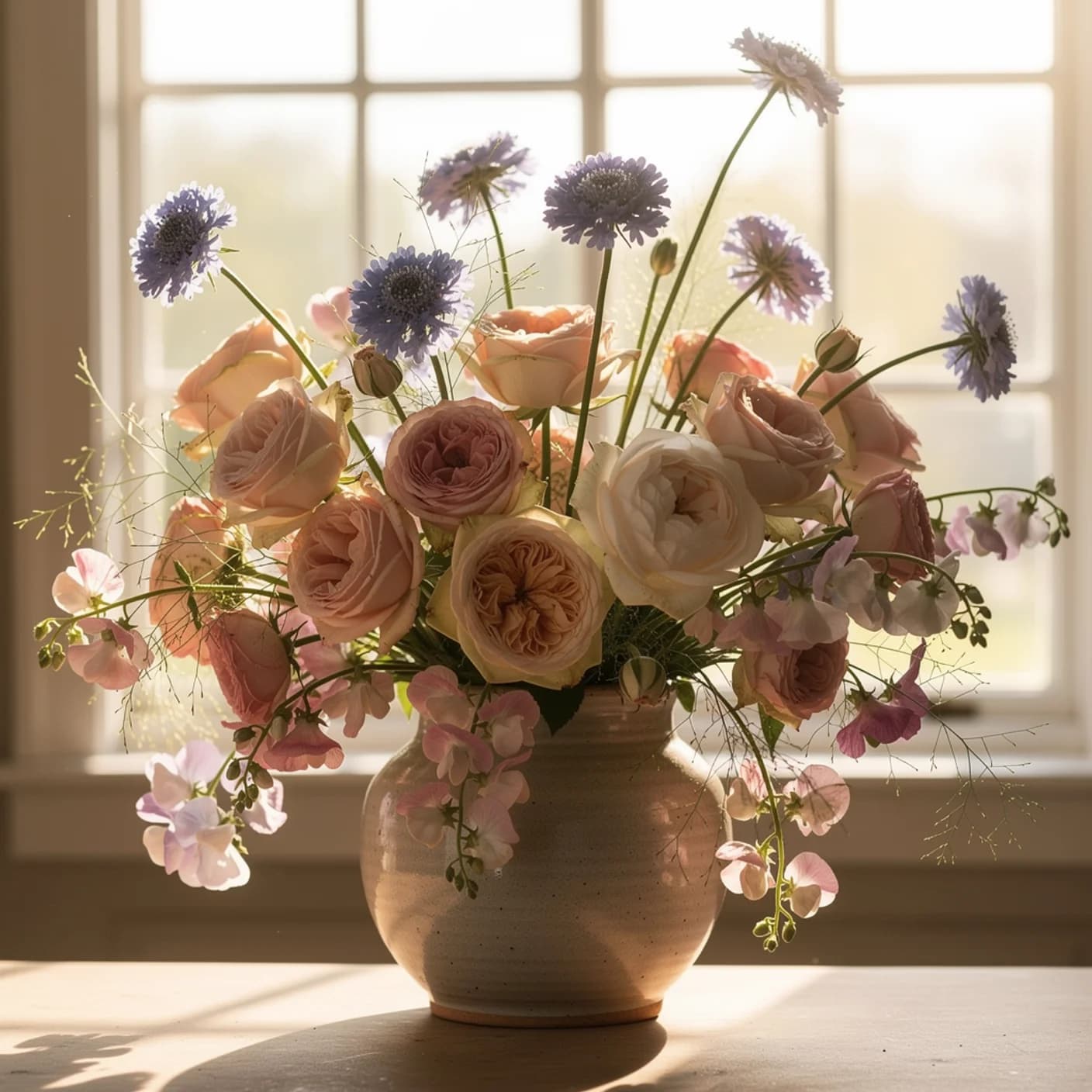
As a cut flower, sea holly is spectacular. The stems are strong, the heads are long-lasting — easily two weeks — and they dry perfectly, keeping that blue colour for months. Mixed with garden roses and ammi, they add a metallic, textural edge that stops an arrangement from being predictable.
I use the dried stems in winter arrangements all the time. That blue, which would look cold on its own, becomes warm and interesting when mixed with dried grasses and honesty pods. It's one of those flowers that earns its place in the garden and then earns it again on the shelf.
Where to Buy
If you want to try sea holly for yourself, here's where I'd point you:
Also available as seeds — Eryngium leavenworthii - Kew Flowerhouse Collection Seeds →
We may earn a small commission from purchases made through our links, at no extra cost to you.
✿ From the folklore cabinet
Sea holly was traditionally candied as a sweetmeat in Elizabethan England — the roots were boiled with sugar and eaten as an aphrodisiac. Shakespeare refers to them in The Merry Wives of Windsor as 'eryngoes.' I find it wonderful that something this spiky and metallic-looking was once considered romantic enough to feed your beloved.