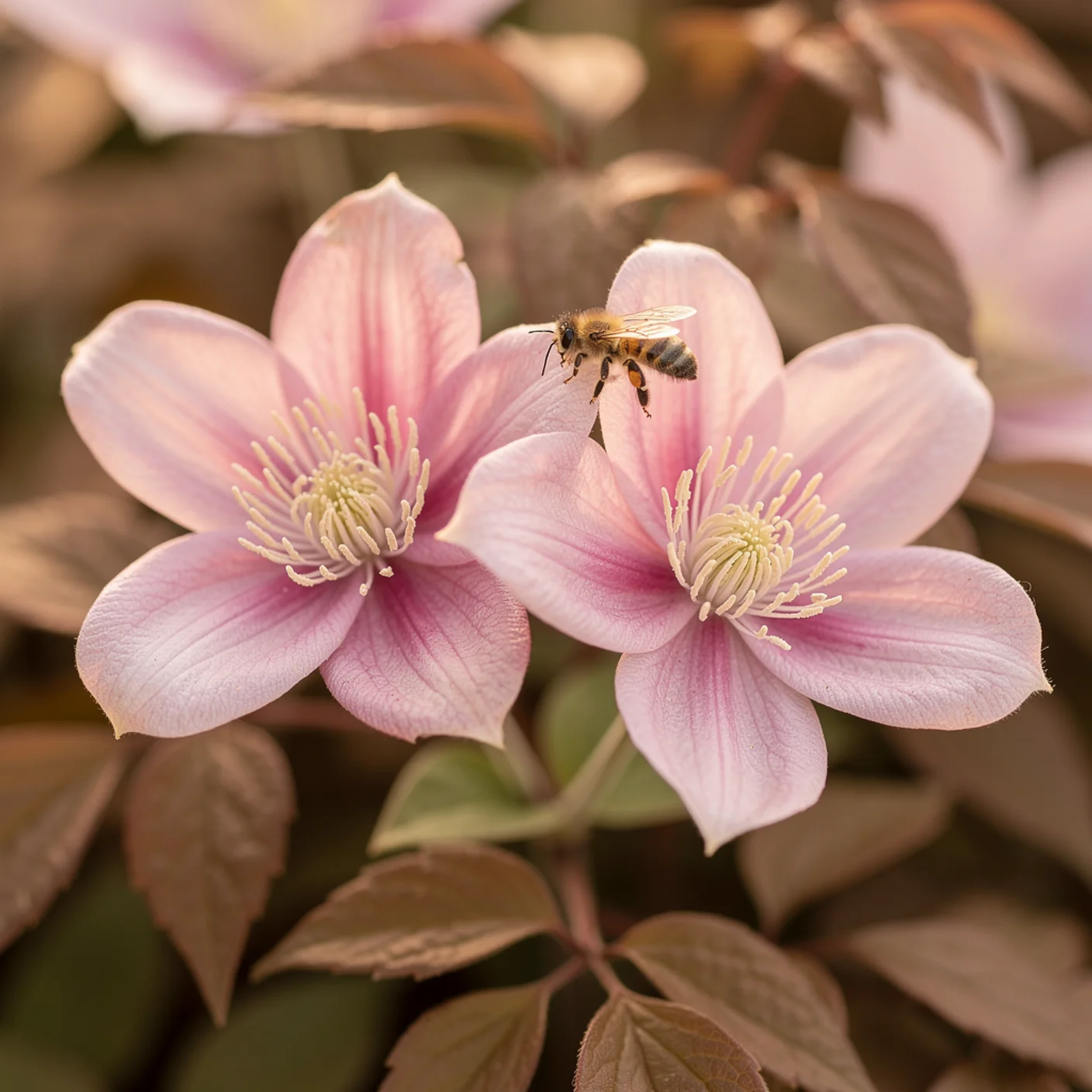
Clematis montana
Rubens
“The most spectacular spring climber you can grow. Give it a big wall, stand back, and let it smother everything in vanilla-scented pink. Not for the faint-hearted or the small trellis.”
— ROSIE
Rosie's Take
There's a week in late May when Clematis montana var. rubens comes into flower and the effect is so extravagant it borders on ridiculous. This is not a plant that does restraint. It covers walls, scrambles over outbuildings, swallows pergolas whole — and when it flowers, every inch of it is smothered in thousands of small, four-petalled, soft pink flowers. Thousands. The sheer volume is almost aggressive in its generosity.
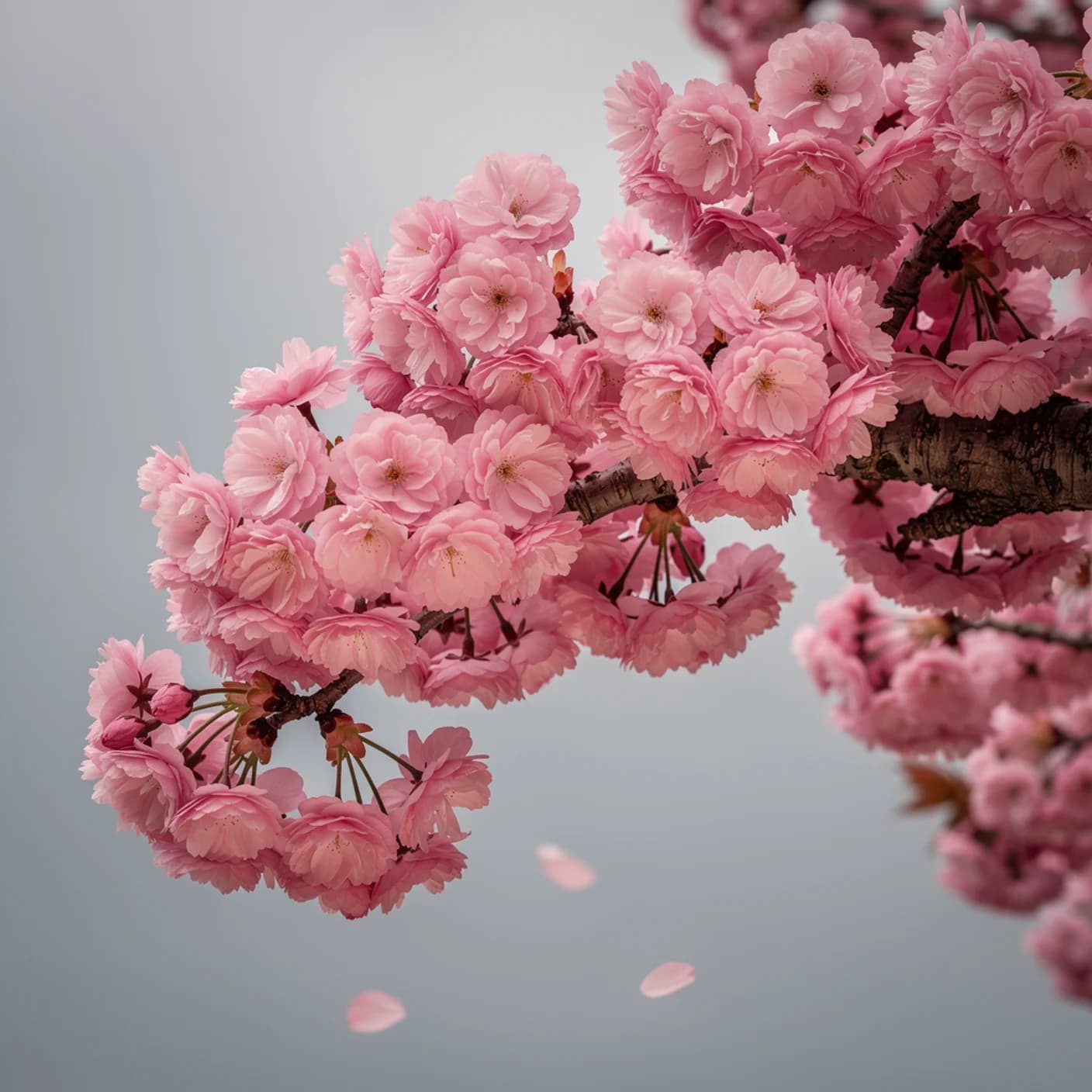
The flowers are individually modest — about two inches across, a gentle shell-pink fading to blush at the edges, with a central boss of creamy-yellow stamens. But it's never about individual flowers with montana. It's about the mass effect, the cascade, the overwhelming abundance of pink tumbling over whatever structure you've given it. From a distance, a well-established montana in full bloom looks like a waterfall of blossom.
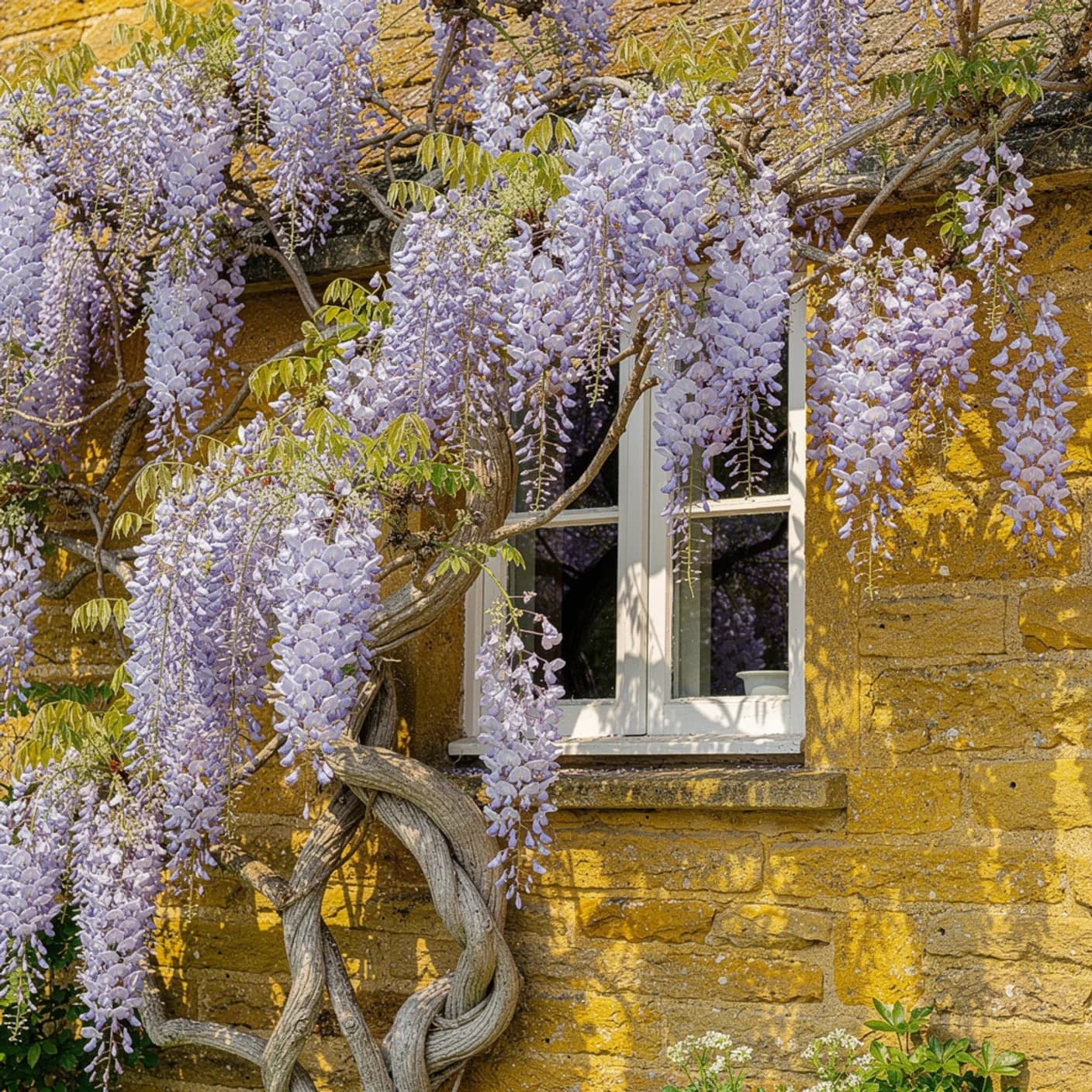
And then there's the scent. Vanilla. Warm, sweet, unmistakable vanilla, drifting across the garden on a May afternoon. Not all montanas are scented — 'Rubens' is one of the best for fragrance, and on a warm, still day you can smell it from the other side of the garden. I once walked past a cottage in the Cotswolds where a montana had colonised the entire front wall, and I stopped dead in the street because the scent hit me before I even looked up.
It grows fast. Alarmingly fast, in the right conditions — six metres or more once established. It needs something substantial to climb — a large wall, a mature tree, a solid pergola. Don't plant it on a flimsy trellis and expect a relationship built on mutual respect. Give it space, let it go, and once a year it'll thank you with the most spectacular display of any climber in the British spring.
Where to Buy
If you want to try clematis montana for yourself, here's where I'd point you:
We may earn a small commission from purchases made through our links, at no extra cost to you.
✿ From the folklore cabinet
Clematis montana is native to the Himalayas, where it scrambles through trees at altitudes up to 4,000 metres. The variety 'Rubens' was raised in the early twentieth century and quickly became the most popular montana in British gardens because of its pink flowers and bronze-tinted young foliage. The name 'clematis' comes from the Greek 'klema,' meaning vine-branch. In the Victorian language of flowers, clematis represented mental beauty and ingenuity — the cleverness of a plant that finds its way through any obstacle. I think 'sheer bloody-minded exuberance' would have been more accurate for this one.