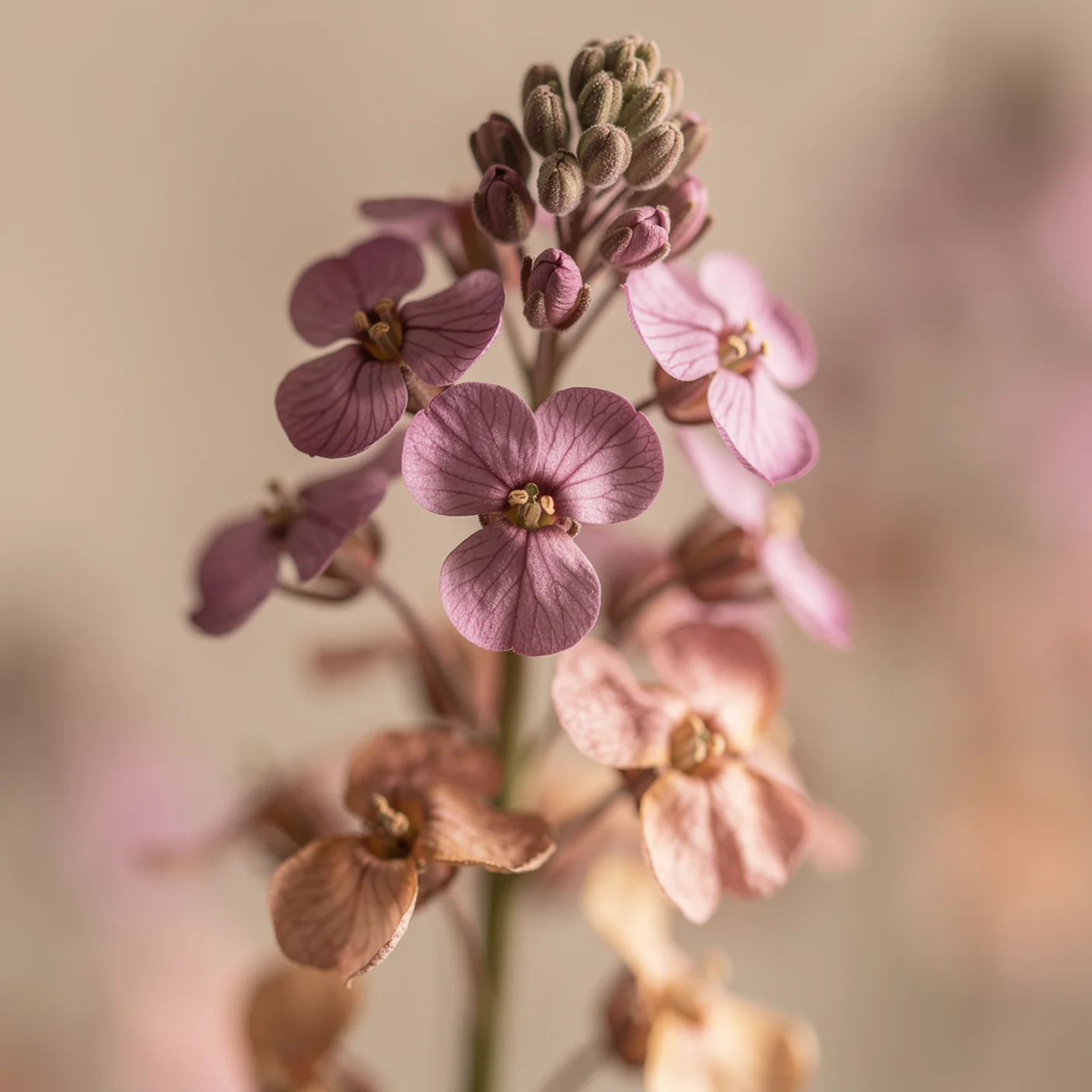
Wallflower
Bowles's Mauve
“The most undervalued plant in the garden centre. 'Bowles's Mauve' flowers for months, smells like cloves, and costs almost nothing.”
— ROSIE
Rosie's Take
Wallflowers are the kind of plant that gardening snobs tend to overlook, which is exactly why I like them. They're cheap, they're cheerful, and 'Bowles's Mauve' — named after the great plantsman E.A. Bowles — happens to be one of the most generous plants in any garden. It flowers for months. Months. Starting in late winter and often still going in midsummer, with barely a pause.
The colour is a warm, dusty mauve — not purple, not pink, but somewhere in between, like the inside of a plum or the sky just after sunset. It changes slightly depending on the temperature, leaning cooler in spring and warmer as summer approaches. Mixed into a border with tulips and forget-me-nots, it's one of those combinations that looks effortless and is.
The scent is the thing people forget about. Wallflowers are properly, old-fashionedly fragrant — a warm, clove-like sweetness that carries on the air in the evening. 'Bowles's Mauve' has it, and on a warm April evening you can catch it from several feet away. It's the scent of the kind of garden I want to grow old in.
I always have one by the back door. They're short-lived perennials — three or four years at best before they get leggy and give up — but they're so cheap and easy to replace that it barely matters. Take a few cuttings in summer, stick them in a pot of grit, and you've got the next generation ready.
Where to Buy
If you want to try wallflower for yourself, here's where I'd point you:
We may earn a small commission from purchases made through our links, at no extra cost to you.
✿ From the folklore cabinet
Wallflowers get their name from their habit of growing in walls and ruins — you'll find them in the crumbling mortar of old castles and churches across Europe. In the language of flowers, they represent faithfulness in adversity, which makes sense for a plant that thrives in the least hospitable spots. 'Bowles's Mauve' was discovered in E.A. Bowles's garden at Myddelton House in Enfield, which is now open to the public and worth a visit in spring.