Monarda
Cambridge Scarlet (Bergamot)
“Aromatic, characterful, and magnetically attractive to bees. Shaggy scarlet flower heads and the scent of Earl Grey tea. May get mildew, but the personality is worth the risk.”
— ROSIE
Rosie's Take
Monarda 'Cambridge Scarlet' is the plant that taught me about scent as architecture. Brush past it — even lightly, even accidentally — and the air fills with bergamot. Not a gentle waft. A full, aromatic, citrus-and-spice exhalation that rises from the foliage as if the plant has been waiting for you to touch it. The whole plant is aromatic: stems, leaves, flowers, all of it saturated with that distinctive bergamot oil that gives Earl Grey tea its flavour.
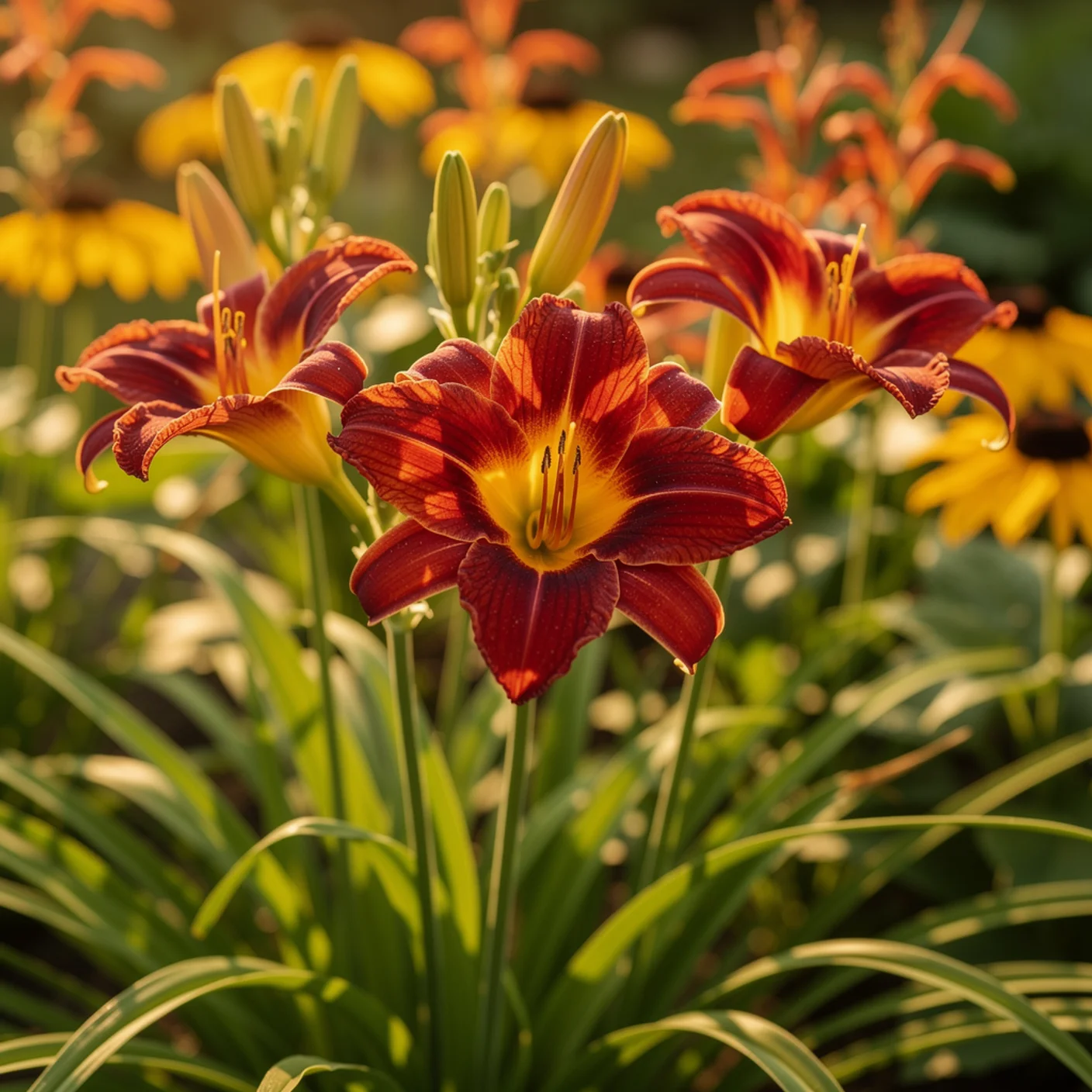
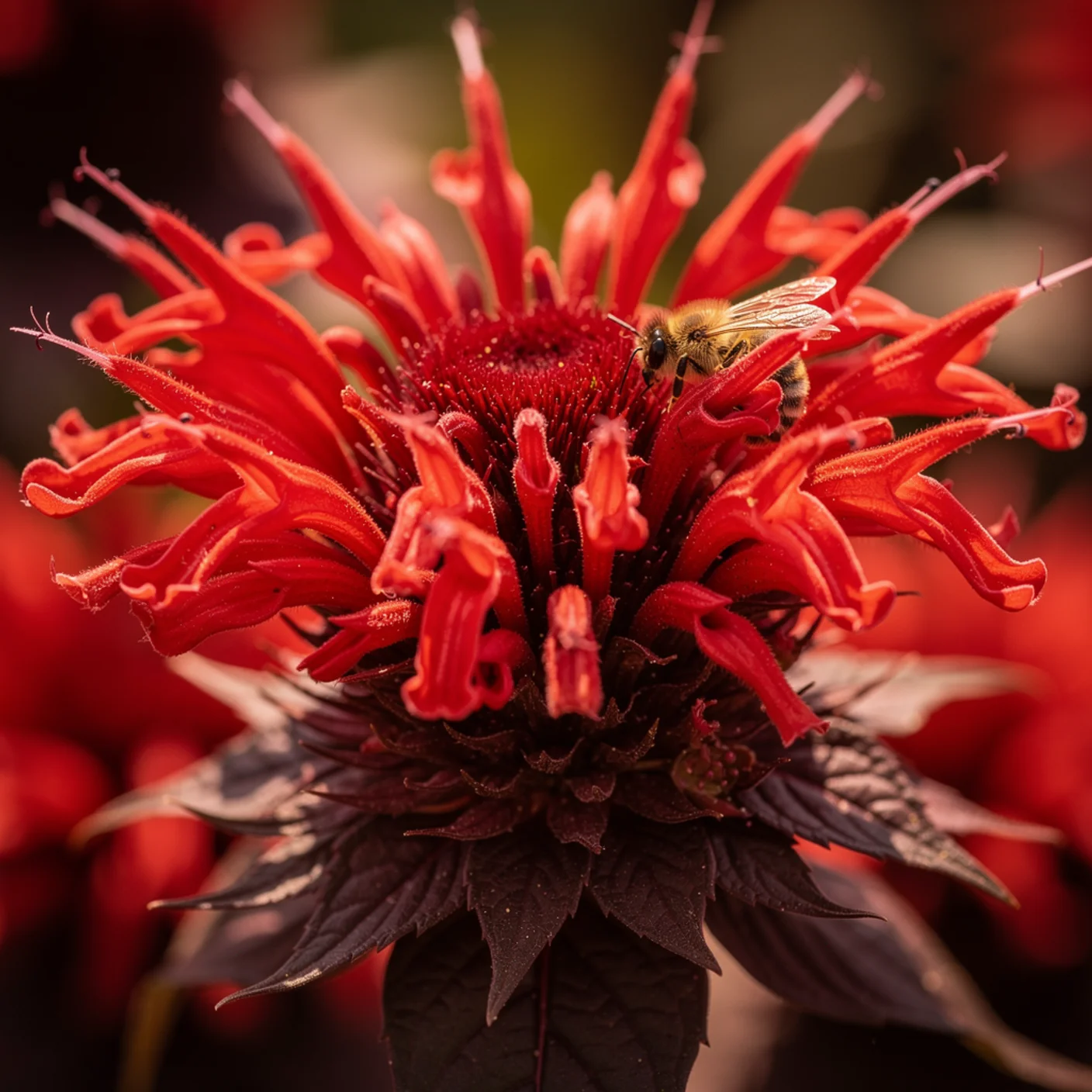
The flowers are extraordinary things — whorls of tubular, hooded, scarlet petals arranged in a shaggy, crown-like head on top of a square stem. They look like tiny red fireworks, or punk hairdos, or the headgear of some eccentric medieval order. Hummingbirds love them in North America. In Britain, we settle for bees, which force their way into the tubular flowers with single-minded determination.
It flowers from July to September, which is a good run, and the dead flower heads have their own structural interest — dark, spiky spheres that persist into autumn and look good frosted. I leave them standing until they collapse, because the seedheads attract finches.
The honest warning: monarda can get mildew. 'Cambridge Scarlet' is one of the older varieties and more susceptible than some modern selections. Good air circulation, decent soil, and not letting it get too dry are the preventatives. In a good year, when the conditions suit it, a clump of 'Cambridge Scarlet' in full bloom — those scarlet whorls above that aromatic, minty foliage — is one of the most characterful sights in the summer border. It's a plant with personality. You don't just notice it, you remember it.
Where to Buy
If you want to try monarda for yourself, here's where I'd point you:
We may earn a small commission from purchases made through our links, at no extra cost to you.
✿ From the folklore cabinet
Monarda is named after Nicolas Monardes, a sixteenth-century Spanish physician who wrote about New World plants without ever visiting the Americas. The Native American Oswego people brewed a tea from the leaves, which became known as 'Oswego tea' and was adopted by colonists as a substitute for imported tea during the Boston Tea Party boycotts. The bergamot scent is chemically similar to that of the bergamot orange used to flavour Earl Grey, though the plants are unrelated. 'Cambridge Scarlet' was raised in Britain and has been a garden favourite since the early twentieth century. A plant that connects the Boston Tea Party to the British tea table via a Spanish doctor who never left Seville — that's the kind of history I enjoy.