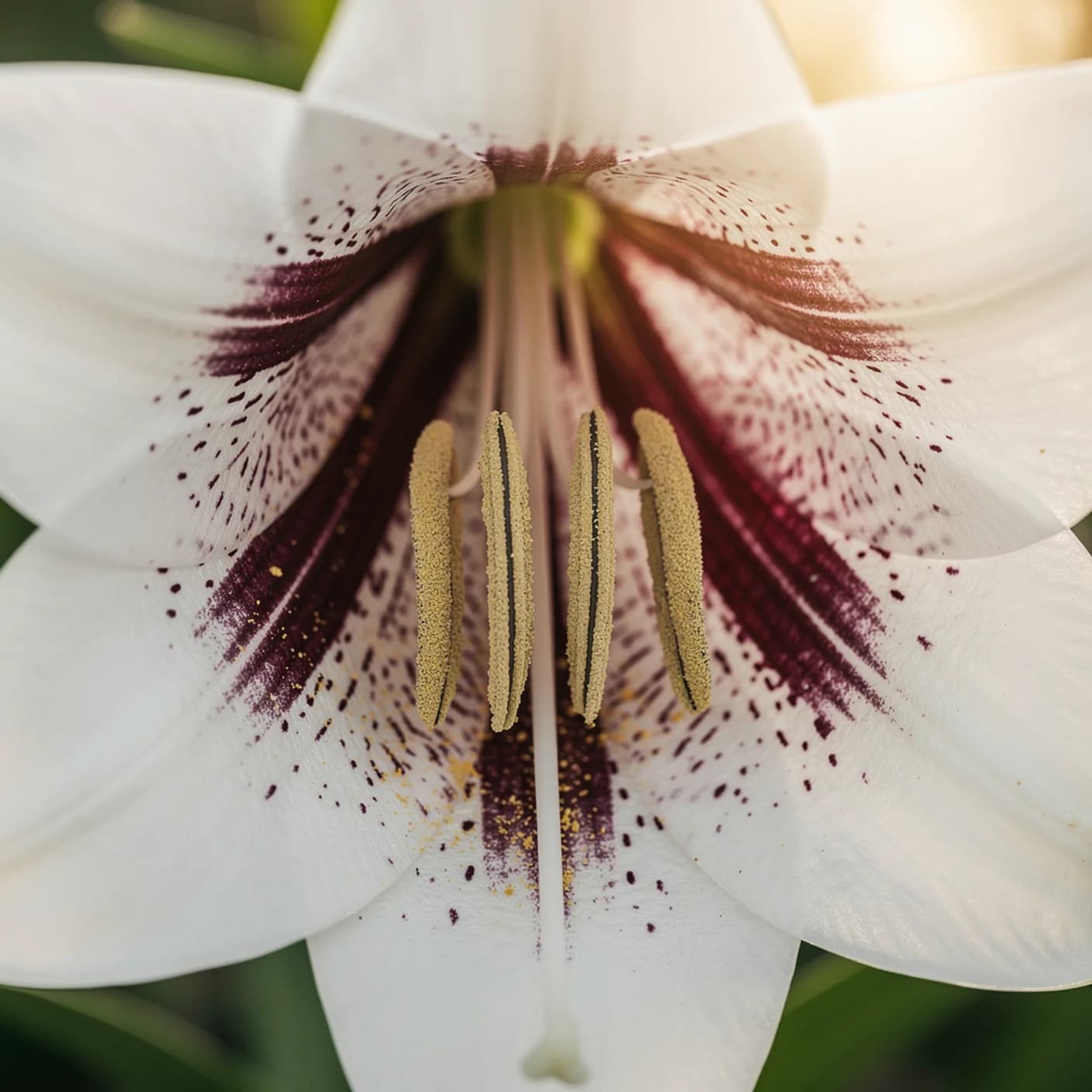
Giant Himalayan Lily
Cardiocrinum giganteum
“The most spectacular bulb on earth. A decade's patience rewarded with ten feet of scented white trumpets in woodland shade. Monocarpic, magnificent, and genuinely unforgettable.”
— ROSIE
Rosie's Take
The first time I saw a Cardiocrinum giganteum in flower, I didn't believe it. A lily — if you can call it that — standing ten feet tall, carrying a column of enormous, trumpet-shaped, white flowers streaked with maroon on the inside, pumping out a perfume so intense and so sweet that it stopped me at twenty paces. It was growing in a woodland garden in Cornwall, in dappled shade between mature trees, and it looked like something from a prehistoric forest. Not a plant. A monument.
The bulb is the size of a football. From it, in spring, huge, glossy, heart-shaped leaves emerge — proper, dramatic, tropical-looking foliage that's impressive long before the flower spike appears. And then in July, the spike shoots up with alarming speed, reaching eight to twelve feet, and the trumpets open — a dozen or more, each six to eight inches long, white with dark maroon-purple streaking in the throat, and powerfully, overwhelmingly fragrant. On a warm July evening, the scent fills an entire section of garden.
Here's the catch: the bulb dies after flowering. The whole thing — years of patient growth — culminates in one magnificent, terminal display. It flowers, it sets seed, it dies. That's the deal. But before it goes, it produces offset bulbs around its base, and these will flower in three to five years. So a colony, once established, is self-perpetuating — each year a different bulb takes its turn at the spectacular, once-in-a-lifetime performance.
It needs deep, moist, humus-rich woodland soil in dappled shade. It is not a plant for a sunny border or a small garden. It's a plant for the gardener who has a mature tree canopy and the patience to wait five to seven years from bulb to flower. But that wait — the anticipation, the gradual increase in leaf size each year, and then the sudden, spectacular, once-and-done flowering — is one of the great experiences in gardening. Worth every year of the wait.
✿ From the folklore cabinet
Cardiocrinum giganteum was discovered by Nathaniel Wallich in Nepal in the 1820s, and introduced to British gardens by Joseph Hooker, who collected bulbs during his famous expedition to Sikkim in 1849-50. The name means 'giant heart-lily,' from the Greek 'kardia' (heart, for the leaf shape) and 'krinon' (lily). In its native Himalayan forests, it grows in clearings and forest margins at altitudes of 1,500 to 3,600 metres. The monocarpic habit — flowering once and dying — is shared with century plants and some bamboos. It's a life strategy that trades longevity for one moment of maximum impact. I can respect that.