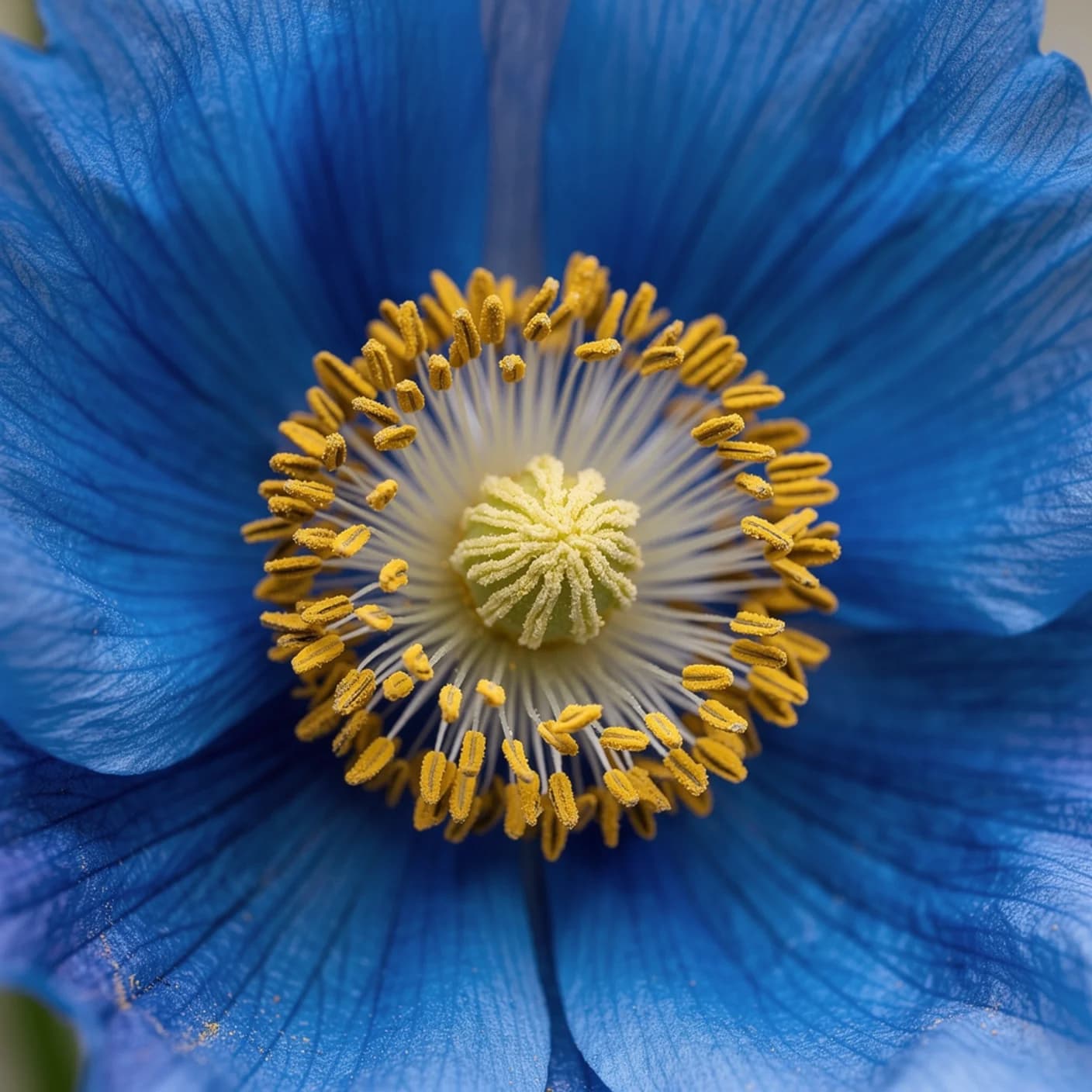
Himalayan Blue Poppy
Lingholm
“The holy grail of the garden world. Not easy, not forgiving, but that blue is worth every failure along the way.”
— ROSIE
Rosie's Take
The first time I saw a Himalayan blue poppy in flower, I stood completely still for about thirty seconds because the colour didn't make sense. Blue poppies shouldn't exist. Your brain knows poppies are red, or orange, or maybe white — and then you see this, and it's the most intense, clear, true blue you've ever seen on a flower. Not purple, not violet. Blue.
'Lingholm' is the most reliable variety for British gardens, which is a relative term — meconopsis are not what anyone would call easy. They want cool, damp conditions with acid soil and shelter from hot sun, which basically means they're happiest in Scotland, Wales, or the north of England. If you garden in the south-east, they'll look at your dry, alkaline soil with contempt and quietly die.
But if you can grow them, nothing else in the garden comes close for sheer jaw-dropping impact. Those papery, cup-shaped petals in that impossible blue, with a crown of golden stamens in the centre — it's the kind of flower that makes even experienced gardeners stop and reach for their phone.
They're perennial if they're happy, coming back year after year and slowly forming clumps. But happy is the operative word. They need patience, the right conditions, and a willingness to accept that you might fail. I've killed three. The fourth is thriving. Some things are worth the persistence.
✿ From the folklore cabinet
Meconopsis was first described by Western botanists after plant hunters found it in the Himalayas in the early twentieth century. Frank Kingdon-Ward famously called the blue poppy 'a glimpse of heaven' when he found it in Tibet. The plants became something of an obsession for British gardeners — the horticultural equivalent of Everest. I think the obsession is completely justified.