Nicotiana
Sylvestris
“The greatest evening-scented plant you can grow. Five feet of white, tubular flowers that save their best performance for dusk and moths.”
— ROSIE
Rosie's Take
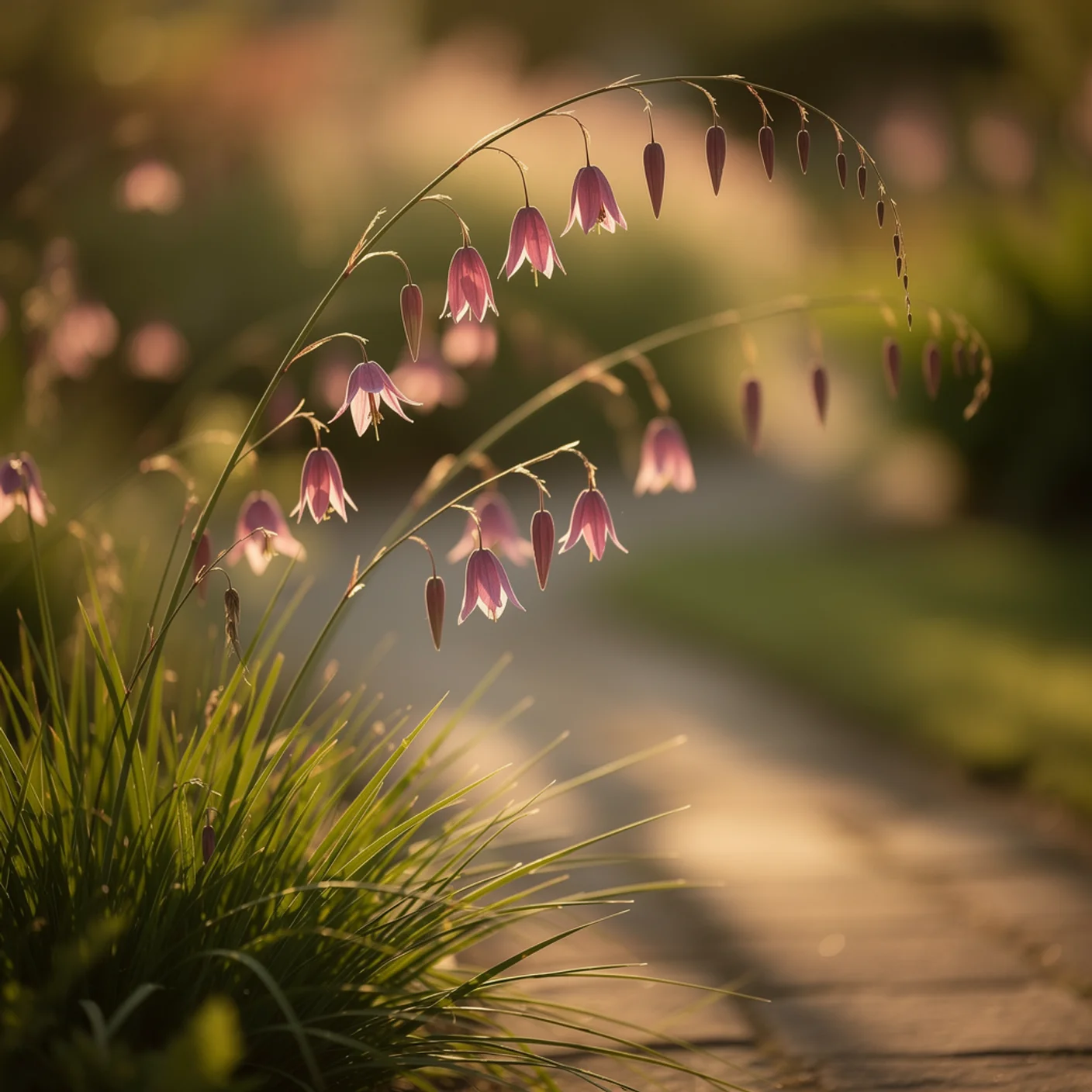
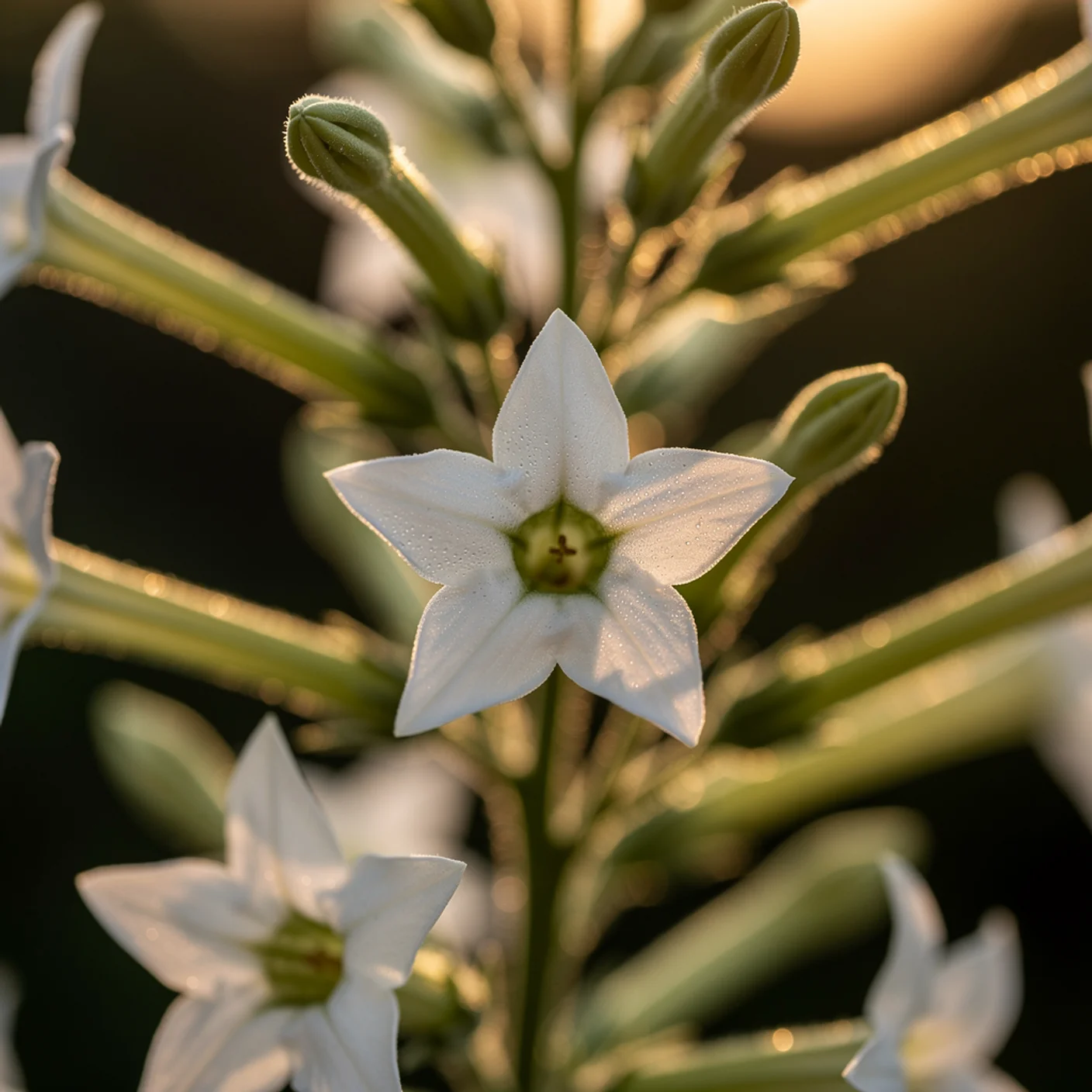
There are flowers you grow for the daytime, and then there's Nicotiana sylvestris, which saves itself for the evening. Those long, white, tubular flowers hang in drooping clusters from five-foot stems, and as the light fades they release a scent that is — genuinely — one of the most intoxicating things any plant produces. Warm, sweet, jasmine-like, with a green, slightly narcotic depth. It's the scent of a summer evening distilled.
During the day, the flowers are elegant but reserved — the tubes hang limply, the petals not fully open, the scent barely detectable. But as dusk settles, something switches on. The tubes flare open into white stars, the fragrance intensifies, and moths appear — hovering, probing, drawn in by a perfume specifically designed for their attention over millions of years of evolution.
I grow it at the back of a border near the garden bench, because that's where I sit in the evening with a glass of wine, and the combination of warm air, fading light, and that scent drifting over is as close to perfect as gardening gets. The basal rosette of enormous, sticky leaves is frankly ugly — let's be honest — but you forgive everything when evening comes.
It's an annual, which means you start from seed each year. The seeds are dust-fine and need light to germinate, which makes the whole process feel slightly miraculous when those tiny seedlings appear. From a speck of dust to a five-foot, evening-scented architectural plant in a single season. That's what annuals can do when they're this ambitious.
Where to Buy
If you want to try nicotiana for yourself, here's where I'd point you:
We may earn a small commission from purchases made through our links, at no extra cost to you.
✿ From the folklore cabinet
Nicotiana is the genus that includes commercial tobacco — the name comes from Jean Nicot, the French ambassador to Portugal who introduced tobacco to the French court in the sixteenth century. N. sylvestris is the woodland species from Argentina, and unlike its commercial cousin, its contribution to human happiness is entirely benign. The Victorians grew it extensively in white gardens and moon gardens designed to be enjoyed after dark — a tradition that deserves reviving. The moths it attracts include hawk-moths, whose hovering flight and long proboscises are perfectly adapted to those deep, tubular flowers.