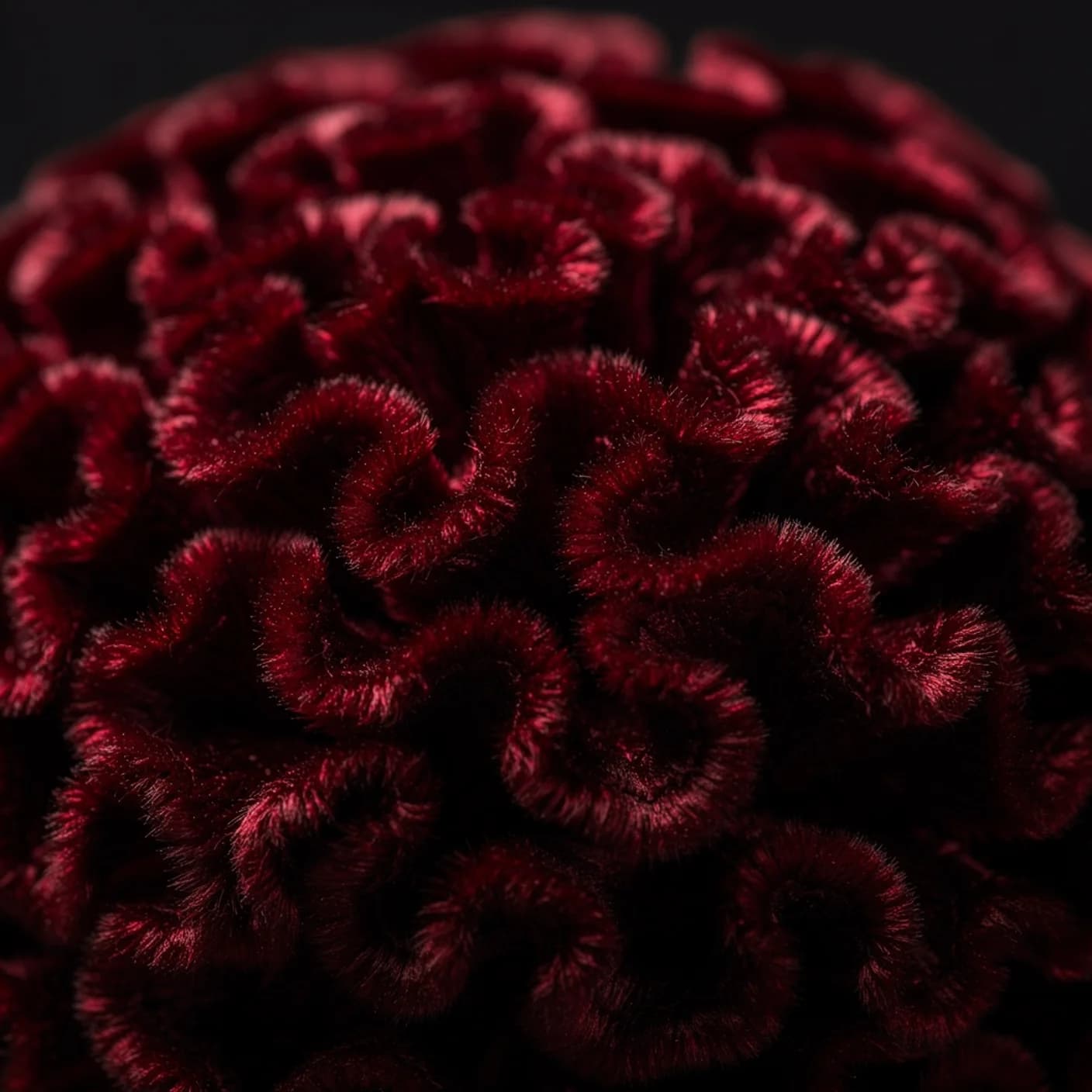
Celosia
Dracula
“The most textural flower you can buy for a few pounds. 'Dracula' dries to near-black and looks extraordinary at every stage.”
— ROSIE
Rosie's Take
Celosia divides opinion in much the same way as marmite or brutalist architecture — you either see extraordinary texture and drama, or you see something that looks like a brain. I'm in the first camp, and 'Dracula' is the variety that put me there.
The colour is the thing. It's a deep, saturated crimson that's almost black — like dried blood or very dark velvet. The texture is extraordinary too — that crested, convoluted surface that looks like coral, or brain tissue, or crumpled velvet. It's genuinely unlike any other flower, and that's rare at this stage of my obsession.
They arrive at florists from late summer through autumn, and they're surprisingly affordable for something so unusual. A few stems in a dark vase make a statement that's quiet rather than loud — all that texture and depth without any of the showiness. They pair brilliantly with dahlias, chrysanthemums, and anything warm-toned and autumnal.
They dry perfectly, which is a bonus I always appreciate. The colour darkens to a gorgeous near-black and the texture holds completely. I have dried celosia from last October that still looks intentional on a shelf. For something that costs a few pounds from the flower stall, that kind of longevity is hard to argue with.
Where to Buy
If you want to try celosia for yourself, here's where I'd point you:
Also available as seeds — Celosia argentea var. cristata 'Century Mixed' - Seeds →
We may earn a small commission from purchases made through our links, at no extra cost to you.
✿ From the folklore cabinet
The name 'celosia' comes from the Greek 'kelos,' meaning burnt — because the flower heads were thought to look like flames. The crested varieties are called 'cristata' types, and they've been cultivated in Asia for centuries. In Nigerian culture, celosia leaves are used as a vegetable in soups and stews, which is a much more practical relationship with a flower than I have.