Laburnum
Vossii (Golden Chain Tree)
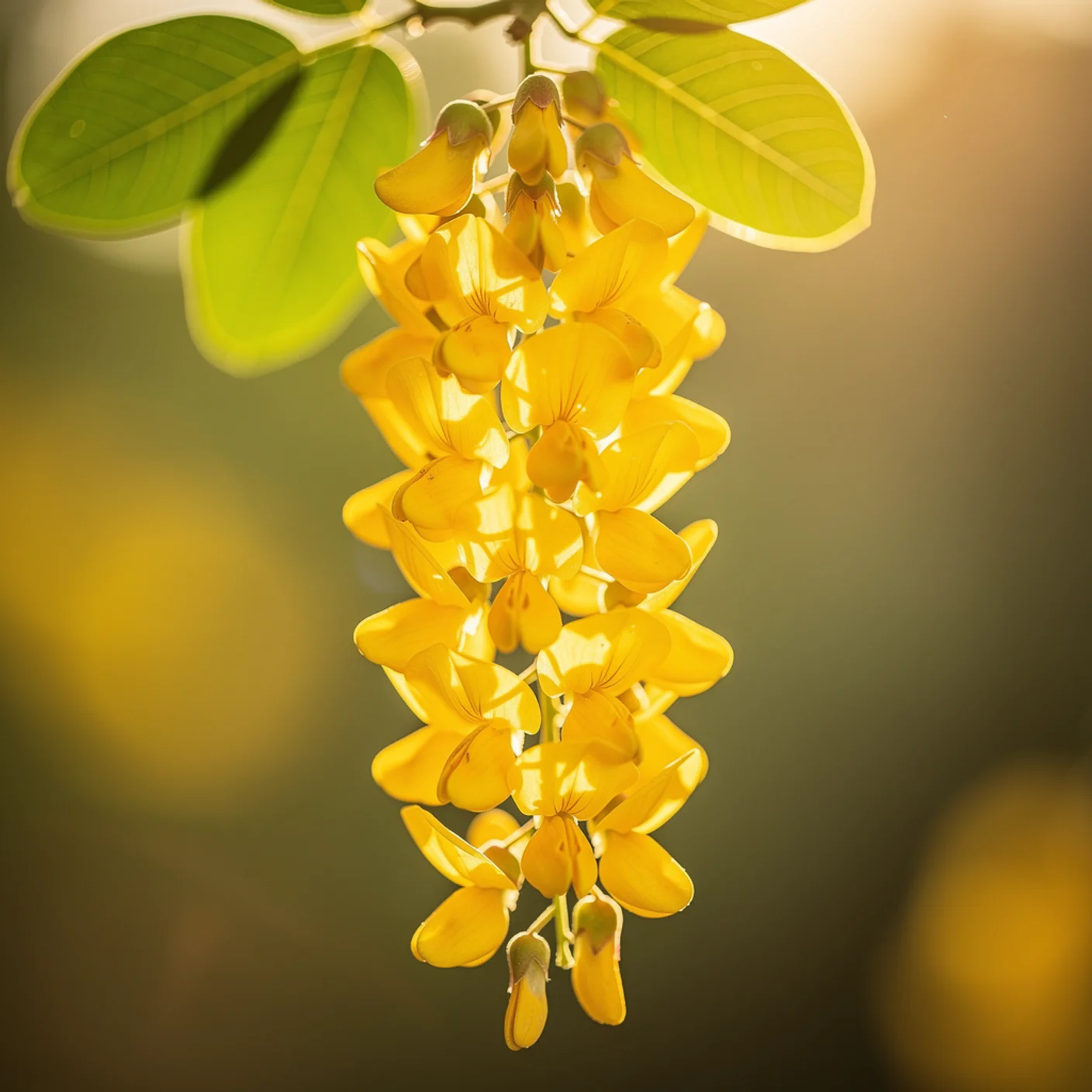
“Late May's most theatrical tree. 'Vossii' rains golden chains from every branch, and standing beneath it in full bloom is one of the great garden experiences.”
— ROSIE
Rosie's Take
A laburnum in full flower is one of the great spectacles of the British spring. Those long, pendulous racemes of bright golden-yellow flowers hanging in cascades from every branch — it looks like the tree is raining gold. Laburnum x watereri 'Vossii' has the longest racemes of any variety, sometimes reaching two feet, and when the whole tree is dripping with them in late May the effect is almost absurdly beautiful.
The famous laburnum arch at Bodnant Garden in North Wales is the image most people carry in their heads — that tunnel of golden chains so dense that the light beneath is filtered yellow. I've walked through it in peak bloom, and the experience is properly overwhelming. Yellow above, yellow on every side, fallen petals yellow on the ground. It's the nearest thing to walking through a painting.
Every part of the tree is poisonous, which gives it a certain dark glamour. The seeds look deceptively like small peas, which has caused problems over the centuries — 'Vossii' was specifically selected because it produces fewer seeds than the species, which makes it somewhat safer in gardens. But the toxicity is part of the story. The most beautiful things often demand respect.
The flowers have a faint, sweet, slightly pea-like scent that you notice when standing directly beneath the canopy. It's not powerful — nothing like wisteria — but it adds to that immersive quality of being inside the tree's performance. A laburnum doesn't share its beauty equally. It wants you underneath it, looking up.
Where to Buy
If you want to try laburnum for yourself, here's where I'd point you:
We may earn a small commission from purchases made through our links, at no extra cost to you.
✿ From the folklore cabinet
Laburnum is native to southern Europe, and the wood is exceptionally hard and beautifully figured — dark heartwood with pale sapwood, like a natural marquetry. It was traditionally used for musical instruments, cabinet work, and the teeth of wooden cogs. The name 'golden chain' is self-explanatory, but an older common name, 'golden rain,' is arguably more accurate. All parts are toxic due to the alkaloid cytisine, which is structurally similar to nicotine. Despite this, laburnum has been one of the most popular ornamental trees in Britain since the seventeenth century. We have always been willing to live alongside beautiful, dangerous things.