Pussy Willow
Salix caprea
“February's most tactile pleasure. A few branches in a tall vase give you the spare beauty of ikebana and the first promise that winter is ending.”
— ROSIE
Rosie's Take
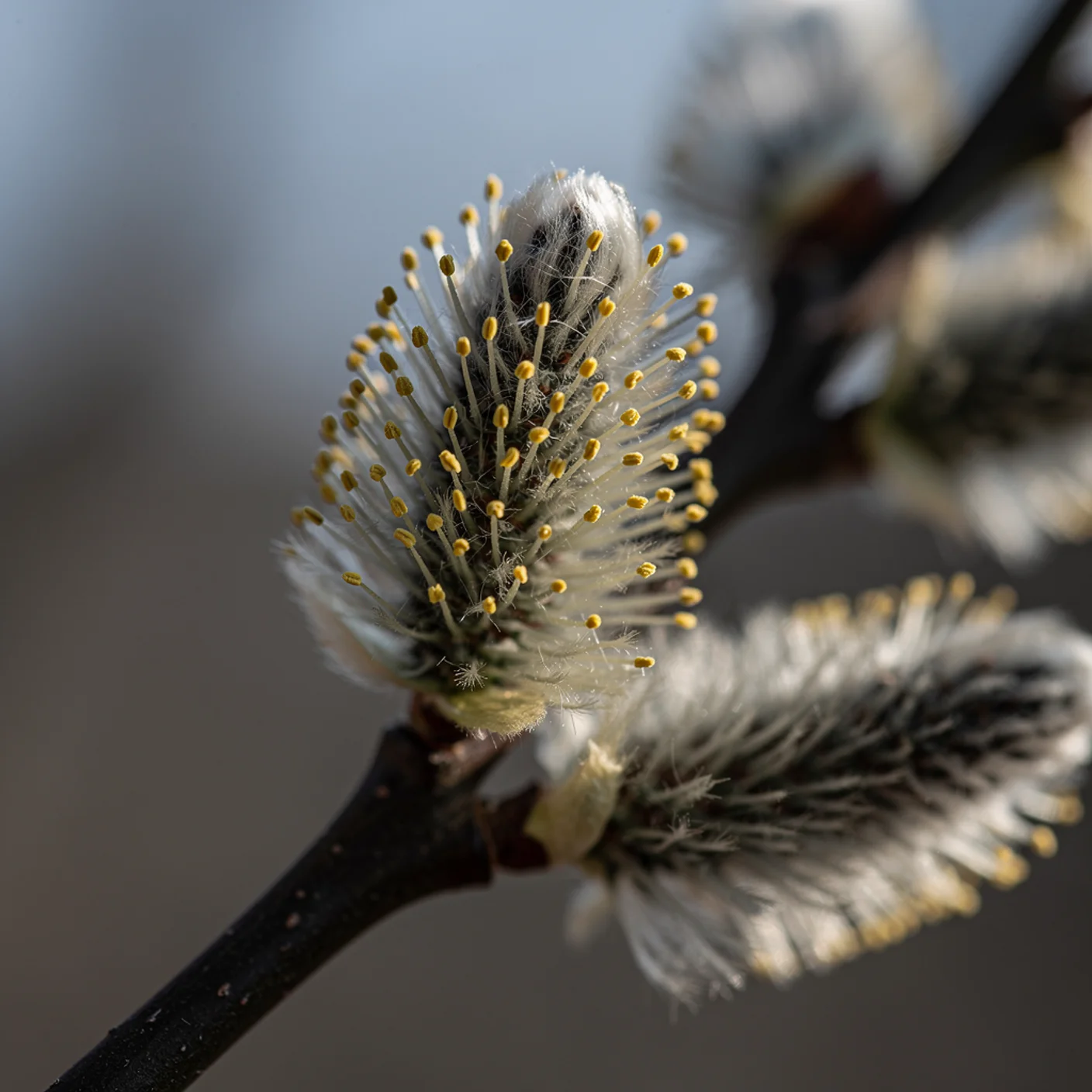
Pussy willow is the first sign of spring you can hold in your hand. Before the daffodils, before the crocuses even, those fat, silvery catkins are swelling on bare branches in February, furry and soft as a kitten's paw. There's a reason every child who ever walked past a hedge in late winter has reached out to touch one.
Salix caprea — the goat willow — is the native British species, and it grows everywhere. Hedgerows, woodland edges, riverbanks, waste ground. The catkins start as tight, silvery-grey pearls pressed against the dark bark, then swell and elongate, becoming those plump, fuzzy ovoids that feel like velvet. Touch them. Everyone should touch them. They're one of the best textures in nature.
A few branches cut for the house are among my favourite things to have indoors in February. In a tall vase or a jug, the bare, dark stems with their silver catkins have a spare, Japanese quality — ikebana without trying. They last for weeks, and if you leave them long enough the catkins develop into their full male form, dusting everything nearby with yellow pollen, which is how you know spring has properly arrived.
Bees adore them. On a warm February afternoon, a flowering pussy willow is the busiest thing in the landscape — early bumblebees and honeybees working the catkins for that first precious pollen after winter. Bringing a branch indoors and watching a confused early bee arrive at your kitchen window looking for its tree is one of those small dramas that makes the season.
Where to Buy
If you want to try pussy willow for yourself, here's where I'd point you:
We may earn a small commission from purchases made through our links, at no extra cost to you.
✿ From the folklore cabinet
Pussy willow catkins were traditionally gathered on Palm Sunday in parts of Britain and northern Europe, as a substitute for the palm branches used in warmer climates. In Polish tradition, people gently tap each other with pussy willow branches on Easter Monday for good luck. The name 'caprea' means 'of the goats' — goats apparently eat the leaves with enthusiasm, which is one of the less poetic origins in botany. In country lore, bringing pussy willow into the house was said to bring good fortune, which is a tradition I'm happy to follow.