Nectaroscordum
Siculum
“The most sophisticated bulb in the late spring garden. Those dangling, multi-coloured bells have the quiet confidence of a plant that knows it's interesting.”
— ROSIE
Rosie's Take
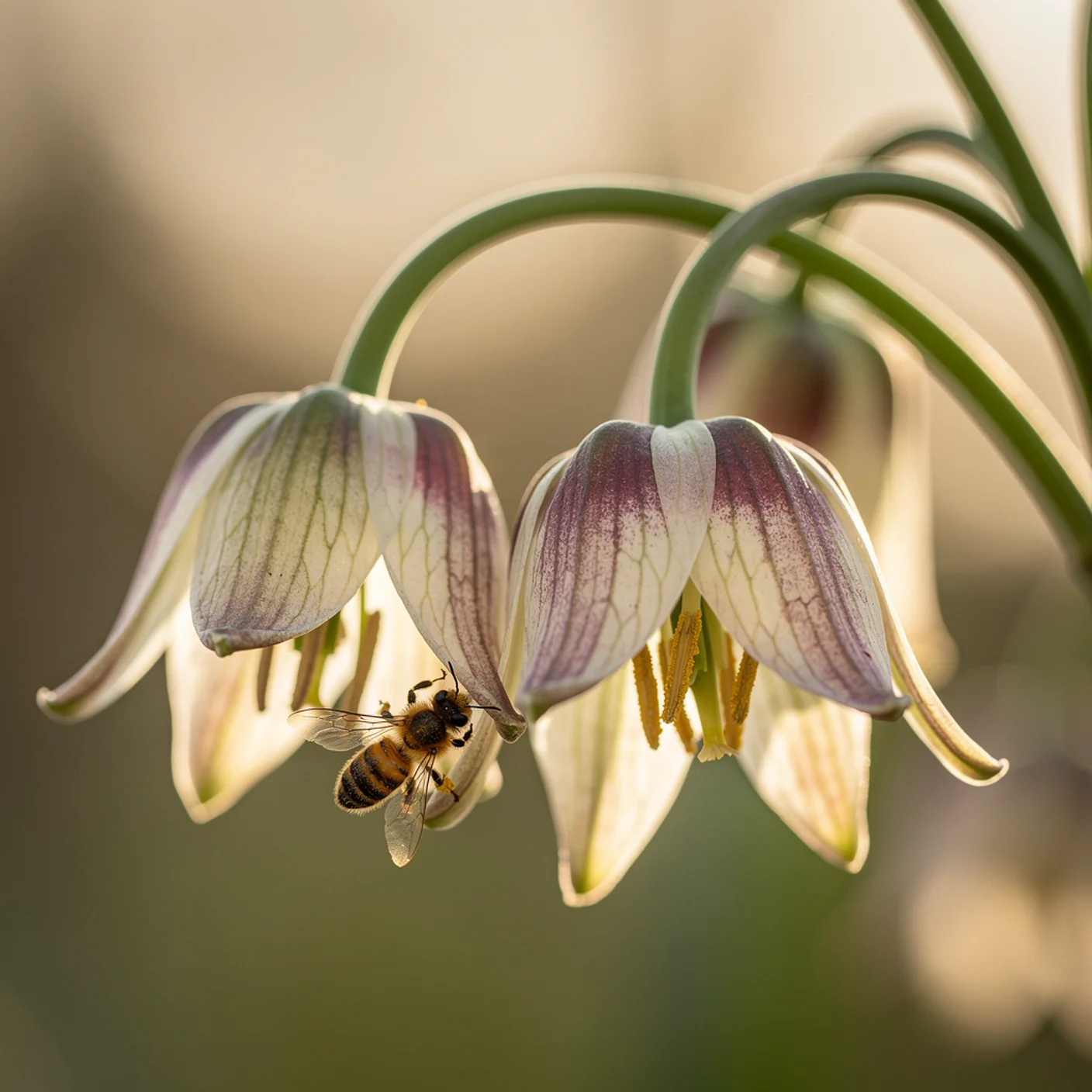
Nectaroscordum siculum is the allium that went to art school. Where regular alliums give you solid, symmetrical globes, this gives you a loose, dangling cluster of bell-shaped flowers at the top of a three-foot stem — each one painted in the most extraordinary palette of cream, flushed with green and stained with dusky pink-purple. They hang downward when fresh, like a chandelier, then flip upright as the seed heads develop, which changes the whole character of the plant.
The colour combination shouldn't work but it does — that muted, complex blend of green, cream, and bruised purple looks like something from an eighteenth-century botanical watercolour. Against dark foliage or threaded through a border of grasses, it's subtle and utterly sophisticated. This is not a flower that shouts. It murmurs.
They self-seed with enthusiasm once established, which divides opinion. I consider it a gift — free plants appearing in unexpected spots, threading themselves through the garden with exactly the kind of casual elegance that's impossible to plan. If you disagree, deadhead before the seeds ripen. But you'd be missing out.
The smell is worth mentioning. Crush a leaf or disturb the bulb and you get a strong, garlicky whiff — it's an allium relative, after all, sometimes classified as Allium siculum. The flowers themselves are faintly scented, and bees are very attracted to the nectar-rich bells. It's one of those plants that other gardeners notice and ask about, which is always a sign you've chosen well.
Where to Buy
If you want to try nectaroscordum for yourself, here's where I'd point you:
We may earn a small commission from purchases made through our links, at no extra cost to you.
✿ From the folklore cabinet
Nectaroscordum means 'nectar garlic' — a name that perfectly captures the dual nature of a plant that smells of garlic but is dripping with sweet nectar. It's native to Sicily and the eastern Mediterranean, growing in shady, rocky places, which explains its tolerance of British conditions. Taxonomists can't quite agree whether it's its own genus or belongs in Allium, so you'll find it listed both ways. Gardeners don't care. We just know it's beautiful and wonderfully easy, which is everything you need from a plant.