Bergenia
Bressingham Ruby
“Unfashionable, indestructible, and quietly gorgeous. 'Bressingham Ruby' earns its place with winter foliage the colour of old wine and spring flowers that demand attention.”
— ROSIE
Rosie's Take
Bergenia is the plant that fashion forgot, and I'm here to argue for its reinstatement. It's been dismissed as municipal planting, as dull, as 'elephant's ears' — a name that doesn't do it any favours. But look at it properly, at the right time of year, and bergenia is quietly extraordinary.
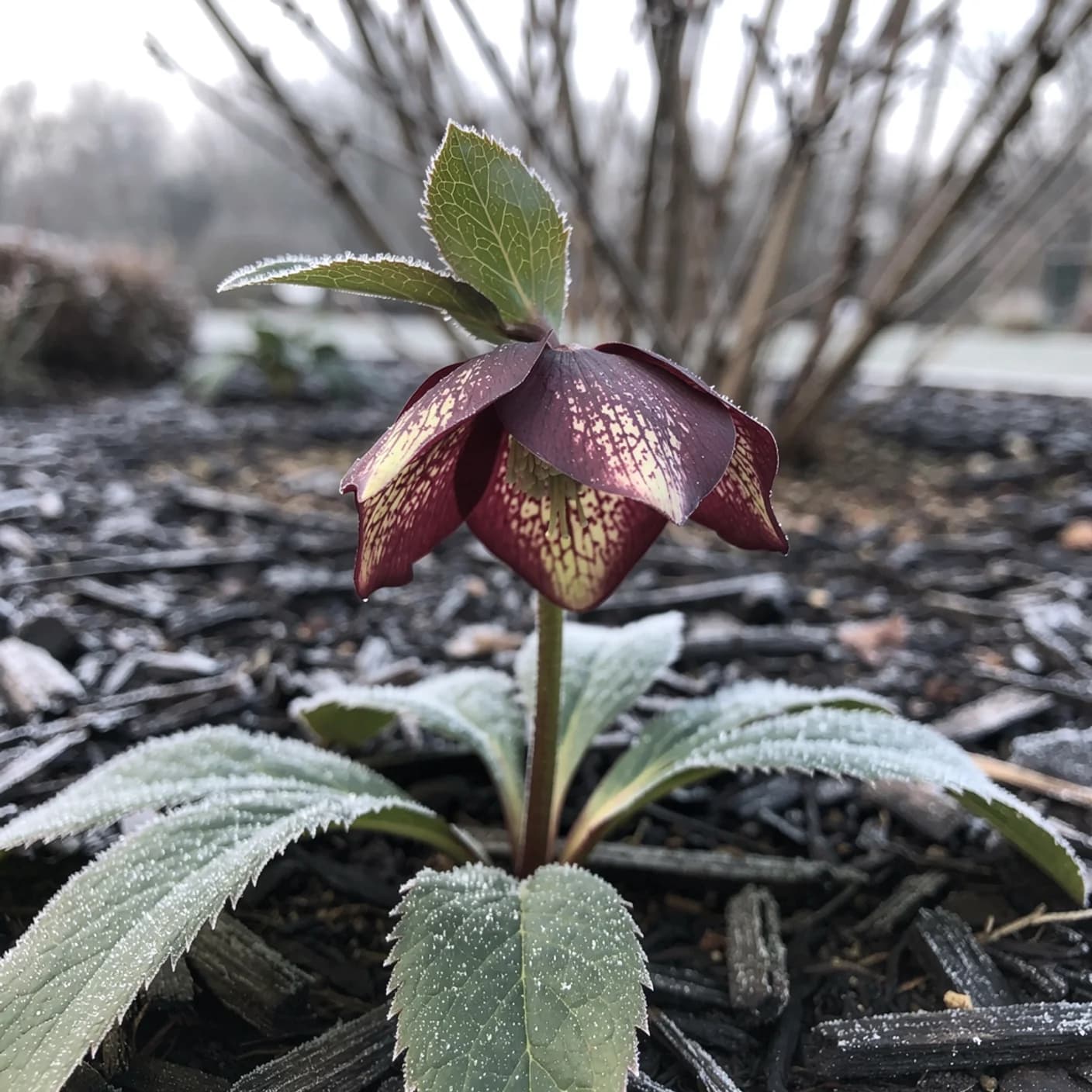
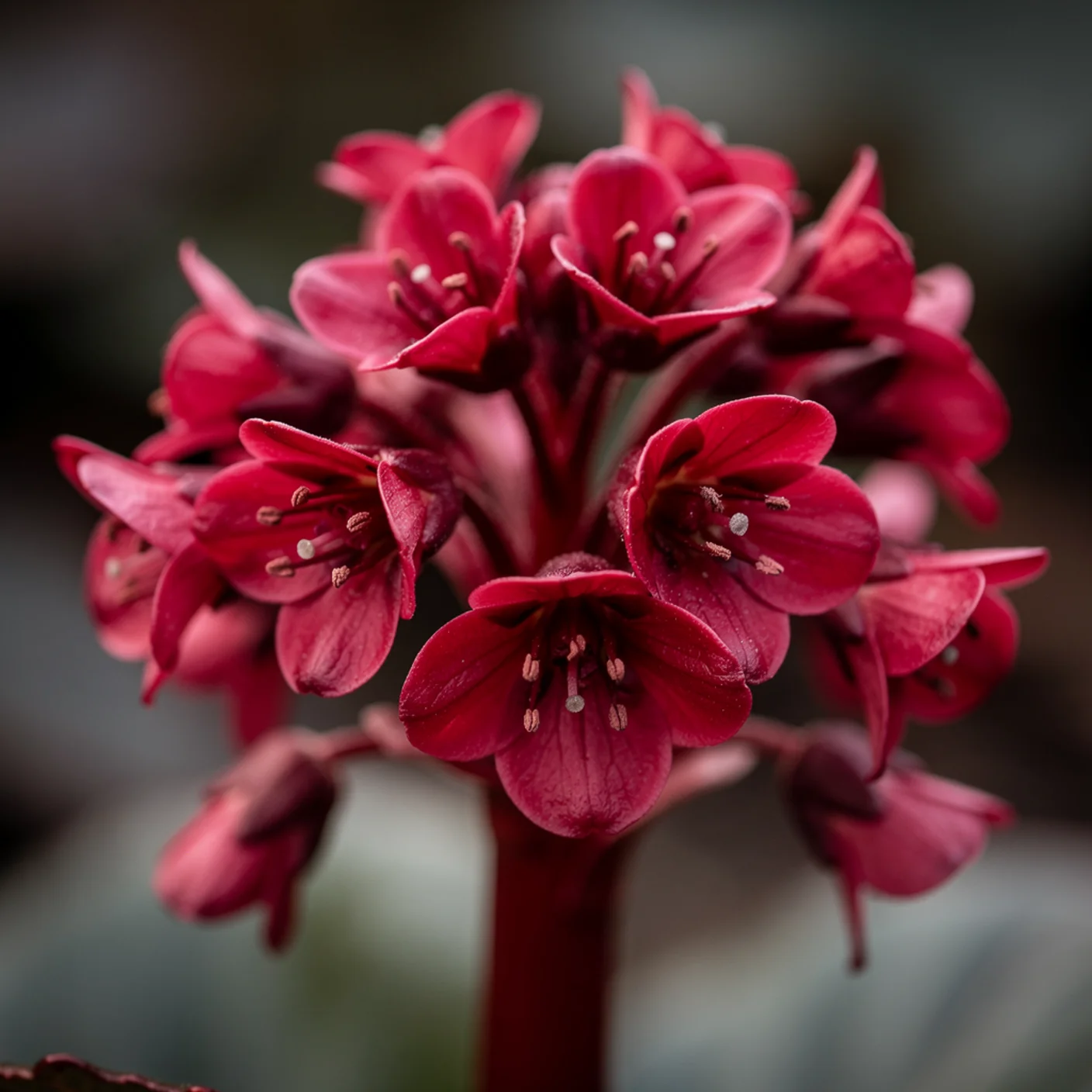
'Bressingham Ruby' flowers in early spring — clusters of deep ruby-pink bells on stout red stems, rising from those big, leathery, rounded leaves. The flowers are richly coloured and showy enough to hold their own against any early spring planting. But the real show is the foliage. Through winter, those great glossy leaves turn the most intense, burnished mahogany-red, darkening with every frost. By January they're the colour of old claret, thick and lustrous and indestructible.
I grow mine along the front of a shady border, where they form a solid, evergreen edge that looks good twelve months of the year. In winter, when everything else has gone, those dark, wine-coloured leaves are the only colour at ground level, and they catch the low sun beautifully. By March, the flower stems push through and suddenly the plant has two things going on — dark foliage and bright flowers. It's a two-act performance.
Gertrude Jekyll used bergenia extensively. She understood that a garden needs structure and substance at ground level, and bergenia provides both. If it's good enough for the greatest garden designer Britain ever produced, I'd argue it's good enough for the rest of us. Give it another look. The unfashionable things are often the most reliable.
Where to Buy
If you want to try bergenia for yourself, here's where I'd point you:
We may earn a small commission from purchases made through our links, at no extra cost to you.
✿ From the folklore cabinet
Bergenia is named after the German botanist Karl August von Bergen. The common name 'elephant's ears' refers to the large, rounded leaves, which do bear a passing resemblance. In traditional Mongolian and Siberian medicine, bergenia leaf tea — known as 'chagir chai' — has been drunk for centuries and is said to be restorative. The leaves that have overwintered and turned dark are considered the best for brewing. Gertrude Jekyll called bergenia 'the most useful of our large-leaved plants,' and I've yet to find a reason to disagree with her.