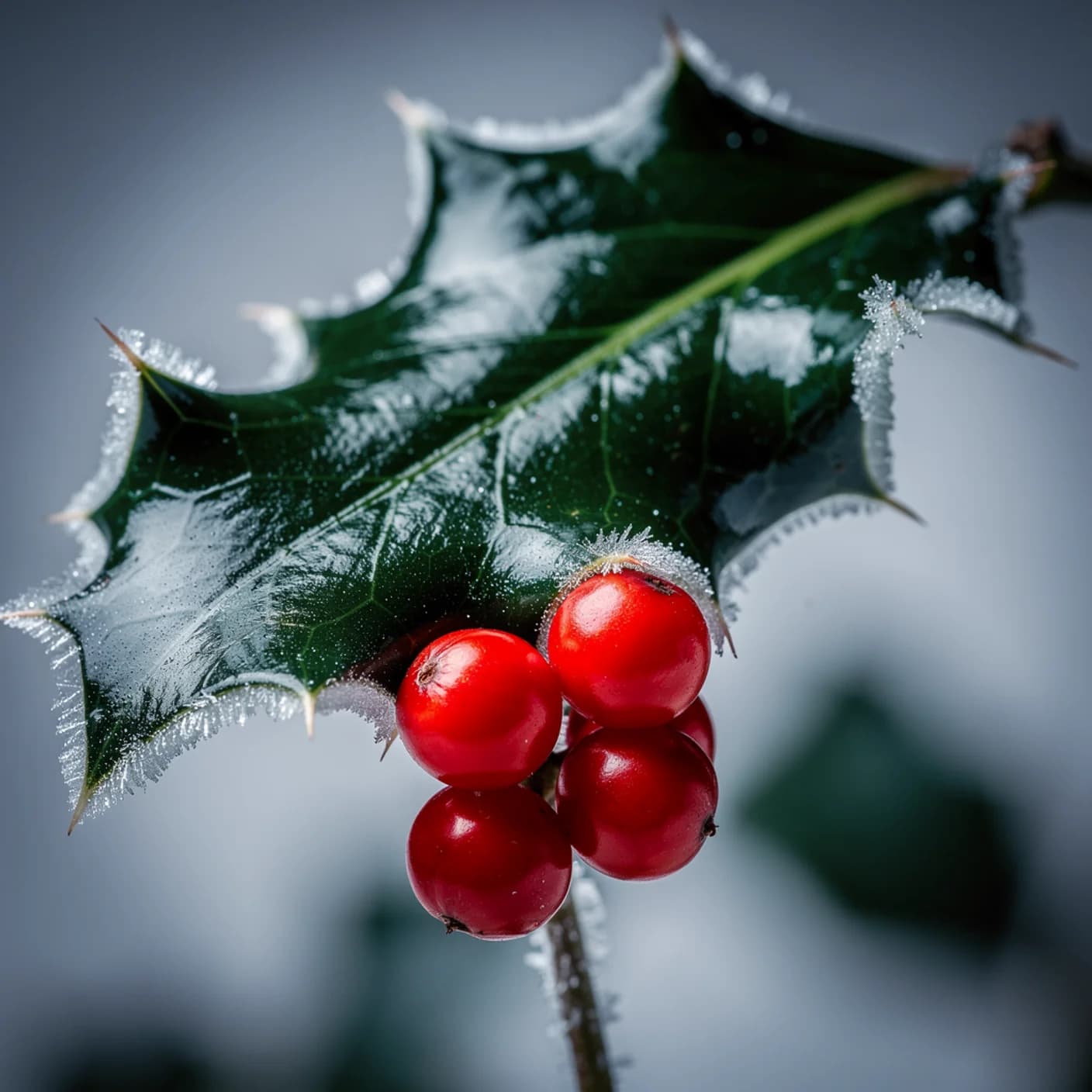
Holly
Ilex aquifolium (English Holly)
“The original winter decoration. Glossy leaves, pillar-box berries, and more folklore than any other British plant. Cut a few stems for the kitchen table in December and join a tradition that predates Christmas itself.”
— ROSIE
Rosie's Take
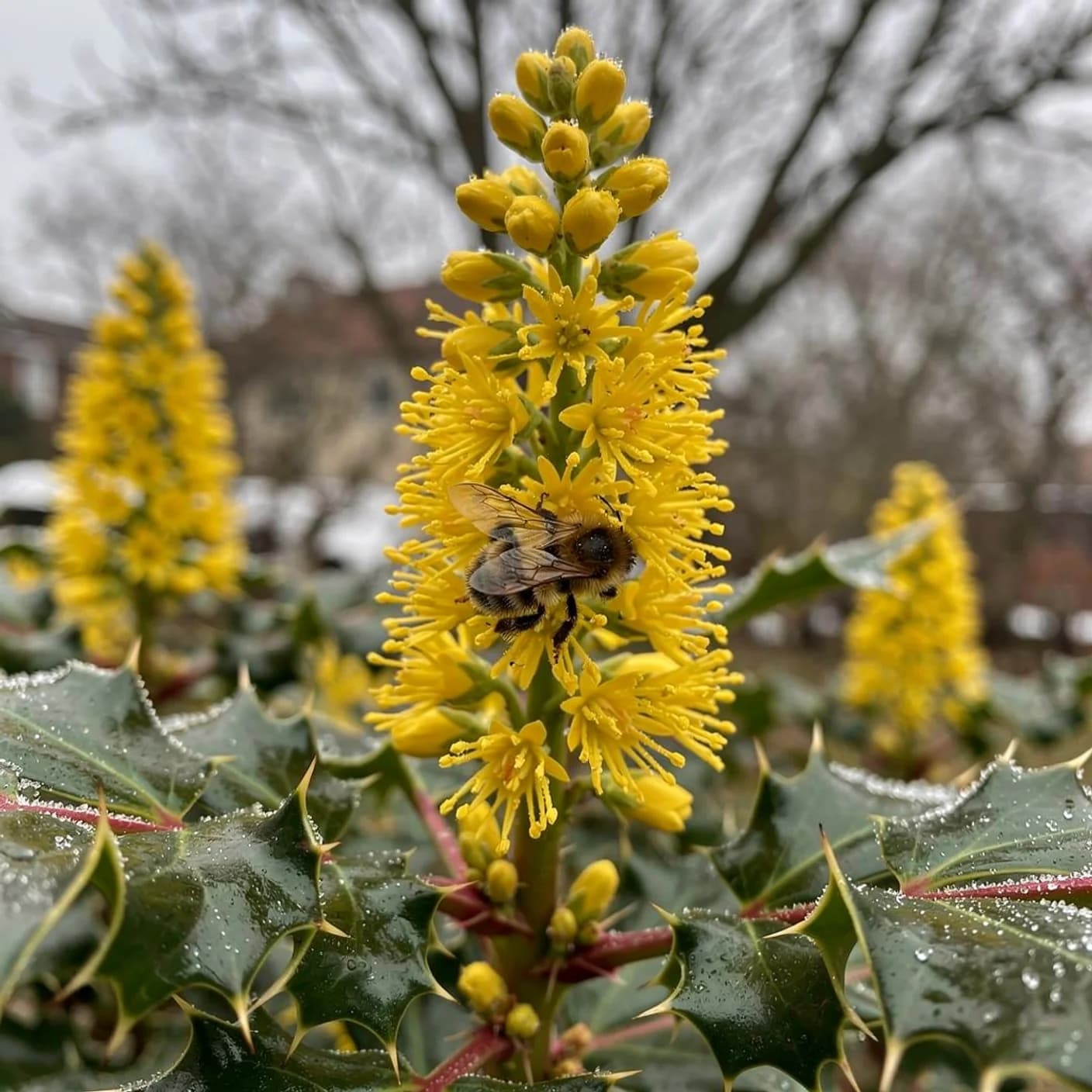
Holly is so deeply embedded in the British winter that we barely see it any more. It's wallpaper — Christmas cards, wreath-making, a sprig on the pudding — and the familiarity has made us lazy about noticing how genuinely extraordinary it is. Those leaves — glossy, dark, architectural, armed with spines sharp enough to draw blood — are among the most beautiful in any British tree or shrub. Hold a single holly leaf up to winter light and it gleams like lacquer.
The berries are the obvious draw. That pillar-box red against the darkest green — it's the colour combination that defined Christmas centuries before anyone thought to commercialise it. But only female hollies bear berries, and only if there's a male nearby for pollination. I know gardeners who've waited ten years for berries on a holly they didn't realise was male. The plant doesn't care about your decorating plans.
Holly grows wild across Britain — in hedgerows, woodland, churchyards — and old, unpruned specimens can reach fifteen metres or more. In the New Forest, ancient hollies form entire groves, their dark canopies creating a cathedral-like understorey in midwinter. Walking through a holly wood in December, with the low sun catching the berries and the leaves throwing sharp shadows, is one of the most atmospheric experiences in the British countryside.
I use cut holly in the house all through December — a few stems in a jug on the kitchen table, a bunch above the fireplace, a wreath on the front door. The tradition goes back to pre-Christian Britain, when holly was brought indoors to shelter woodland spirits through the darkest days. I like that. We think we're decorating. We're actually continuing something thousands of years old.
Where to Buy
If you want to try holly for yourself, here's where I'd point you:
We may earn a small commission from purchases made through our links, at no extra cost to you.
✿ From the folklore cabinet
Holly has more folklore attached to it than perhaps any other British plant. The druids considered it sacred — an evergreen in the dead of winter, proof that life endured. In pre-Christian tradition, holly was brought indoors at the winter solstice to shelter the wood spirits until spring. Christianity absorbed the symbolism: the prickly leaves became Christ's crown of thorns, the red berries drops of blood. In parts of Britain, it was considered terrible luck to cut down a holly tree. The old name 'holm' gives us place names across England — Holmfirth, Holmwood, Holmes. Ilex aquifolium literally means 'holm oak with pointed leaves,' which is the Romans getting confused by the similarity of the two plants' glossy evergreen foliage.