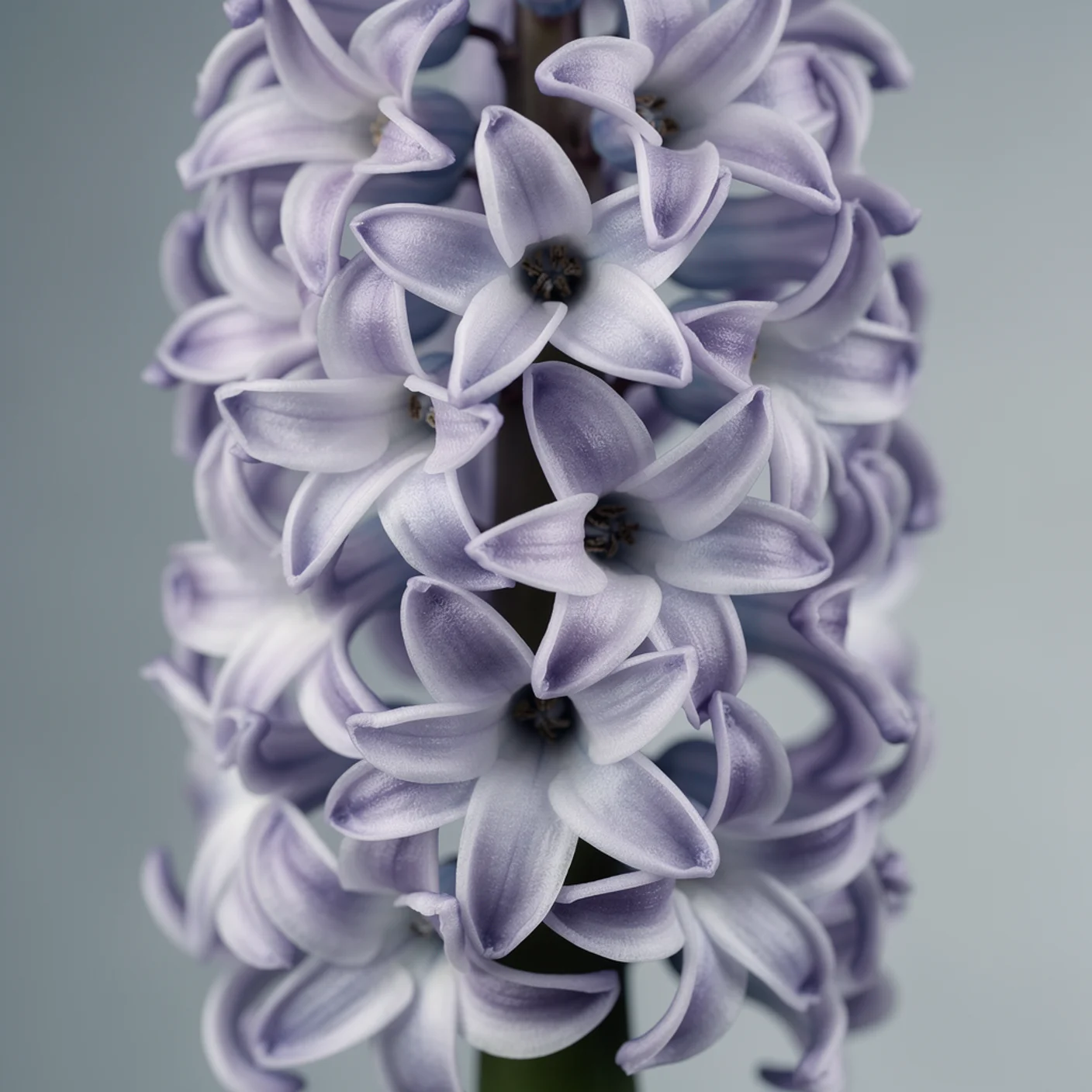
Hyacinth
Delft Blue
“Force one in a glass vase on the kitchen windowsill in January. The scent alone will get you through the rest of winter.”
— ROSIE
Rosie's Take
The smell of hyacinths is my Proustian trigger. One breath and I'm eight years old, sitting at the kitchen table watching the roots grow through the glass of a forcing vase while my grandmother made tea. Delft Blue is the variety I always come back to — that soft, powdery, lavender-blue with a scent that's both sweet and somehow green at the same time. It's spring compressed into a single bulb.
The forcing vase is still my favourite way to grow them. Buy a fat bulb in October, settle it in the neck of the vase with the water just touching the base, wrap it in newspaper and put it somewhere cold and dark for eight weeks. Then bring it into the light and watch. The pale shoot thickens, greens, and then that dense spike of florets pushes up and out, and within days the whole room smells like the door to spring has been quietly opened.
They're one of the few flowers where I actively enjoy the indoor-grown version more than the garden one. A hyacinth in a pot on the kitchen windowsill in January is a small revolution. The scent is almost narcotic — rich, heady, persistent — and it fills the whole room from a single stem.
In the garden, they're planted in autumn and flower in March and April, those dense spikes rising through the last of the cold with a determination I find genuinely moving. They look best planted in tight groups — dozens together — where they read as blocks of colour and the combined scent stops you mid-path.
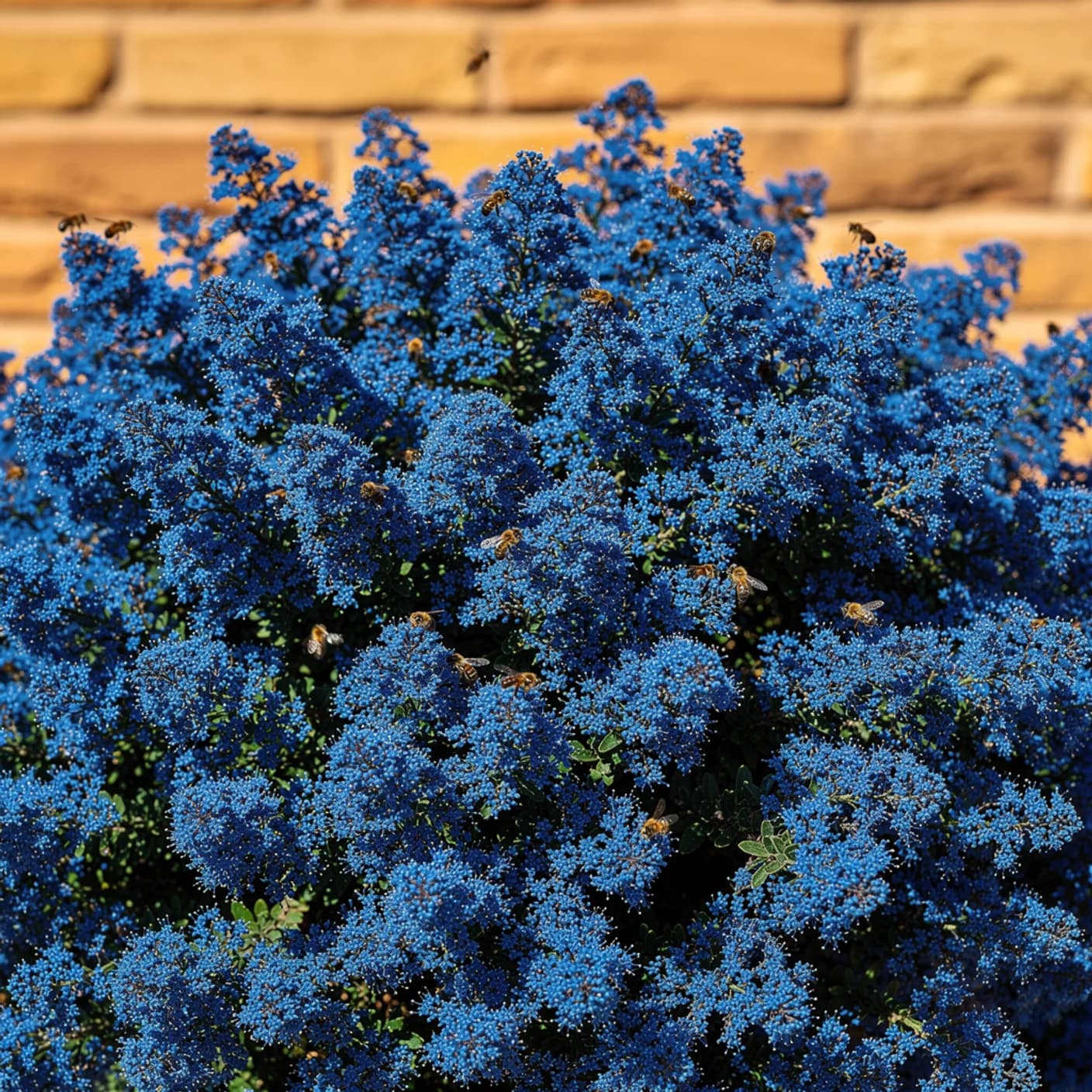
The blue of Delft Blue specifically is worth noting — not the electric blue of a cornflower, but a softer, more complex shade with grey in it, and lavender, and something almost chalky. Like the Delftware pottery it's named for.
Where to Buy
If you want to try hyacinth for yourself, here's where I'd point you:
Also available as bulbs — Hyacinth 'Rhapsody in Blue' →
We may earn a small commission from purchases made through our links, at no extra cost to you.
✿ From the folklore cabinet
In Greek mythology, Hyacinthus was a beautiful young man loved by Apollo. When he was accidentally killed, Apollo's tears mixed with his blood and the hyacinth flower grew from the earth. The marks on the petals were said to spell 'AI' — the Greek cry of mourning. I think about that every spring, and then I put my nose in the flowers and forget everything except how good they smell.