Skimmia
Rubella
“The winter garden's most reliable performer. Those deep red buds colour up through the cold months and then open to sweetly scented white flowers in spring. Unbeatable in a winter pot.”
— ROSIE
Rosie's Take
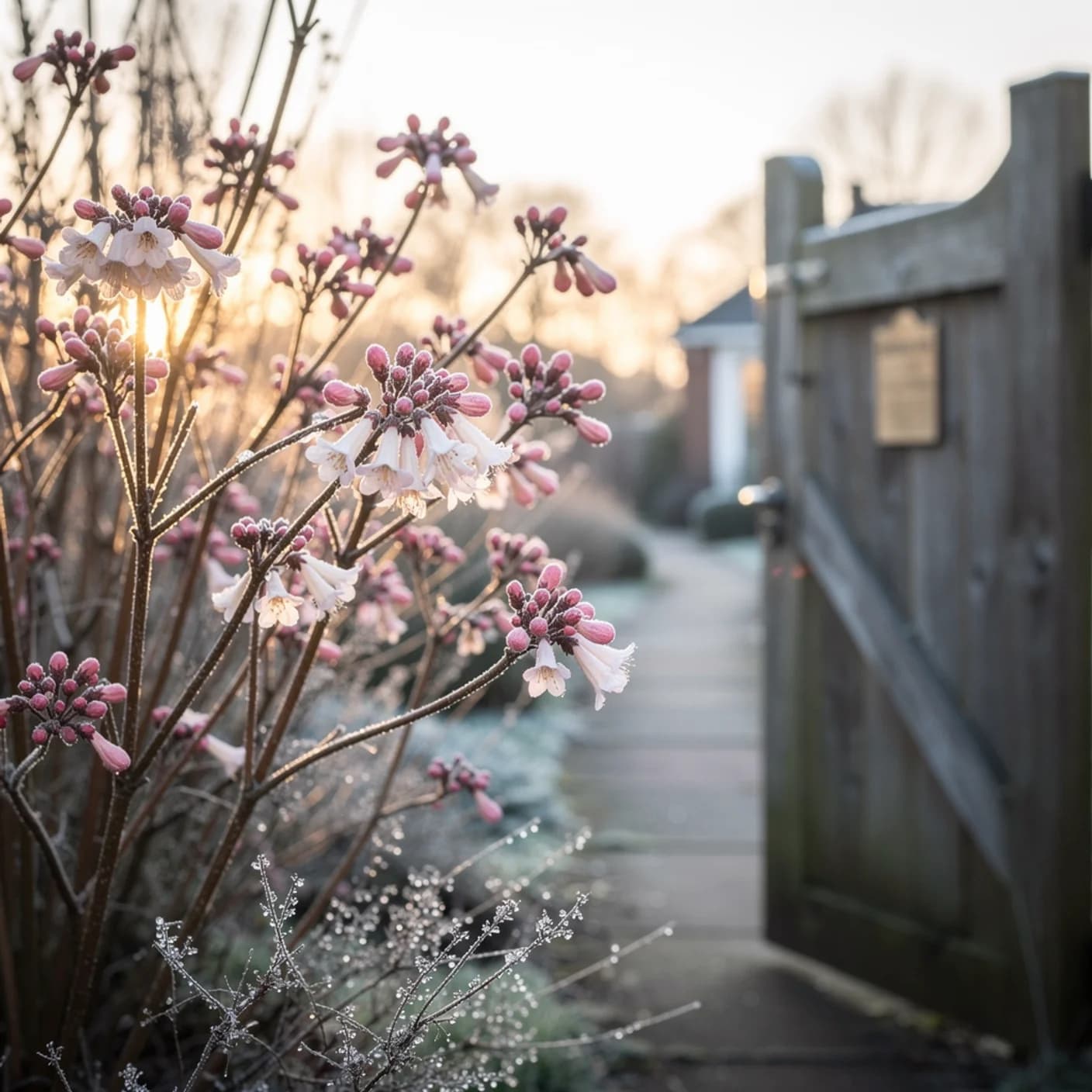
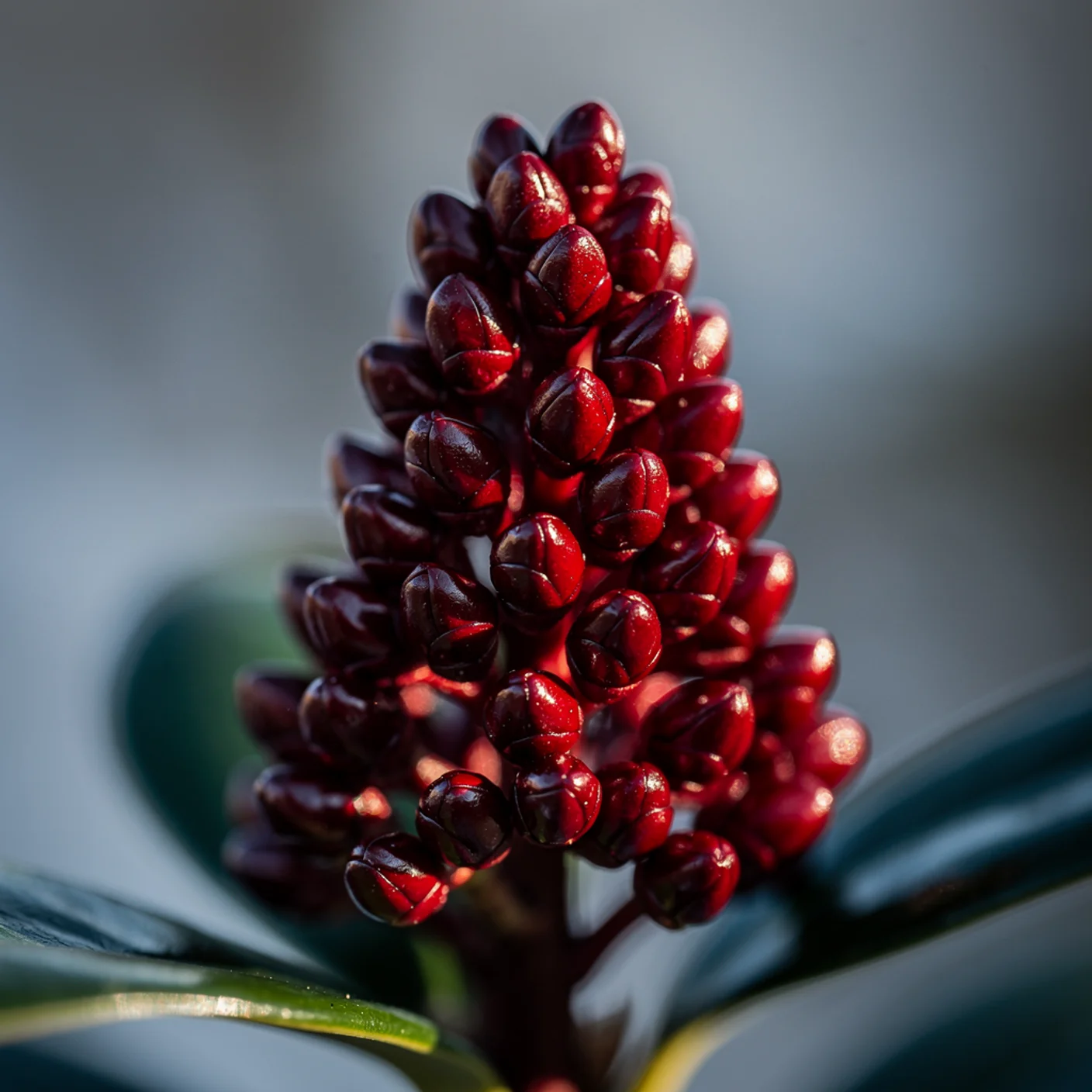
Skimmia 'Rubella' is a winter plant that understands the assignment. While most of the garden is dormant and bare, this compact evergreen shrub is carrying clusters of dark red buds — tight, conical panicles the colour of mulled wine — that sit above the glossy, dark green leaves like little promises. They form in autumn and hold through the entire winter, colouring up in the cold, getting richer and deeper as the weeks go on. They don't open until spring, which means you get five months of those gorgeous red buds.
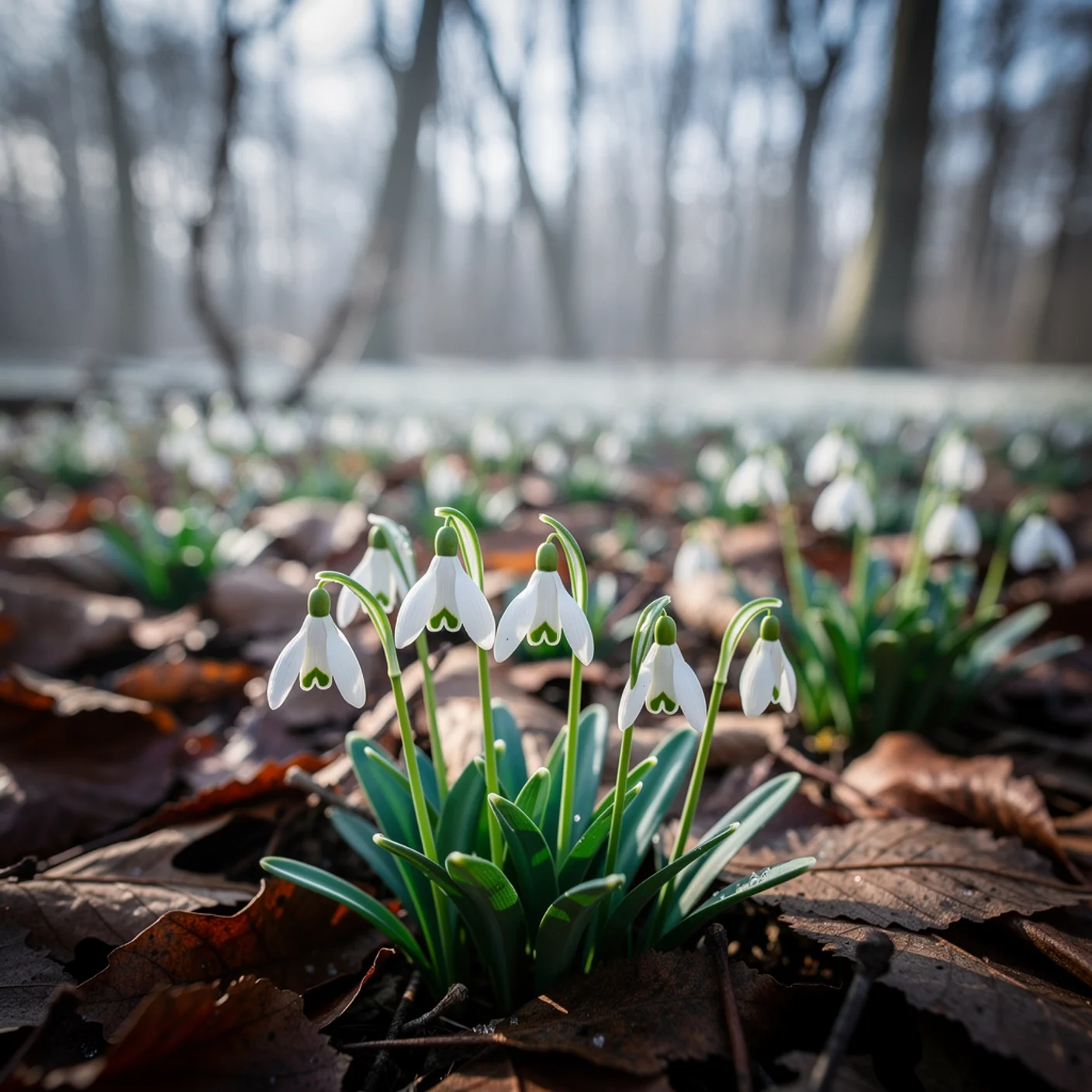
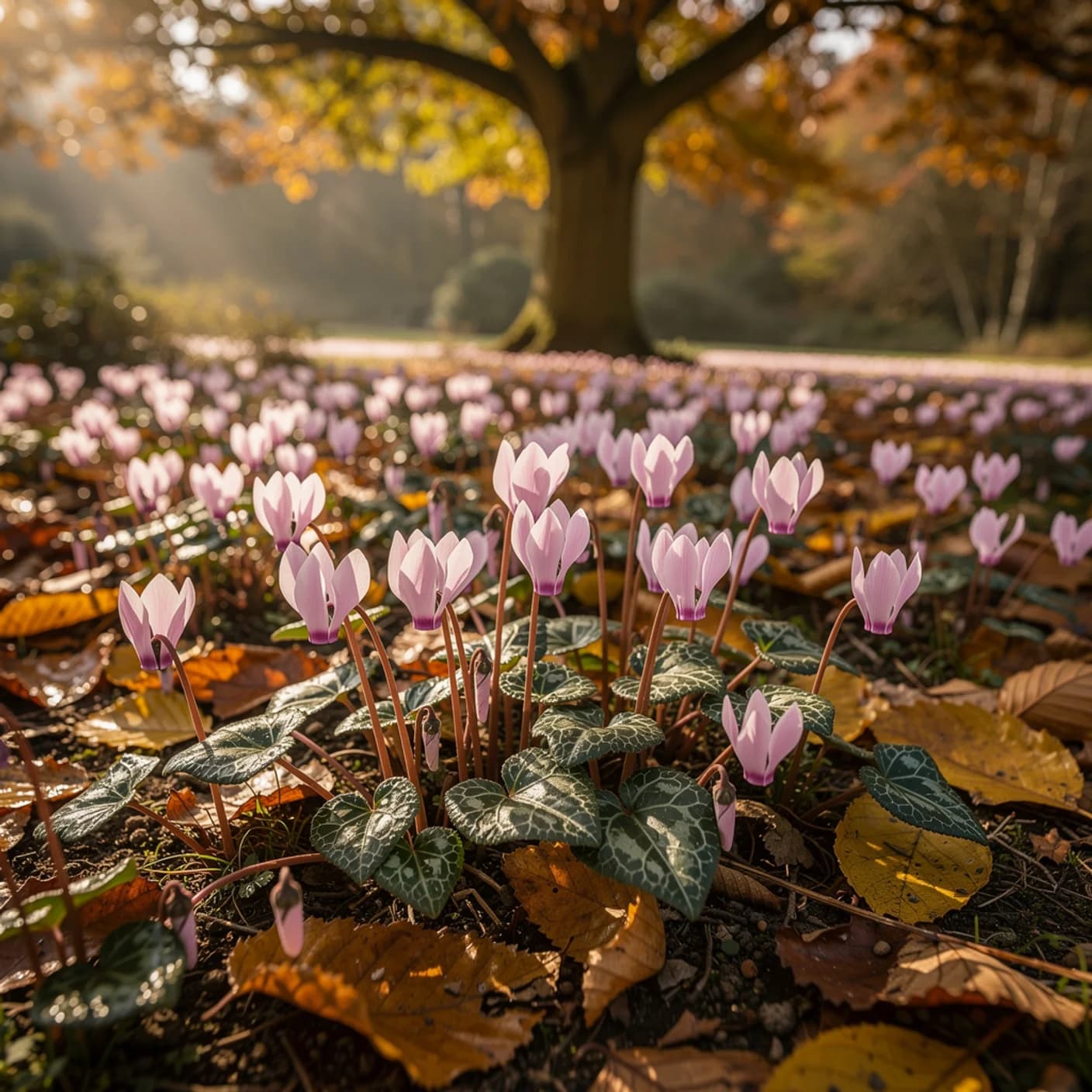
I use it in winter pots. A good 'Rubella' in a handsome container by the front door, underplanted with snowdrops or cyclamen, is one of the most effective winter displays you can create — and it costs almost nothing once you've bought the plant. The dark, leathery leaves have a slightly aromatic quality if you crush them, something resinous and clean.
When the buds finally open in March or April, the flowers are small, starry, and white, with a sweet, almost lily-of-the-valley fragrance that surprises everyone who smells it for the first time. I cut a few stems for the house in early spring and they scent the hallway beautifully. The buds are the main event — the flowers feel like a bonus.
'Rubella' is a male clone, which means it won't produce berries — you need a female skimmia nearby for that. But I've never minded. The buds are the point. They carry the garden through those long weeks between Christmas and spring when everything else has given up. A plant that looks its best when everything around it looks its worst — that's earned my loyalty.
Where to Buy
If you want to try skimmia for yourself, here's where I'd point you:
We may earn a small commission from purchases made through our links, at no extra cost to you.
✿ From the folklore cabinet
Skimmia is native to Japan, China, and the Himalayas. The name comes from the Japanese 'miyama-shikimi,' a word for a related toxic plant — and indeed, all parts of skimmia are mildly poisonous, though the berries would taste so bitter you'd spit them out before doing yourself any harm. In Japanese gardens, skimmia is valued for its evergreen form and winter structure. 'Rubella' was selected for those extraordinary dark red buds, which make it the most popular skimmia in British gardens by a wide margin. I've yet to meet a gardener who planted one and regretted it.