Baptisia
Australis (False Indigo)
“A perennial for the long game. Indigo-blue lupin-like spires, architectural blue-green foliage that never gets mildew, and the promise of decades of improvement. Worth every year of the wait.”
— ROSIE
Rosie's Take
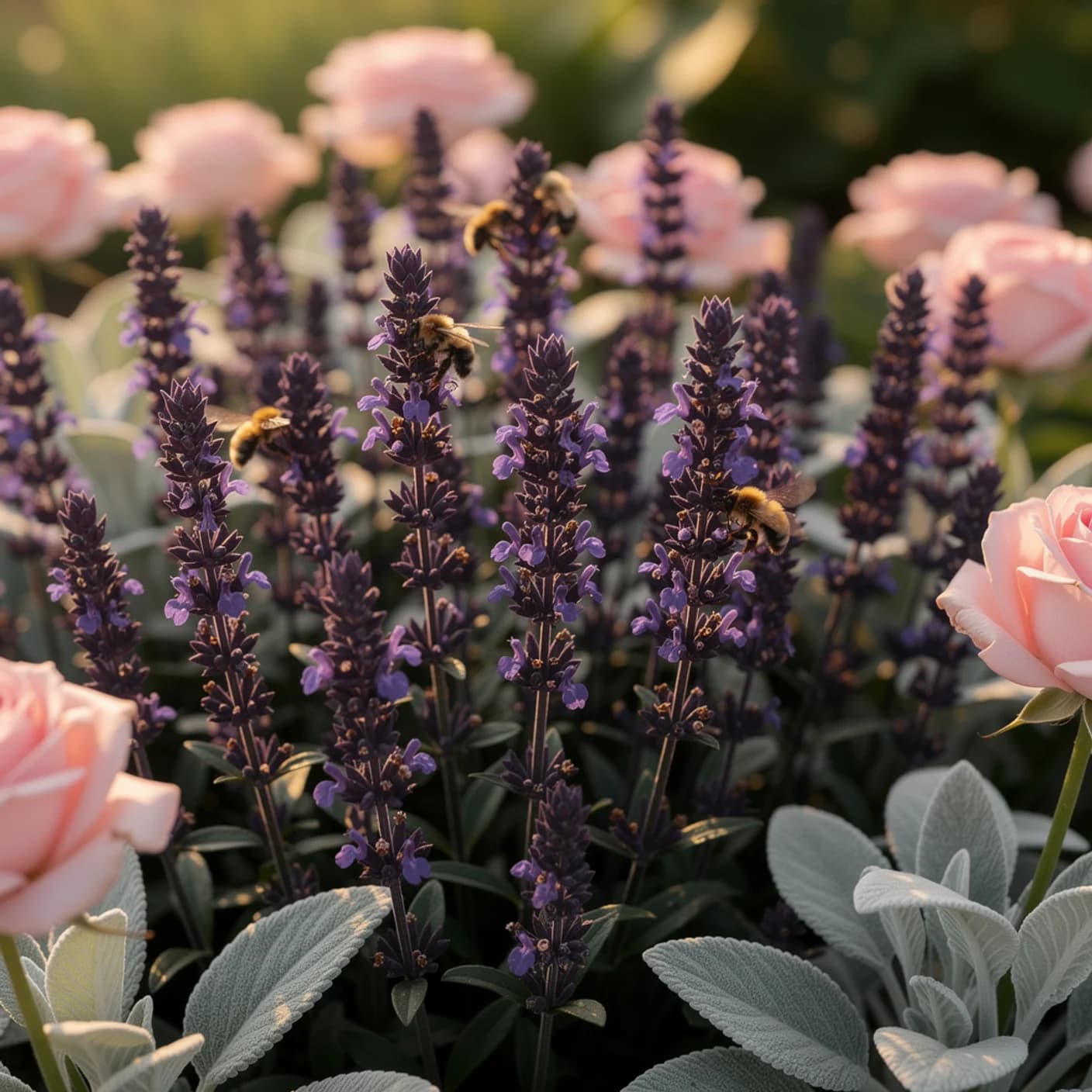
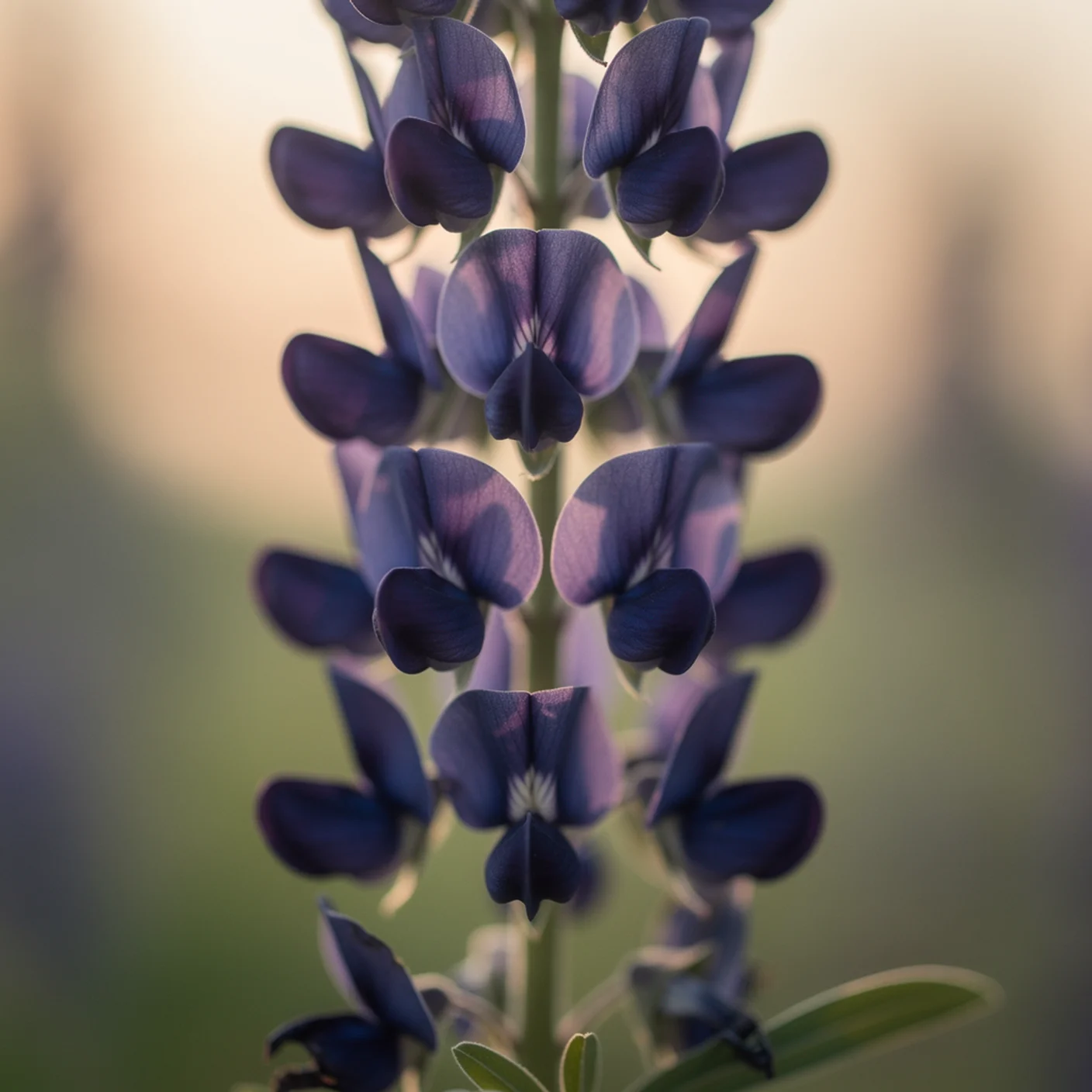
Baptisia australis is one of those plants that makes me wish I'd discovered it ten years sooner. It's a North American prairie perennial that does something no common British border plant quite manages — it builds, over several years, into a substantial, shrub-like clump of blue-green foliage topped in early June with tall spires of indigo-blue, lupin-like flowers. The colour is unusual — a deep, smoky, blue-purple that's closer to woad or indigo dye than to any bright blue.
The flowers are individually pea-shaped — it's a legume, related to lupins and sweet peas — and packed densely along spikes that can reach three feet. The blue-on-blue-green colour scheme is sophisticated and cool, and the overall form is structural without being rigid. After flowering, the spent flowers develop into inflated, dark-grey to black seed pods that rattle in the wind and are almost as ornamental as the flowers themselves.
The foliage is extraordinary — trifoliate, smooth, and a unique blue-green that persists all summer without fading, flopping, or developing the mildew problems that plague lupins. A mature clump of baptisia has the presence of a small shrub, and the blue-green colour of the leaves means it contributes to the border even when not in flower.
It's slow. Really slow. A young plant will take three to five years to reach its full potential, and it resents being moved. But once established, it's essentially permanent — plants can live for decades, getting better each year. In the American Midwest, where it grows wild in prairies, there are baptisia clumps that may be a hundred years old. I planted mine four years ago, and it's only now beginning to hint at what it will become. The best gardens are built on patience and the knowledge that some things are worth waiting for.
Where to Buy
If you want to try baptisia for yourself, here's where I'd point you:
We may earn a small commission from purchases made through our links, at no extra cost to you.
✿ From the folklore cabinet
Baptisia means 'to dye' — the plant was used by early American settlers as a substitute for true indigo, which had to be imported at great expense. The blue dye extracted from baptisia was inferior to genuine indigo but serviceable, earning it the name 'false indigo.' Native Americans used the plant medicinally and as a dye for centuries before European contact. 'Australis' means 'southern,' referring to its range in the south-eastern United States, not to Australia. It's part of the legume family, fixing nitrogen through root nodules, which explains why it thrives in poor prairie soils. A plant that feeds itself, dyes cloth, and looks magnificent — the kind of self-sufficiency that the prairies bred into everything.