Hydrangea
Annabelle
“One stem in a wide-mouthed jug is a statement. Leave the heads on the bush through winter and you'll see why I can't stop talking about this plant.”
— ROSIE
Rosie's Take
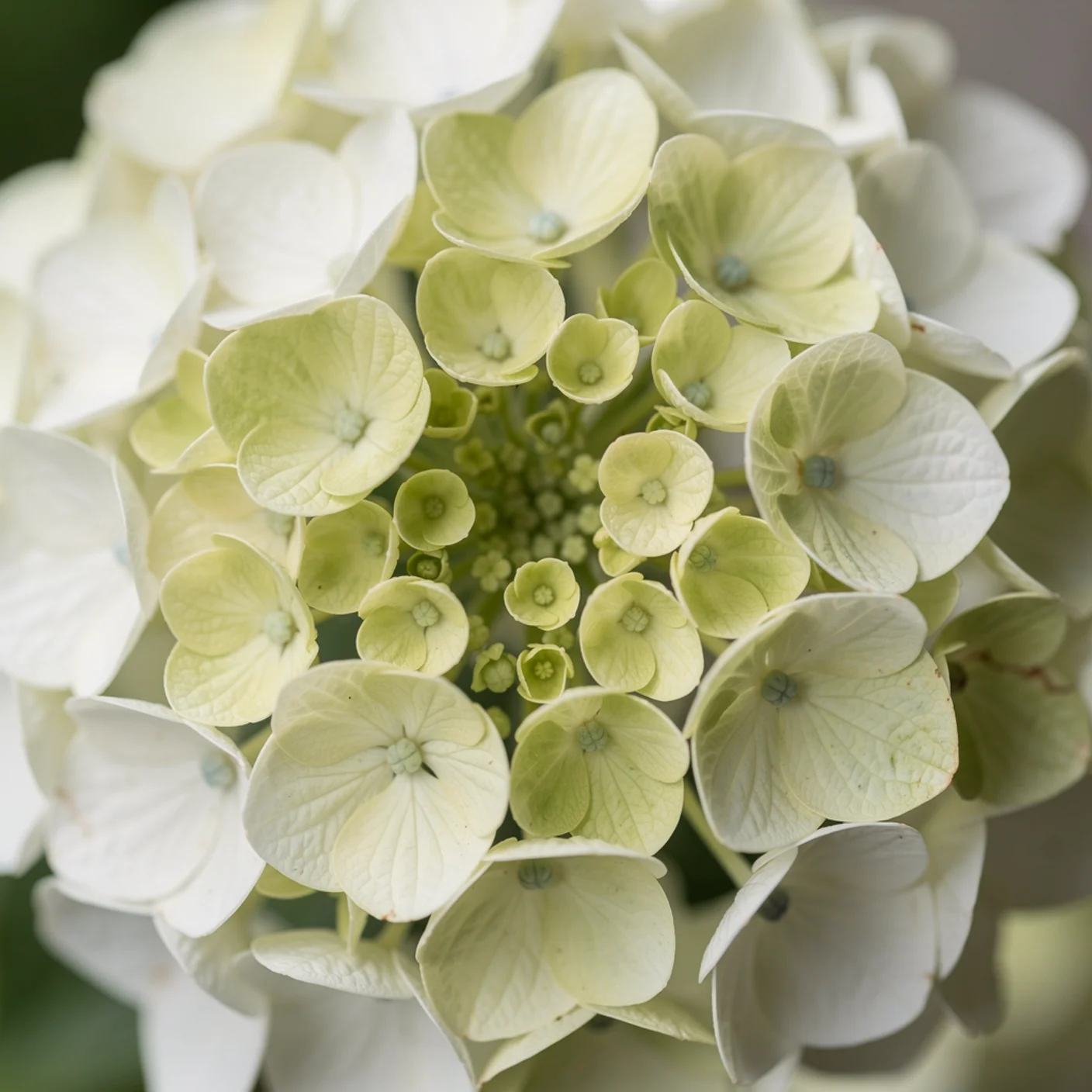
There's a particular kind of generosity that Annabelle hydrangeas have that I find almost overwhelming. Those enormous, round, snow-white heads — each one made up of hundreds of tiny florets packed together into something that looks like a cloud decided to grow on a stem.
I first fell for Annabelle at a friend's house in the Cotswolds. She had three bushes along a shaded wall and they were absolutely billowing with white globes, each one the size of a dinner plate. The light was doing that soft, late-afternoon thing and the whole border looked like a watercolour someone hadn't quite finished. I went home and ordered one immediately.
What I love about Annabelle — apart from the sheer abundance of her — is how she ages. She starts pure white, then gradually turns to the most beautiful pale green as summer wears on, and by autumn she's this papery, dried, antique thing that's just as lovely as the fresh bloom. I leave the heads on through winter. Frost-touched dried hydrangea is one of my favourite sights in a bare garden.
As a cut flower, she's magnificent. Those big heads need a big vessel — a wide-mouthed enamel jug or a deep ceramic pot. One stem is a statement. Three stems is almost too much, and I mean that as a compliment.
She does the remarkable trick of being simultaneously dramatic and calming. A room with Annabelle hydrangeas in it feels generous, cool, and somehow expensive — even though the bush itself is about as low-maintenance as garden plants get.
Where to Buy
If you want to try hydrangea for yourself, here's where I'd point you:
We may earn a small commission from purchases made through our links, at no extra cost to you.
✿ From the folklore cabinet
The name hydrangea comes from the Greek for 'water vessel' — a reference to the cup-shaped seed pods. In Japan, hydrangeas are associated with gratitude and heartfelt emotion, and monks brew the leaves into a ceremonial tea. I love that something this abundant is linked to saying thank you.