Heliotrope
Marine (Cherry Pie Plant)
“The scent everyone forgets about until they smell it again. 'Marine' is dark, handsome, and smells like cherry pie in warm sunshine.”
— ROSIE
Rosie's Take
The common name tells you everything: cherry pie plant. Lean in close to a heliotrope in warm sunshine and the scent is extraordinary — a rich, sweet, vanillin warmth that genuinely does smell like cherry pie, or maybe marzipan, or warm almonds, or all three simultaneously. It's one of the most delicious fragrances in the plant world, and it comes from a flower that most people walk past without a second glance.
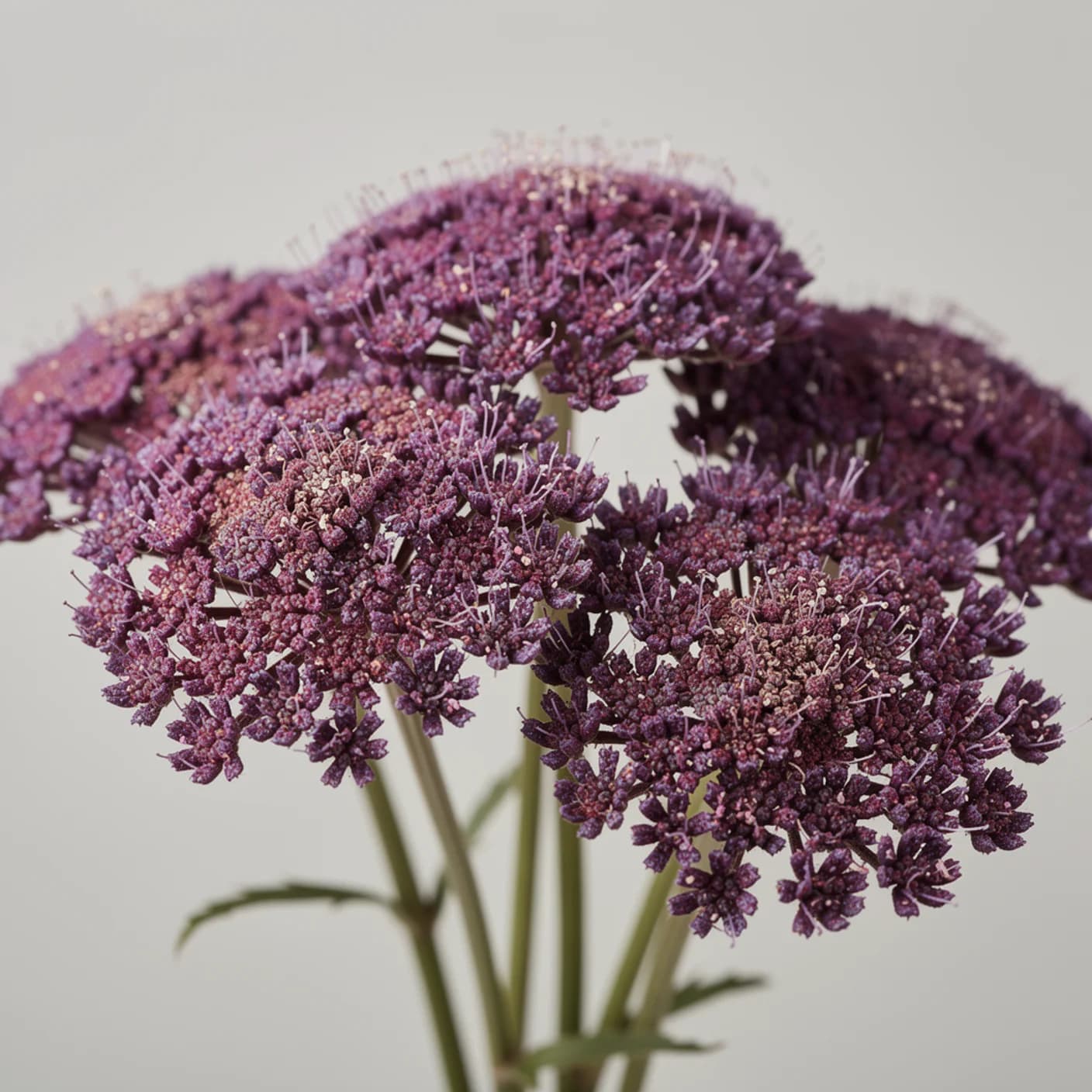
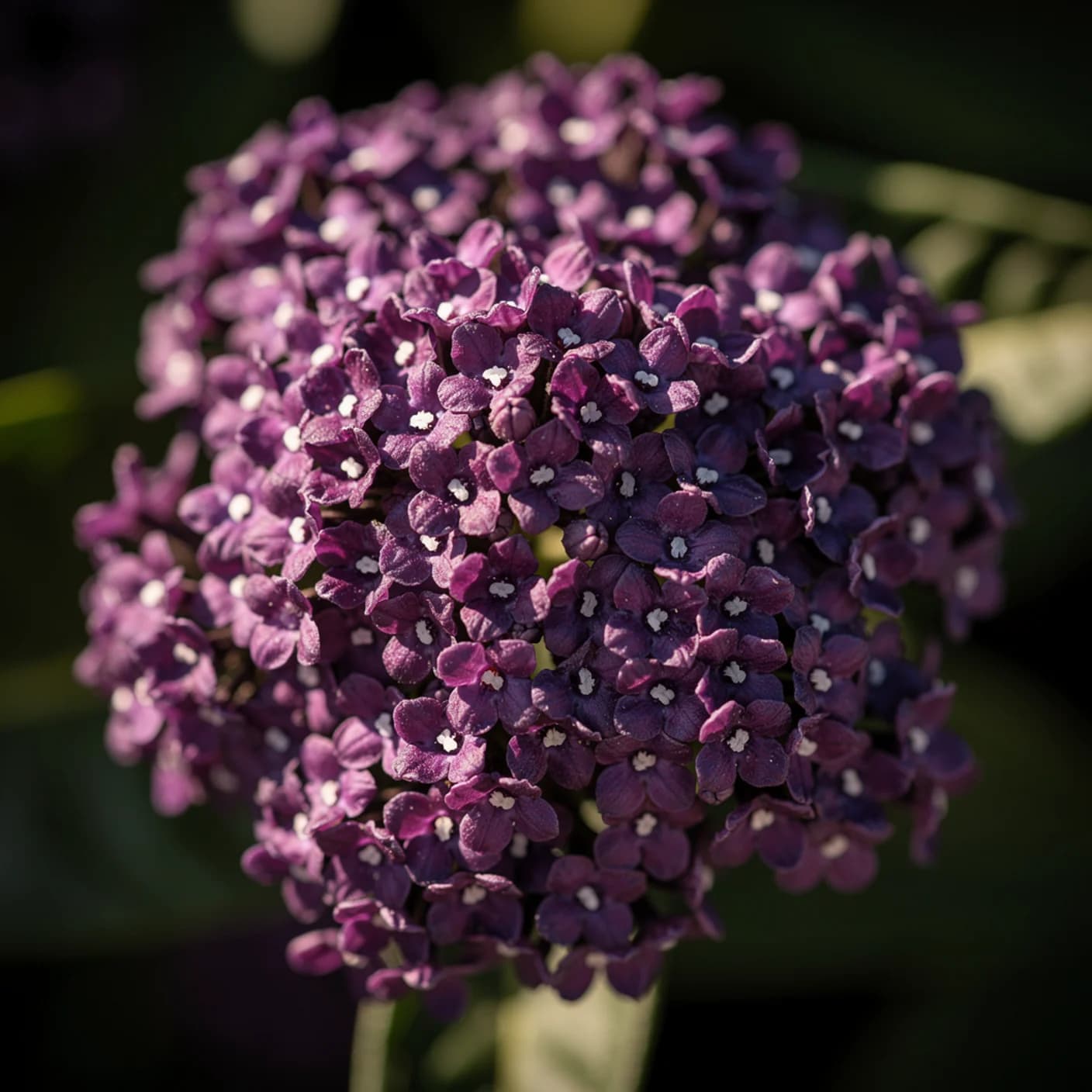
'Marine' is the variety you'll find most easily — compact, well-behaved, with dense, domed clusters of tiny flowers in a deep violet-purple so dark it borders on navy. The colour alone would be worth growing it for, but it's the scent that earns heliotrope its place. The Victorians understood this — they grew heliotropes obsessively, as bedding, as standards, as pot plants for conservatories. Then somehow we forgot about them.
I grow mine in pots by the back door, where the warmth of the paving intensifies the scent. On a hot afternoon, sitting outside with a cup of tea and that cherry-almond fragrance drifting over — that's a very specific kind of happiness. The dark purple flowers against the deep green, slightly textured leaves look handsome in a serious, old-fashioned way.
They're tender perennials treated as annuals in Britain, which means you start fresh each year or take cuttings before the frost. The effort is worth it. Once you've smelled a heliotrope properly — properly, with your nose in the flower in full sun — you won't forget it. Some scents are like that. They write themselves into your memory and stay.
Where to Buy
If you want to try heliotrope for yourself, here's where I'd point you:
Also available as seeds — Heliotrope 'Dwarf Marine' - Seeds →
We may earn a small commission from purchases made through our links, at no extra cost to you.
✿ From the folklore cabinet
Heliotrope means 'sun-turner' — the flower heads were believed to follow the sun across the sky, though they don't really. The association with the sun goes deeper in mythology: in Ovid's Metamorphoses, the water nymph Clytie was in love with the sun god Helios. When he abandoned her, she sat on the ground for nine days watching the sun cross the sky, until she was transformed into a heliotrope, forever turning her face toward the thing she loved. It's one of the more heartbreaking origin stories in botany.