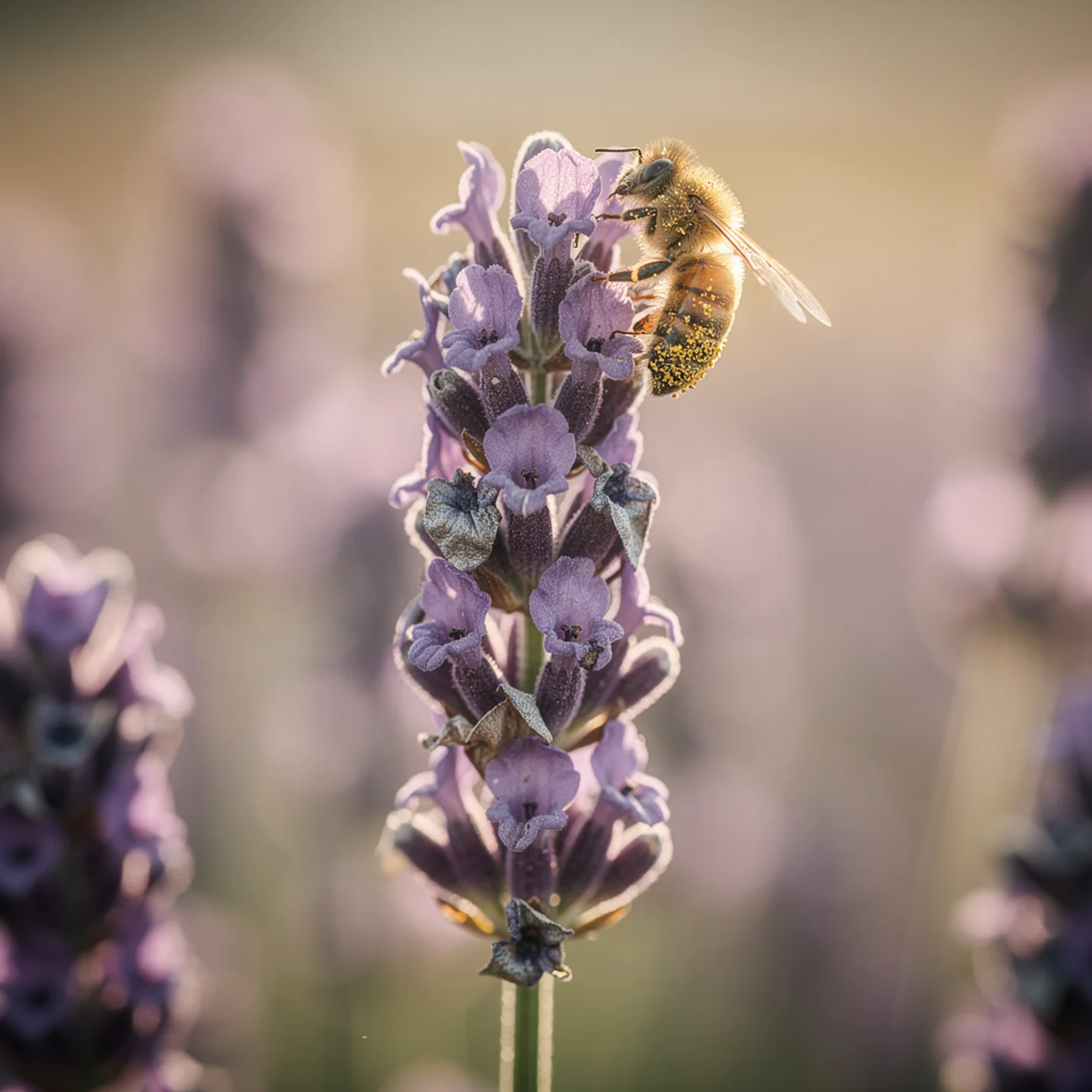
Lavender
Hidcote
“Not a vase flower — a life flower. Grow it by your front path and you'll never walk to the door without feeling slightly better about everything.”
— ROSIE
Rosie's Take
I can't walk past lavender without reaching out and running my hand through it. I've never met anyone who can. It's one of those involuntary things, like yawning or smiling at a dog. Hidcote is the variety I come back to every time — compact, deeply coloured, and with a scent so clean and warm it makes the whole garden smell like a good decision.
The colour is what separates Hidcote from the paler varieties. It's a proper, saturated violet-purple — almost indigo in certain lights — and when a whole hedge of it is in bloom in July, the effect is extraordinary. Bees agree. I've stood next to my lavender path on a hot afternoon and the sound alone is worth the planting.
It's not really a cut flower in the traditional sense — the stems are short and it dries almost immediately. But that's part of its charm. Cut a few handfuls, tie them loosely with kitchen string, and hang them upside down in the kitchen. In a week you've got dried lavender that'll scent a room for months. It's the flower that keeps on giving long after the garden has moved on.
I use it in everything — tucked into linen drawers, in a small jar on the bathroom shelf, mixed with dried rose petals in bowls on the windowsill. The dried stems are almost more useful than the fresh ones, which is a rarity in the flower world.
If you've got a sunny patch of well-drained soil and want something that will look after itself, attract every pollinator in the postcode, and make your garden smell like the south of France, Hidcote is the one.
Where to Buy
If you want to try lavender for yourself, here's where I'd point you:
We may earn a small commission from purchases made through our links, at no extra cost to you.
✿ From the folklore cabinet
Lavender gets its name from the Latin 'lavare' — to wash. The Romans used it in their bathwater, which makes it possibly the oldest beauty product still in daily use. I find it reassuring that something this simple has been making people feel better for two thousand years.