Ceanothus
Concha
“The most intense blue any garden shrub produces. 'Concha' against a sunny wall in May is a once-a-year spectacle that stops traffic.”
— ROSIE
Rosie's Take
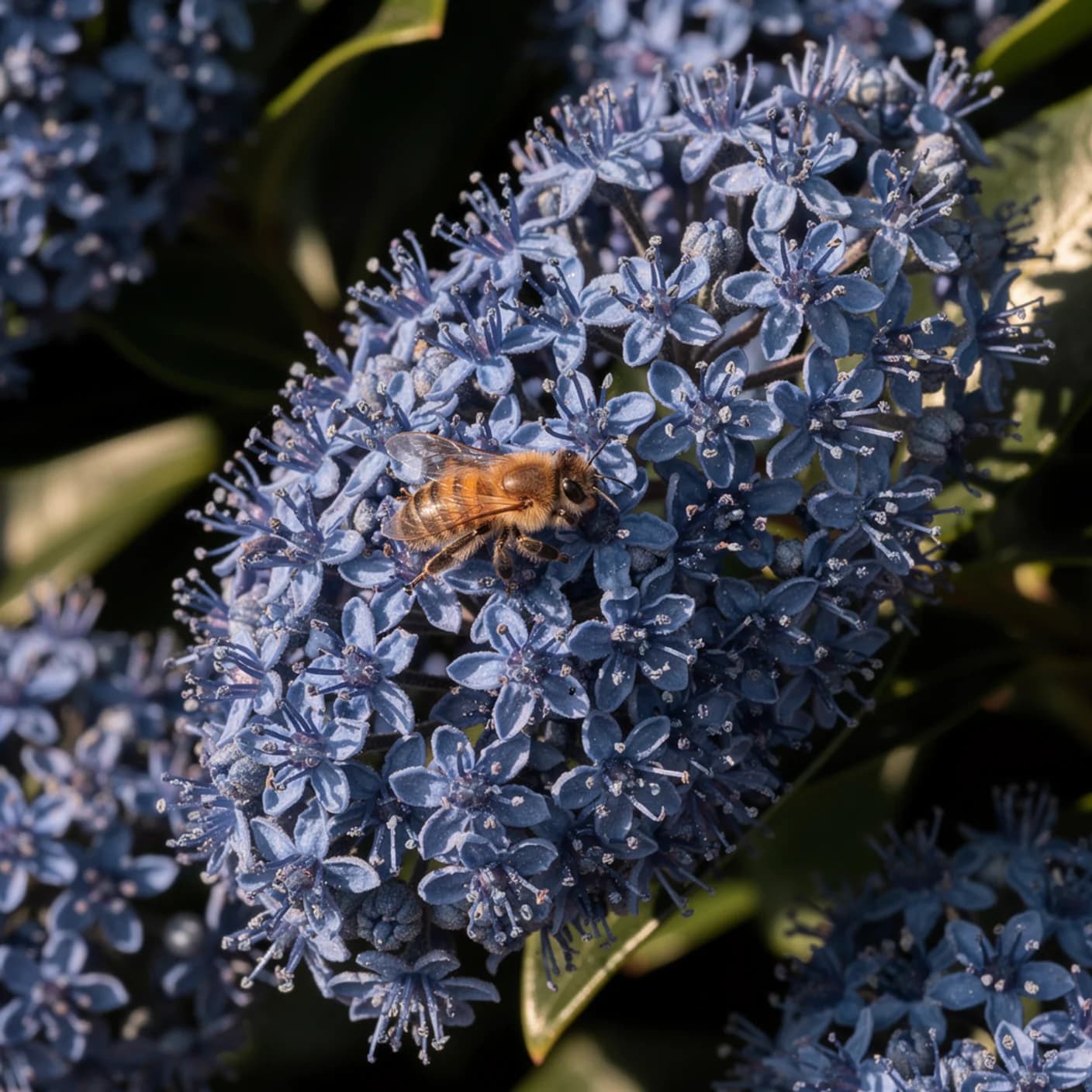
There's a moment in late May when a well-established ceanothus comes into flower and the effect is genuinely startling. The entire shrub turns blue. Not blue-ish, not purplish — properly, intensely, electrically blue, covered so densely in tiny flower clusters that you can barely see the leaves beneath. 'Concha' is the variety I'd choose above all others, because the colour is the richest — a deep, saturated cobalt that's almost unreal.
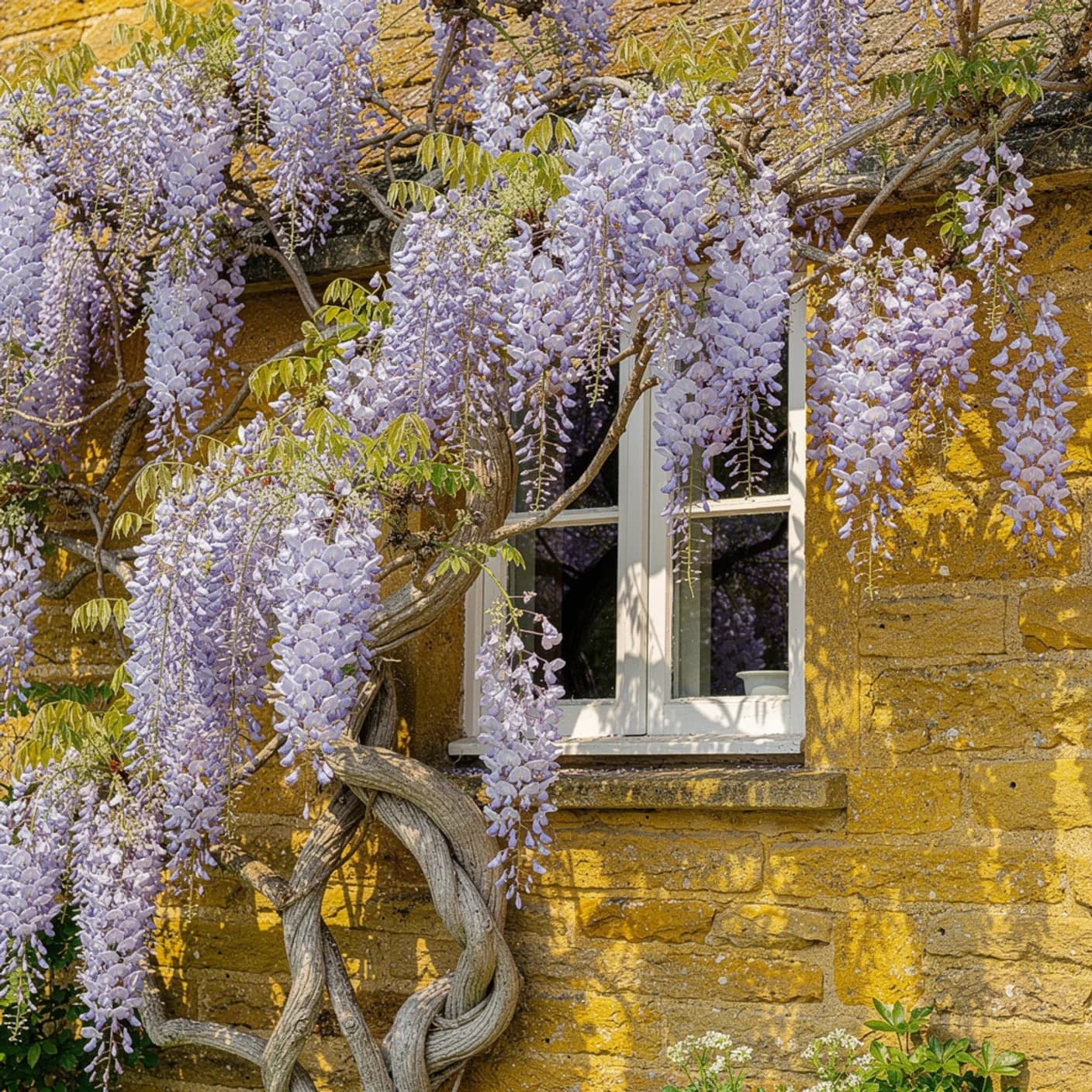
Trained against a sunny wall, as most ceanothus are in Britain, it creates a solid wall of blue that stops people on the pavement. I've seen it do this literally — a woman once stood outside my neighbour's house for a full minute, just looking. That's the power of the colour. There's nothing else in the British garden that does blue on this scale, at this intensity. Wisteria is close, but wisteria is lavender. This is blue.
The flowers are tiny individually — pinhead-sized — but packed into dense clusters that vibrate with bees. The whole shrub hums. On a warm May afternoon, standing near a flowering ceanothus is a full sensory experience — the blue filling your vision, the hum filling your ears, and occasionally catching a faint, honey-sweet fragrance drifting off the flowers.
It's a Californian native, which explains why it needs a warm wall in Britain. Given that shelter, it's remarkably tough. Mine has survived several hard winters with nothing more than a light frosting of the leaf tips. The dark, evergreen foliage is handsome year-round, making it one of those rare plants that earns its wall space twelve months of the year.
Where to Buy
If you want to try ceanothus for yourself, here's where I'd point you:
We may earn a small commission from purchases made through our links, at no extra cost to you.
✿ From the folklore cabinet
Ceanothus is often called Californian lilac, though it's not related to lilac at all. The genus is native to North America, where indigenous peoples used the roots to make a soapy lather for washing. Early settlers brewed the dried leaves as a tea substitute during the American Revolution — it was called 'New Jersey tea.' 'Concha' was selected at the Santa Barbara Botanic Garden in California and means 'shell' in Spanish. It's one of those plants that reminds you how much of British gardening depends on the generosity of other continents.