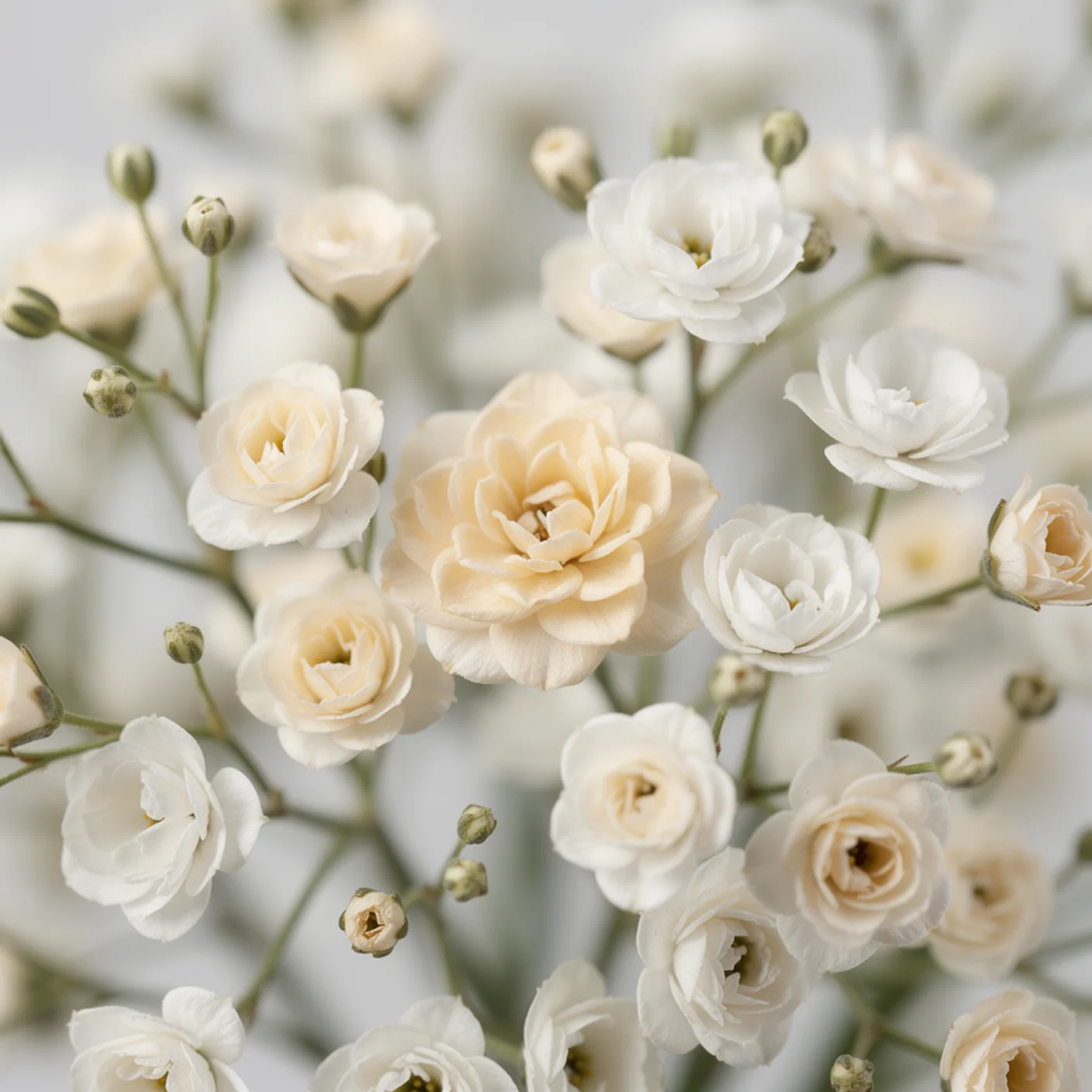
Gypsophila
Bristol Fairy
“Far more than just filler. Used generously on its own, gypsophila is airy, modern, and surprisingly striking.”
— ROSIE
Rosie's Take
I know what you're thinking — baby's breath, that filler stuff from 1990s wedding bunches. And yes, gypsophila spent decades being the thing shoved around the edges while the roses got all the attention. But 'Bristol Fairy' is having a moment, and honestly, it deserves it.
Used on its own — a great cloud of it in a wide-mouthed vase — it's like having a small, very pretty weather system on your kitchen table. All those tiny double flowers catching the light, making this haze of white that's somehow both airy and full at the same time.
The trick is to use it generously. Don't be stingy. You want armfuls of the stuff so it looks intentional rather than like you forgot to buy the rest of the flowers. A big bunch on its own is honestly more striking than mixed into an arrangement where it just fades into the background.
It dries beautifully too, which is a bonus. Just hang it upside down somewhere warm and it'll keep its shape for months. I've had a dried bunch on my bookshelf since last summer and it still looks lovely.
Where to Buy
If you want to try gypsophila for yourself, here's where I'd point you:
Also available as seeds — Gypsophila paniculata - Seeds →
We may earn a small commission from purchases made through our links, at no extra cost to you.
✿ From the folklore cabinet
The name 'gypsophila' means 'chalk-loving' in Greek, because it thrives in chalky, lime-rich soil. In the Victorian language of flowers, it stood for everlasting love — which is rather sweet for something most people think of as an afterthought.