Sidalcea
Elsie Heugh (Prairie Mallow)
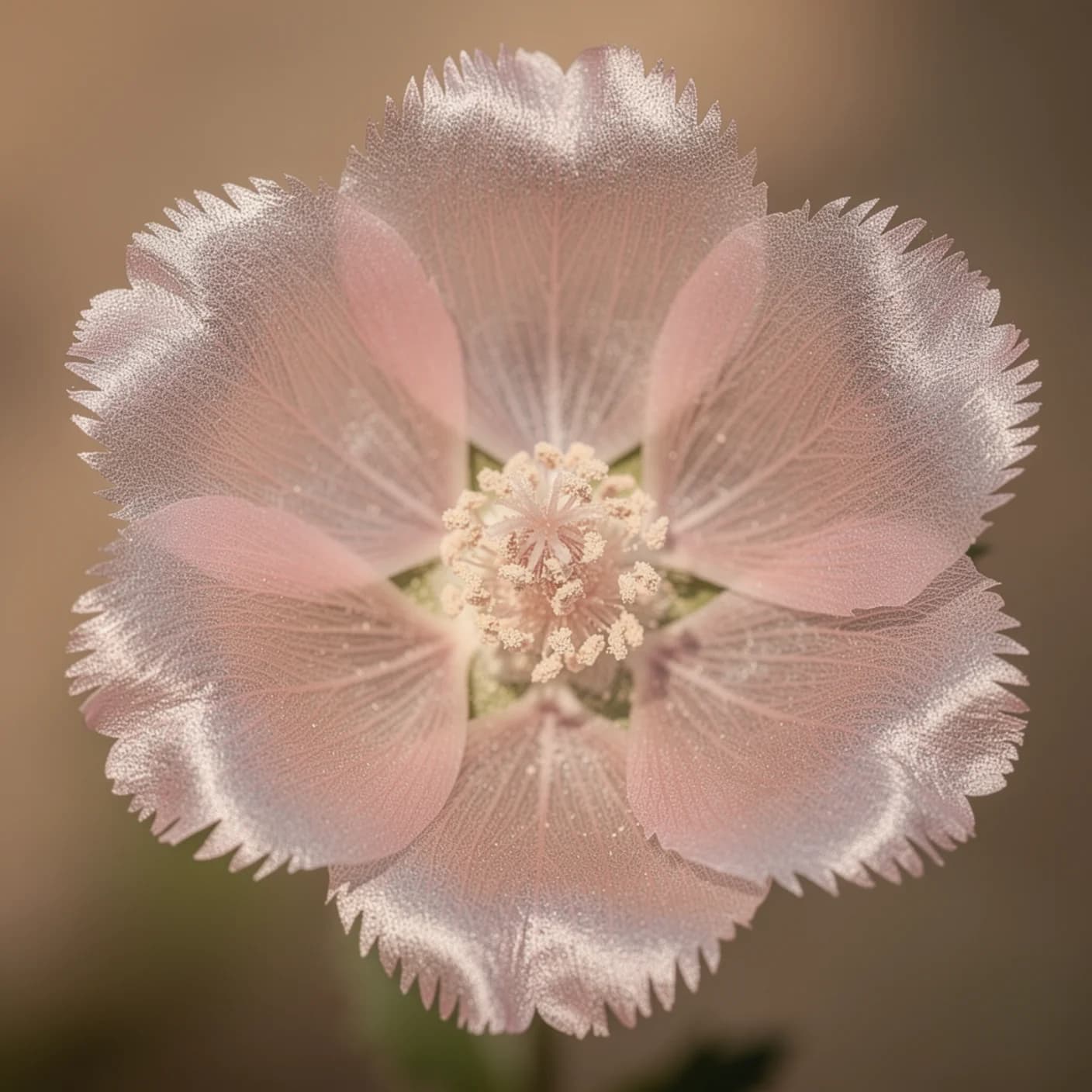
“The cottage garden perennial for people who love hollyhocks but want something more refined. Fringed, satiny pink flowers on elegant three-foot spires from June to August. No staking, no rust, no fuss.”
— ROSIE
Rosie's Take
Sidalcea 'Elsie Heugh' is the flower I point people towards when they say they love hollyhocks but can't grow them. It's a miniature hollyhock, essentially — the same spire of silky, saucer-shaped flowers stacked up a tall stem, the same mallow-family charm — but at half the height, without the rust disease, and with a delicacy that hollyhocks, for all their magnificence, can never quite achieve.
The flowers are pale, satiny pink — not shell pink, not blush, but a soft, silvery pink with a luminous, almost pearlescent quality. Each petal is fringed at the edges, as if cut with pinking shears, and the overall effect is of something handmade from silk. They open in succession up the stem from the bottom, which means each spike is in flower for weeks — the lower flowers still holding as the upper ones open. It's a long, slow performance from late June through August.
The plant grows to about three feet — tall enough to be a presence in the mid-border but short enough to never need staking. The foliage is a neat basal rosette of round, lobed leaves, and the whole plant has an elegant, upright, well-mannered habit. It doesn't flop, doesn't spread, doesn't take over. It just stands there, producing those silk-pink spires, looking like it's been arranged by someone with excellent taste.
I grow it alongside astrantia and hardy geraniums, where the soft pink complements the mauves and whites without competing. It's not a showy plant — it won't shout from across the garden — but at close range, that silky, fringed, pearlescent quality is irresistible. If hollyhocks are the opera singer, sidalcea is the folk musician. Quieter, subtler, and every bit as good when you lean in and listen.
Where to Buy
If you want to try sidalcea for yourself, here's where I'd point you:
We may earn a small commission from purchases made through our links, at no extra cost to you.
✿ From the folklore cabinet
Sidalcea is a genus of plants native to the western United States — the prairies and meadows of Oregon, California, and beyond. The name is a botanical mashup of two related genera: Sida and Alcea (hollyhock), reflecting the plant's intermediate position between them. 'Elsie Heugh' was selected in Britain and has been a fixture of the cottage garden border since the mid-twentieth century. In the wild, sidalceas are pollinated by native bees that are specifically adapted to mallow flowers — they vibrate their flight muscles to shake pollen loose from the anthers, a technique called 'buzz pollination.' In a British garden, bumblebees have figured out the same trick. Watching a bumblebee buzz-pollinate a sidalcea is one of those small, fascinating moments the garden gives you if you stand still long enough.