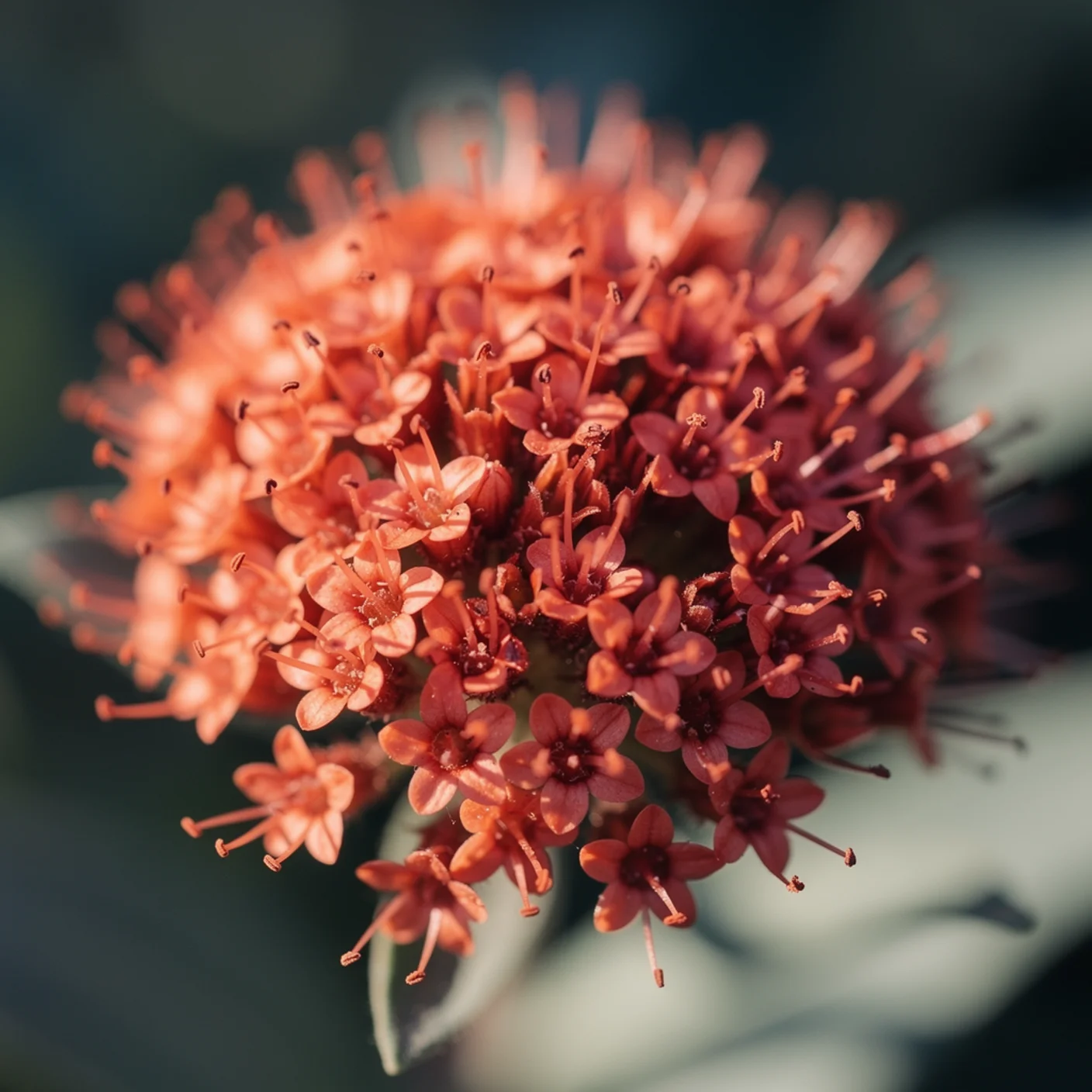
Red Valerian
Centranthus ruber
“The flower of warm stone walls and seaside towns. Grows in pure rubble, flowers for months, and asks for absolutely nothing.”
— ROSIE
Rosie's Take
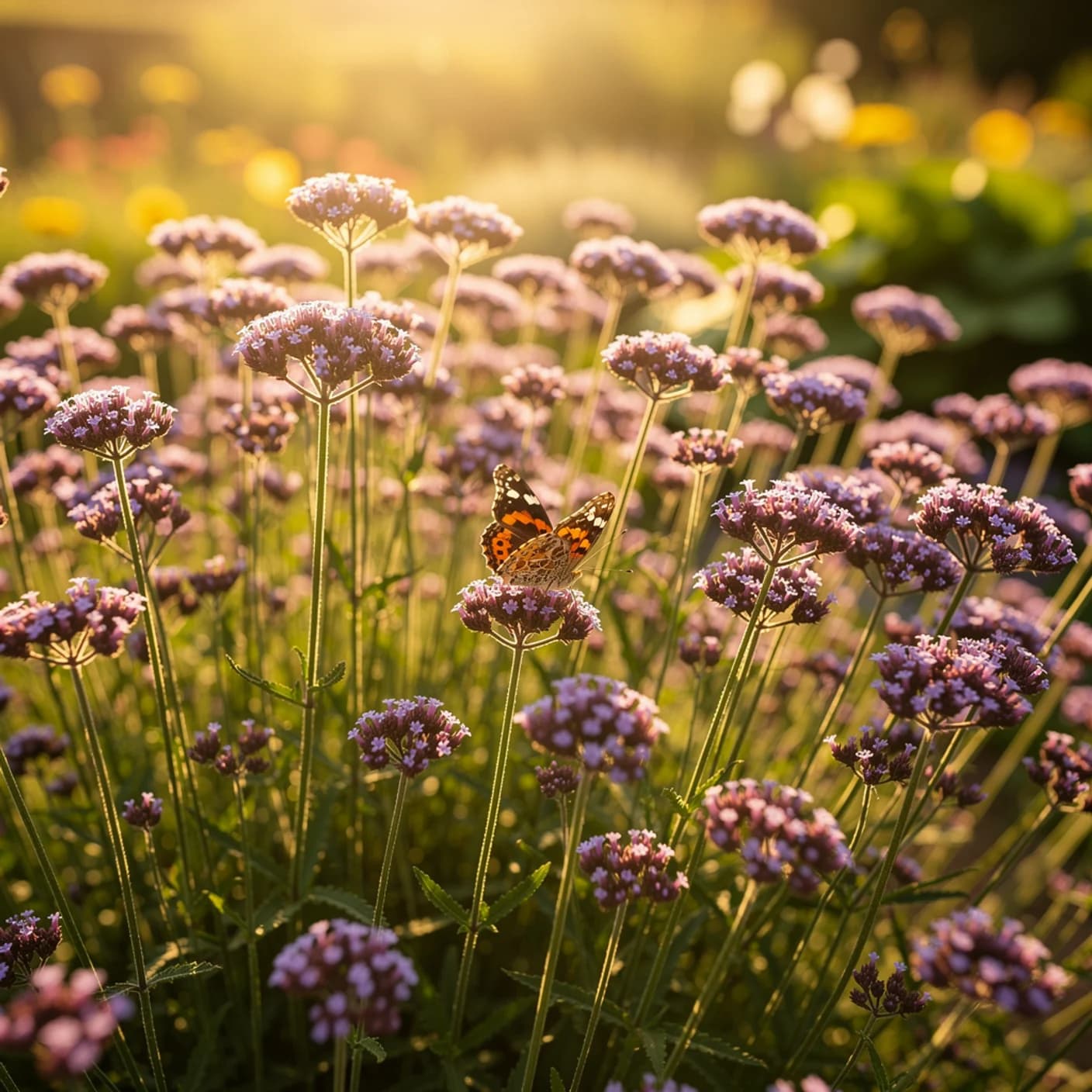
Red valerian is the flower of warm stone walls and seaside towns. If you've ever walked along the Devon coast, or through a Cornish harbour village, or past the crumbling walls of an old castle, you've seen it — those clusters of tiny, deep pink-red flowers erupting from mortar joints and crevices where nothing should be able to grow. It's the most optimistic plant I know.
Centranthus ruber isn't actually a valerian — the 'real' valerian is Valeriana officinalis, which is a different plant entirely. This is a Mediterranean escapee that's been naturalising itself across Britain since the sixteenth century, and it's now so thoroughly at home that it feels native. You see it everywhere, and everywhere it looks like it belongs.
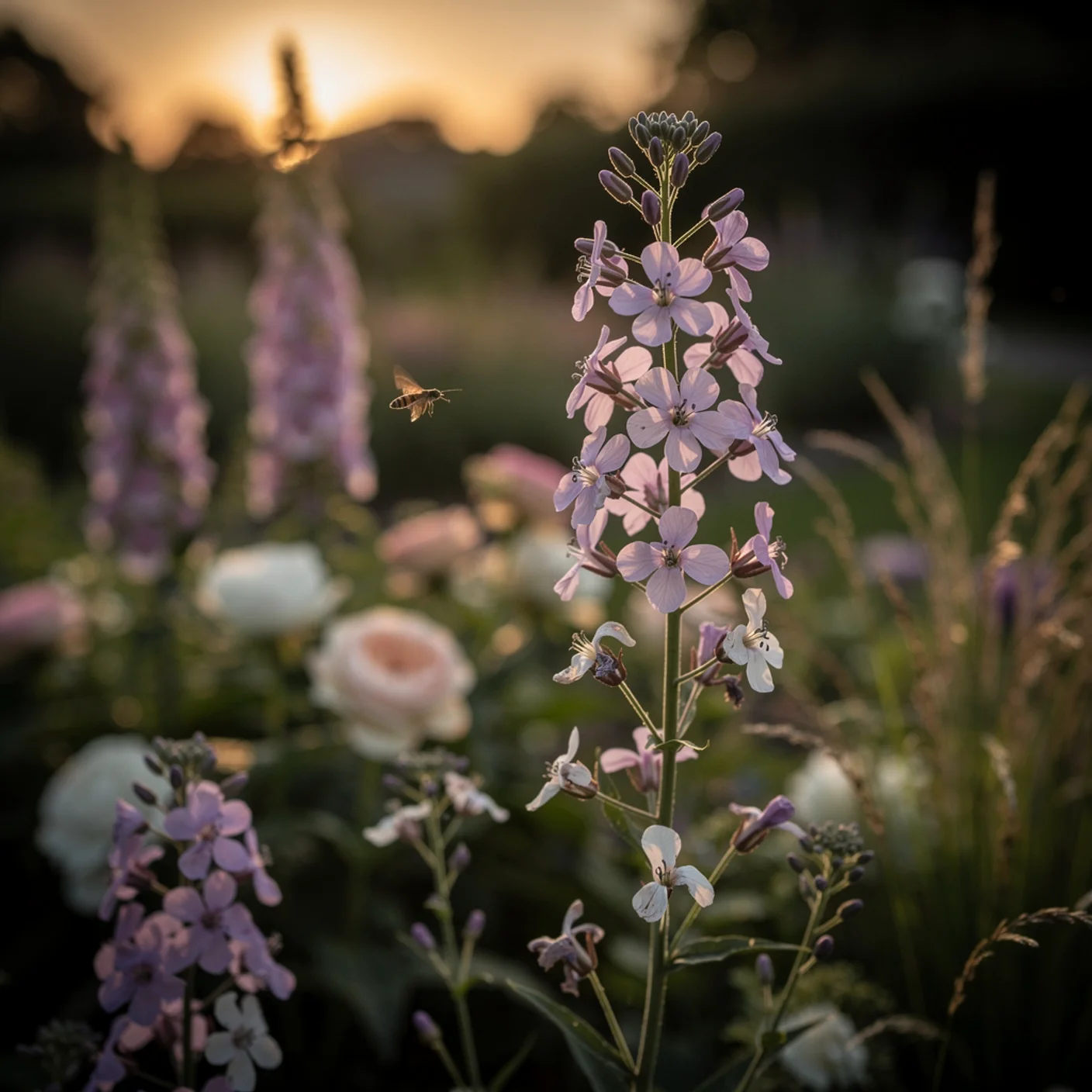
The colour is complicated. People call it red, but it's closer to a warm coral-pink with a hint of terracotta — raspberry jam mixed with dust. There's also a white form which is just as lovely and seeds itself in equal measure. Together they colonise walls and dry banks with a casual abundance that makes formal planting schemes look slightly anxious.
Butterflies love it. Hummingbird hawk-moths love it even more — I've watched them hover at the flower clusters on warm summer evenings, their wings a blur, and that alone is worth giving it garden space. It flowers from May to September with barely a pause, needs no watering, no feeding, no attention whatsoever. It grows in pure rubble and looks beautiful doing it. There's a lesson in that for all of us.
Where to Buy
If you want to try red valerian for yourself, here's where I'd point you:
We may earn a small commission from purchases made through our links, at no extra cost to you.
✿ From the folklore cabinet
Despite the name, red valerian has no connection to the medicinal valerian used as a sedative. The confusion has persisted for centuries. Centranthus comes from the Greek for 'spur' — the flowers have a tiny spur at the base. In some parts of the Mediterranean, the young leaves are eaten as salad, though I've tried them and 'bitter' barely covers it. The plant arrived in Britain as a garden ornamental and promptly escaped over the wall, which feels entirely in character.