Dierama
Dierama pulcherrimum (Angel's Fishing Rod)
“Grow it for the way it moves. Angel's Fishing Rod in full bloom, swaying on a summer evening, is one of the great sights in gardening. Plant it once and never move it.”
— ROSIE
Rosie's Take
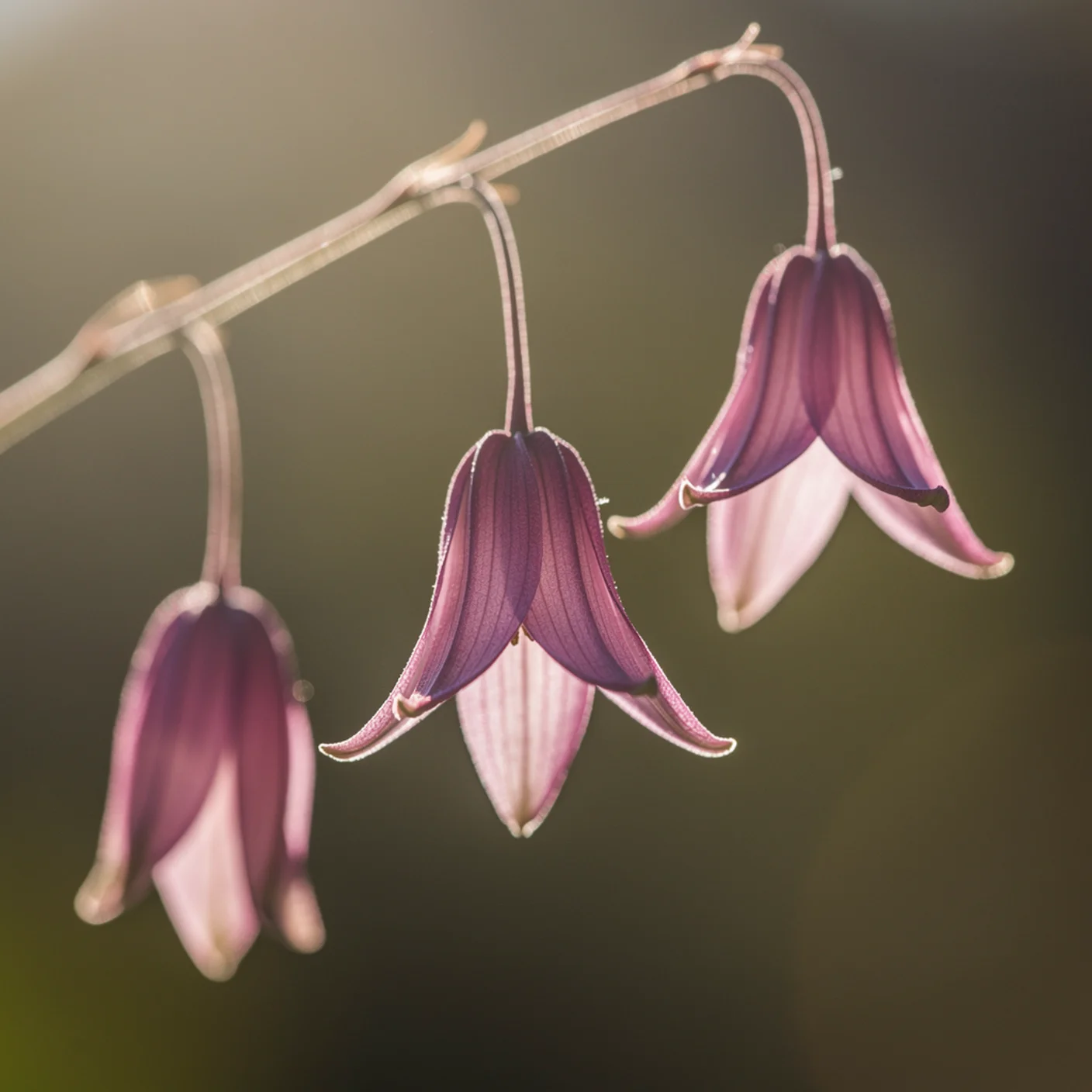
Angel's Fishing Rod. Even the common name is perfect. Dierama pulcherrimum produces long, impossibly slender, arching stems — five or six feet of thin, wiry steel that curve under the weight of bell-shaped flowers dangling from their tips like drops about to fall. In a breeze, the whole plant sways and bobs with a fluidity that no other garden plant achieves. It's the most beautiful movement in horticulture.
The flowers are typically a rich, dusky pink-mauve, though they range from deep magenta to pale shell-pink depending on the seedling. They're arranged along the arching stem in a series of drooping clusters, each flower hanging on its own thread-thin pedicel, swinging independently. The effect in late June and July, when a well-established clump is in full flower, is mesmerising. I've stood watching mine for far too long on summer evenings, glass in hand, just following the movement.
It grows from a corm, producing a fountain of narrow, grassy, evergreen leaves that are handsome year-round — think of an ornamental grass with flowers that no grass could dream of producing. It needs full sun and good drainage, and it resents being moved — transplant shock can set it back years. The secret is to plant it young, from a pot, into its permanent position and leave it alone forever. Patience, again.
The species name 'pulcherrimum' means 'most beautiful,' which is a bold claim from a Latin binomial, but in this case I'd allow it. There's nothing in the garden quite like a mature clump of dierama in full, swaying bloom on a warm July evening. Some plants you grow for their colour. Some for their scent. This one you grow for the way it moves.
✿ From the folklore cabinet
Dierama is native to the grasslands and stream-sides of eastern and southern Africa, from Ethiopia to South Africa. The name comes from the Greek 'dierama' meaning funnel, referring to the flower shape. In South Africa it's called 'grasklokkies' — grass bells. It was first introduced to British gardens in the nineteenth century and thrives in the mild, damp conditions of western Britain and Ireland — some of the finest clumps I've ever seen were in Cornish gardens, their fishing-rod stems arching over granite walls. The species was first described by the botanist John Gilbert Baker in 1877, who presumably saw it and thought 'most beautiful' was the only honest thing to call it.