Lilac
Sensation
“Spring's most intoxicating splurge. One bunch of 'Sensation' will fill your kitchen with a perfume that money genuinely can't replicate any other way.”
— ROSIE
Rosie's Take
The scent of lilac is one of those things that bypasses every rational thought and goes straight to the part of your brain that stores memories. For me it's my grandmother's front garden in late April — that dense, sweet, powdery perfume that you could smell from the pavement before you even opened the gate.
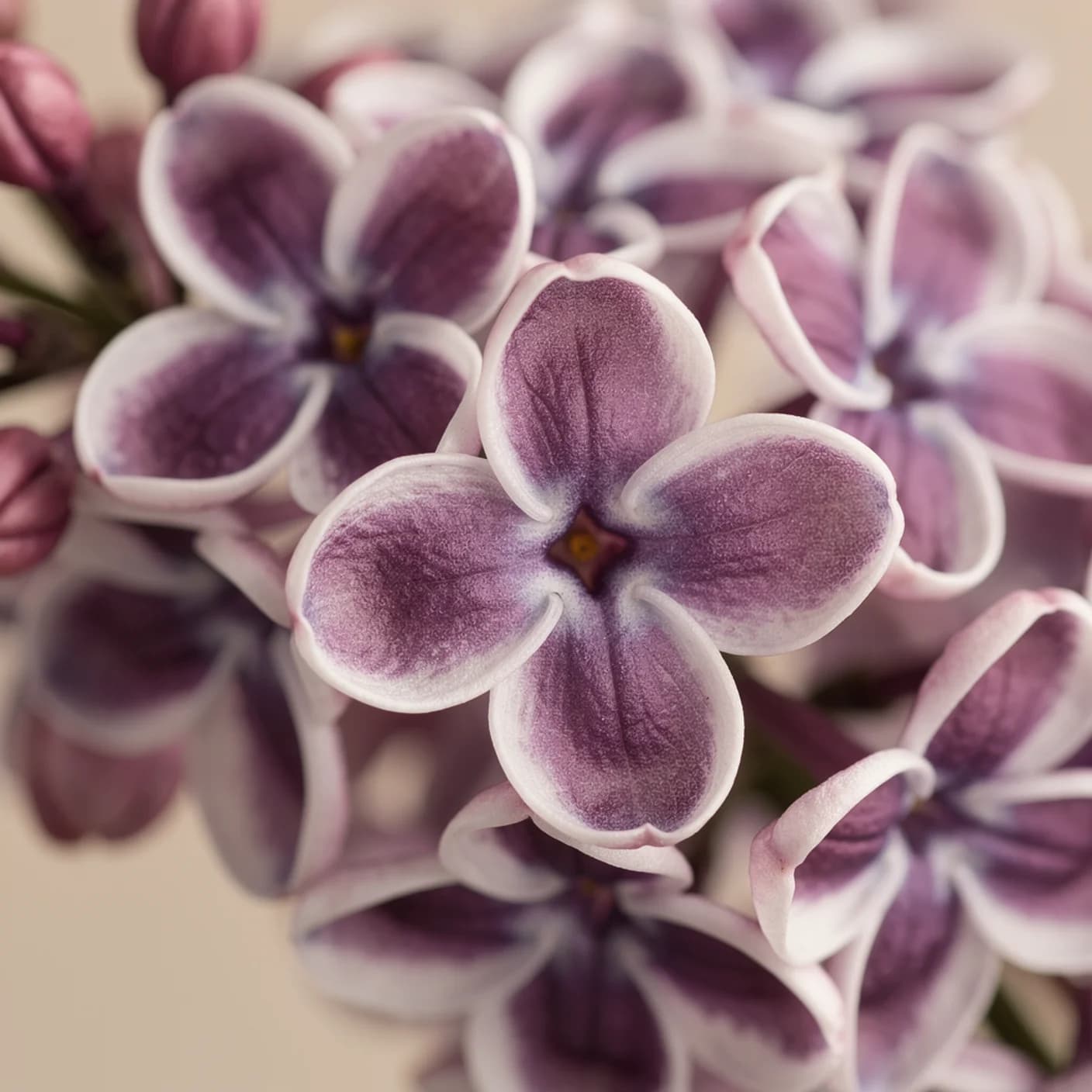
'Sensation' is the variety I'd choose above all others. Each individual floret is deep purple edged in white, which sounds like it shouldn't work but creates this extraordinary marbled effect on the flower heads — like someone dipped each tiny petal in milk. The whole panicle has a depth and complexity that single-coloured lilacs lack.
As a cut flower, lilac is a spring luxury. The branches are woody and heavy, the flower heads are generous, and a few stems will fill a room with that perfume for a good week. They're not cheap from a florist — this is a splurge — but in terms of scent-per-pound, very little else comes close.
The trick is to crush the stem ends with a hammer before putting them in water. Woody stems struggle to take up water otherwise, and you'll watch those luscious flowers wilt within a day. A good bashing and warm water, and they'll reward you properly. I buy them once a year — my annual spring treat — and for that week the kitchen smells like every good May memory I've ever had.
Where to Buy
If you want to try lilac for yourself, here's where I'd point you:
We may earn a small commission from purchases made through our links, at no extra cost to you.
✿ From the folklore cabinet
The name 'syringa' comes from the Greek 'syrinx,' meaning pipe — the hollow stems were used to make pan pipes. In the language of flowers, purple lilac represents the first emotions of love, while white lilac represents youthful innocence. Lilac was introduced to Britain from Ottoman Turkey in the sixteenth century, and it's been colonising cottage gardens ever since.