Star Jasmine
Trachelospermum jasminoides
“The best-scented climber for a warm wall. Star jasmine fills summer evenings with a perfume that makes your garden feel like a holiday.”
— ROSIE
Rosie's Take
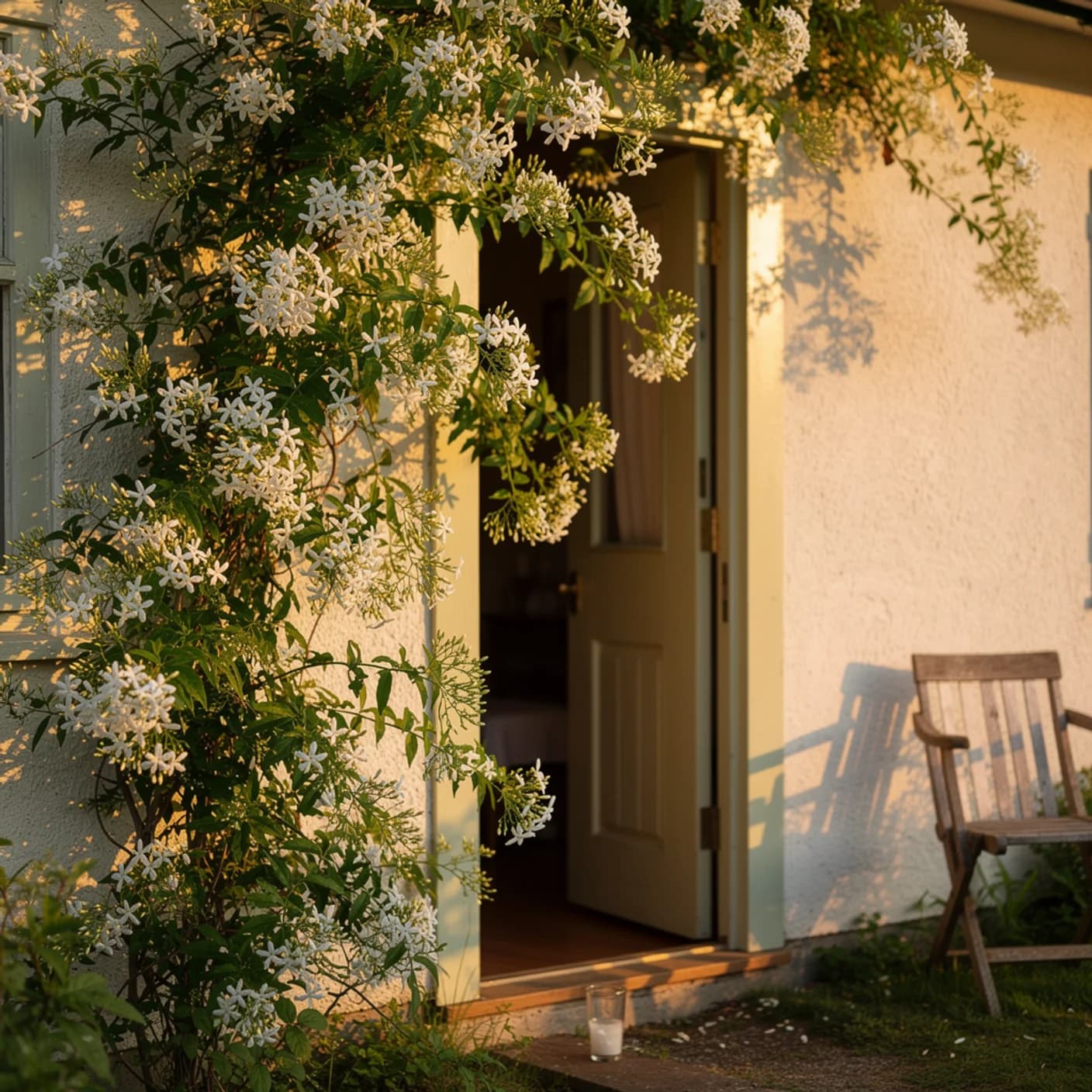
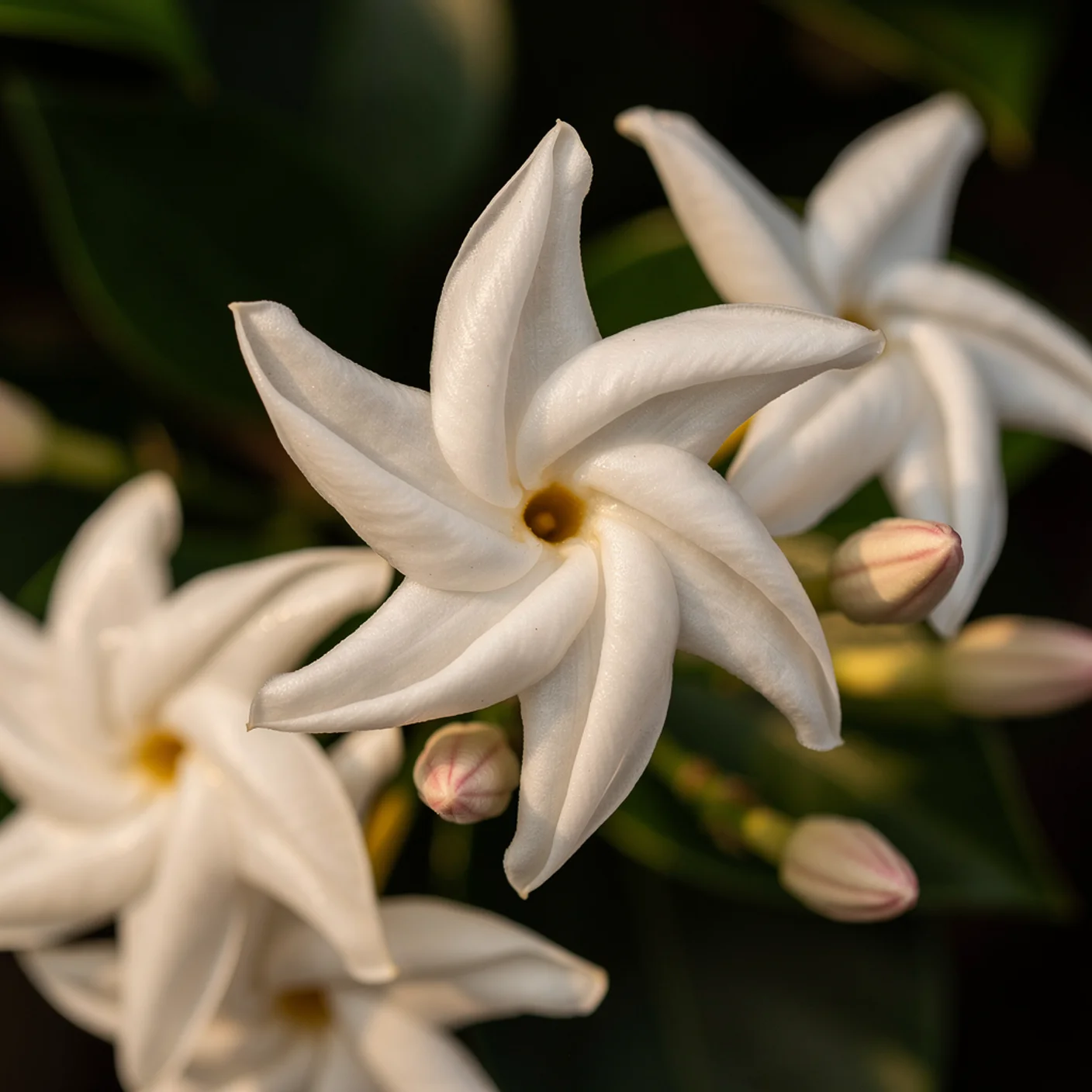
Star jasmine is the plant I'd recommend to anyone building a seating area and wanting it to smell like a holiday. Train it over a pergola or against a warm wall near a bench, and from June onwards those clusters of small, pinwheel-shaped white flowers will fill the evening air with a perfume that's rich, sweet, and unmistakably jasmine — but warmer, deeper, and more complex than true jasmine. It smells like a Mediterranean terrace in a bottle.
Trachelospermum jasminoides isn't actually jasmine — it's a member of the Apocynaceae family, related to periwinkle. But the scent is so jasmine-like that the common name has stuck, and honestly, if a plant smells this good, it can call itself whatever it likes. The fragrance intensifies in warm evening air, which is perfect for the way most of us use our gardens in summer — sitting outside after the heat of the day, with a glass of something cold.
The flowers are small but produced in generous clusters against glossy, dark evergreen foliage. In mild winters, the leaves take on a coppery-bronze tint that's attractive in its own quiet way. The plant is a neat, well-behaved twiner that won't rip your trellis apart, which makes it a far more civilised choice than some climbers I could mention.
It needs a warm, sheltered wall in most of Britain — south or west-facing, out of cold winds. Given that protection, it's surprisingly tough. Mine has survived minus eight without complaint. The warmth of the wall is key — it needs that stored heat to produce flowers generously. But when it does flower, leaning back in a chair and breathing in that scent as the sun goes down — that's what a garden is for.
Where to Buy
If you want to try star jasmine for yourself, here's where I'd point you:
We may earn a small commission from purchases made through our links, at no extra cost to you.
✿ From the folklore cabinet
Trachelospermum comes from the Greek for 'neck seed' — a reference to the shape of the seed, which is not the plant's most inspiring feature. It's native to eastern Asia, from Japan through China to Vietnam. In traditional Chinese medicine, the stems and leaves have been used to treat rheumatism and inflammation. In Japan, it's called 'teikakazura' and has been cultivated for centuries — it appears in classical Japanese garden design as a fragrant climber for trellises and arbours. The British love affair with it is more recent, driven by the trend for outdoor dining and the realisation that a scented climber overhead transforms a meal.